

THE DISMAL SCIENCE DEPT./
ARS GRATIA ARTIS DESK
Another little bit of good news: the recovery of a lost American masterpiece. And just in time for a blockbuster exhibit at the Met. (Remember New York?)
Moms turned me on to the art of Jacob Lawrence a couple of years ago; I think she must have seen the traveling show (in St. Louis?). Looking over the exhibit program, I immediately fell in love with Lawrence’s style. Plus, he carried on the noble and necessary work of the history painter — rare among the moderns. His compositions and colors stand out in a gallery; I’ve been lucky to discover a few of his works serendipitously, here in LA at the African-American Museum.
But, hallo…? Shays’s Rebellion of 1787, America’s first insurrection, marches the View right back to the redoubt of Alexander Hamilton’s legacy. Art fans, you may now leave the tour. Don’t forget to visit the gift shop. Geeks, slog on:
Why Did Daniel Shays Hate Freedom?


Scrip issued by the emerging States of America. Current until…it wasn’t.
Moms may have left the tour but she also gets credit, or chagrin, for interesting me in colonial scrip. In the years surrounding the Bicentennial, she and Dad made sure we kids got plenty of exposure to re-enactments, parades and musters; each event had booths selling souvenir tricorn hats, fifes, hand-dipped candles, funnel cake, and reproduction colonial parchment scrip. Notes came in cellophane packets (probably for .76c.) The crinkly paper was fun to handle and the 18th c. printing, fascinating. Though, you never knew whether your packet would yield notes reckoned in mere pennies, or pounds, or dollars amounting to a fortune. Oddly, their value was nearly that uncertain, just after the Revolution:
“The Revolution’s costs left severe financial problems, both private and public. Wartime disruption to production had spread poverty and personal indebtedness. The coming of peace released a pent-up demand for goods, and 1783-84 witnessed a significant surge of imports from Britain. These goods would have to be paid for in addition to the unpaid pre-war debts that the peace terms between Britain and the United States permitted British creditors to collect. By 1784-85 the combination of old and new debts imposed substantial private obligations, especially in rural regions still recovering…In addition to this arose the severe effects of public financial burdens. The War had left state treasuries empty and their finances in chaos. In an effort to replenish them and repay their debts, states raised taxes by amounts ranging from double to six time their pre-Revolutionary levels. These demands were imposed on a society where inequalities had widened sharply.“
Christopher Clark, Social Change in America (2006)
Again, how was all this debt acquired? Reckless liberal spending? No; to pay these guys. Who was paying these exorbitant taxes? Rich foreign playboys? No; these guys.

Von Steuben drills frostbitten men 
Empty stomachs rowed to Trenton 
Gate-crashers with Ethan Allen 
Skinning an ox for Col. Knox, to capture the ordnance of Ticonderoga 
Nathaniel Greene and Casimir Pulaski rally
the starving and sober at Brandywine
“Molly…Pitcher?” Great guns, gal. 
“Look! The French fleet!” 
“Huzzah, did they bring quarters for laundry?”
The war had largely been financed by the issue of paper money and the payment of soldiers and others in paper warrants and other instruments entitling them to land or cash in the future. Most holders of these paper instruments, however, needed ready cash or goods to live on, and could not afford to keep them. Meanwhile the crises of wartime and the uncertainties of the future of Revolutionary governments severely deflated the current values, and many holders were obliged [i.e, by compounding debt] to sell it to others at mere fractions of its face value. Wealthier men accumulated these paper promises and titles to land, [speculating on] the potential repayment of the debt by the states.
— Christopher Clark, Social Change in America

Continental currency, unbacked “fiat” money 
They claimed bi-metal backing…a feeble gambit. Everyone knew Congress had no chest full of milled dollars; anyway not enough for the blizzard of bills issued. And there was no bank to go to, even if you wanted to try your foolish luck cashing it. 
John Dunlap, successor to BF as PA’s primo printer.
Fought bravely at Trenton/Princeton.
There were thousands of British counterfeits, debasing everything. Outside Philadelphia, Continental currency was almost worthless. So was it scrip or scrap?
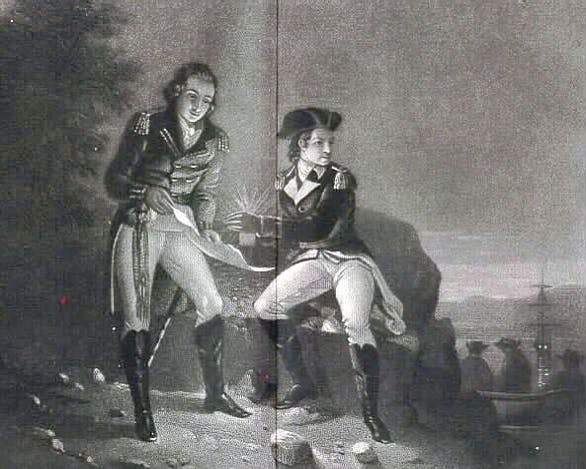
“In Annapolis, from 1781 on, merchants were buying soldier’s pay certificates and land warrants at one-seventh of their face value. In 1783, Rhode Island merchant Nicholas Brown paid out goods worth 246 pounds, for Continental certificates worth fifty times as much. Of Pennsylvania’s $4.8 million in outstanding wartime debt in 1790, 96 percent was in certificates held by just 434 individuals, and 40 percent was held by just 28 Philadelphia lawyers, merchants, and brokers. Commercial elites in the port cities influenced government to retain a tight financial regime. Merchants’ letters filled with tales of uncollectible debts. Forced sale-offs of those who had back taxes or debts mounted.
— Christopher Clark

“In Massachusetts conflict became more serious still. In Worcester County in 1784, two thousand lawsuits for debt were brought to court. Crowds gathered to protest auctions and court dates and issue petitions to the government. Armed men calling themselves “Regulators” gathered to ensure that courts remained closed, or to counter militia troops mobilized against them. In January, 1787 two Regulator bands converged on the armory at Springfield, intending to capture its arsenal, one led by a former Continental officer, Daniel Shays. A mis-timed rendezvous allowed the militia guards to put Shays’s men to flight with casualties. As they retreated into the hills, they were pursued by militia hastily assembled in Boston, led by General Benjamin Lincoln.
— Clark. He mentions also that retreating Shaysites mingled across the New York border with disgruntled tenants in the Hudson Valley, who were suffering under the practically feudal land-tenure laws inherited from New Netherland. In 1791 the Hudson counties crackled with a Shays-esque “anti-rent” rebellion.
When Lincoln surprised the Regulators at Petersham, they were scattered. Skirmishes continued in parts of rural Massachusetts through the spring of 1787, but the rout of Shays’s force marked the defeat of the Rebellion remembered by his name. Shays and many others fled the state. Regulators who laid down their arms signed oaths of allegiance to the Commonwealth [of Massachusetts]; arrested leaders were tried and sentenced to death (most sentences were commuted).

“Benjamin Lincoln, given the task of raising a militia to counter the Shaysites, presented the situation in stark terms to the prosperous men he wished to recruit. Persuading leading Bostonians to finance and support the army, he portrayed the rebellion as an attack on property, urging them to be “loaners of a part of their property it they wished to secure the remainder.” As Lincoln marched west, an observer noted that he had a “fine body of men, well-officered, the whole of the monied men to support him.”
— Christopher Clark, ‘Social Change in America from the Revolution to the Civil War’
Thus, then, was Shays’s Rebellion, a debt rebellion. It was a shot across the bow for America’s leaky ship of state. The veterans were swatted down, left broke, landless, jobless, and feeling swindled out of the patrimony they fought for. This marked a sad precedent for America’s treatment of her citizen-soldiers.
It also scared the hell out of Congress, the state legislatures, the brokers in the urban coffee houses, and the judges threatened with effigy-hangings. They had momentarily cowed the debtor class with force, but everybody — the Congress, the members of Congress, the states, the governors of the states, landlords, renters — was broke and ALL the debts seemed un-payable. The Revolution had apparently beggared her people. Privilege had won out over equality, AGAIN, dismaying many frontier farmer-democrats. For those who had pledged all, America had turned into a great big pile of “No.”
That summer they called another convention at Philadelphia, under Gen. Washington himself, to see if they couldn’t fix America’s debt-rebellion-army-debt cycle. All of the delegates were elites, most lifelong debtors, all of them ambitious, all of them embarrassed, all former military men, all trying to hide even from each other how overdrawn they were or how much worthless paper they held. Taxes on farmers? Like ordering blood from turnips. They were turnips, too, with the British creditors roasting them slowly. They were a senate who seized an empire, all ignorant of how empires financed themselves. All ignorant, that is, except for Washington’s trusted former whiz-kid aide-de-camp, who offered that, actually, he knew quite a lot about the subject. https://drive.google.com/file/d/1TW_uOyl4FQbqq82M9BeZR9svGFh22KsF/view?usp=sharing
 The Valley Village View