Category Archives: architecture

The Last Post

Patient Reader, I regret to report this is the last edition of the Valley Village View. I have hit the limit of the “storage space” allowed by WordPress for a non-monetized blog. That is, if I wish to continue adding to it, I’d have to pay them a monthly rent. Google’s gate-fee is not cheap; their idea is, it should be a privilege to put the View into competition with all their other products for the world’s eyeballs — and for me to hustle for ever-more readers eager to click-through their ads on my blog.

The View began as a way to share pictures with family and friends about the local and natural history of the place I call home. Very quickly I realized that I knew nothing about it, myself! And I could see that many of the most interesting things about Los Angeles, and especially the Valley, weren’t ‘covered’ online: events weren’t presented with accurate facts, landmarks weren’t honored with clear informative pictures, history and natural wonders were ignored. As my own ‘sense of place’ grew, I realized that I had to work hard to find facts, or forgotten but important names. I tried to tie each blog entry into the important themes and trends I’d discerned.

I am especially proud of the View’s multi-part explorations:


First, the Views of “Beautiful Valley Village” itself, its middle-class history, its walkable scale and unpretentiously homey Mid-Century architecture. I think the photo essay of the once innovative, now abandoned Valley Plaza may be the best visual record there is or was, of the sad fate one of America’s first modern shopping centers; another lost moment in LA conservation history. The low-slung, rock-faced, steel-and-glass rows of shops, booths, and showrooms now are falling, burning, or being allowed to be torn down, for the lack of an adaptive-reuse plan for the site.

“The Theatre of Conversion” series is the most comprehensive general account online of the religious and cultural interface that began in 1769 between the Tongva, Tataviam and Chumash peoples, with their Chinigchinich religion on the one hand, and the Franciscans, with their Christianity. In addition to discovering the amazing lore and ritual of the datura plant, momoy, t was a golden chance to do the kind of history I admire most, a “local history from the soil up” kind of story. Comparing the Indians’ myths, plants, animals, food, medicine, and land-use, with the cultural apparatus and technology which was brought in by the Spanish, opened my eyes to the magnificent chaparral of the California Floristic Province, which was almost wiped out by the invasive Spanish Pasture Mix. Learning about Fr. Lasuen’s grandiose design for the most commodious building in Alta California, the Convento at San Fernando Mission, and the huge amount of quicklime-whitewash needed to cover all that adobe, and the huge amount of oak firewood required to kiln the limestone, and the quarrying of the limestone itself, and wondering where the neophytes got all the resources called for in Vitruvius’s whitewash recipe, led me into the geology of the canyons.

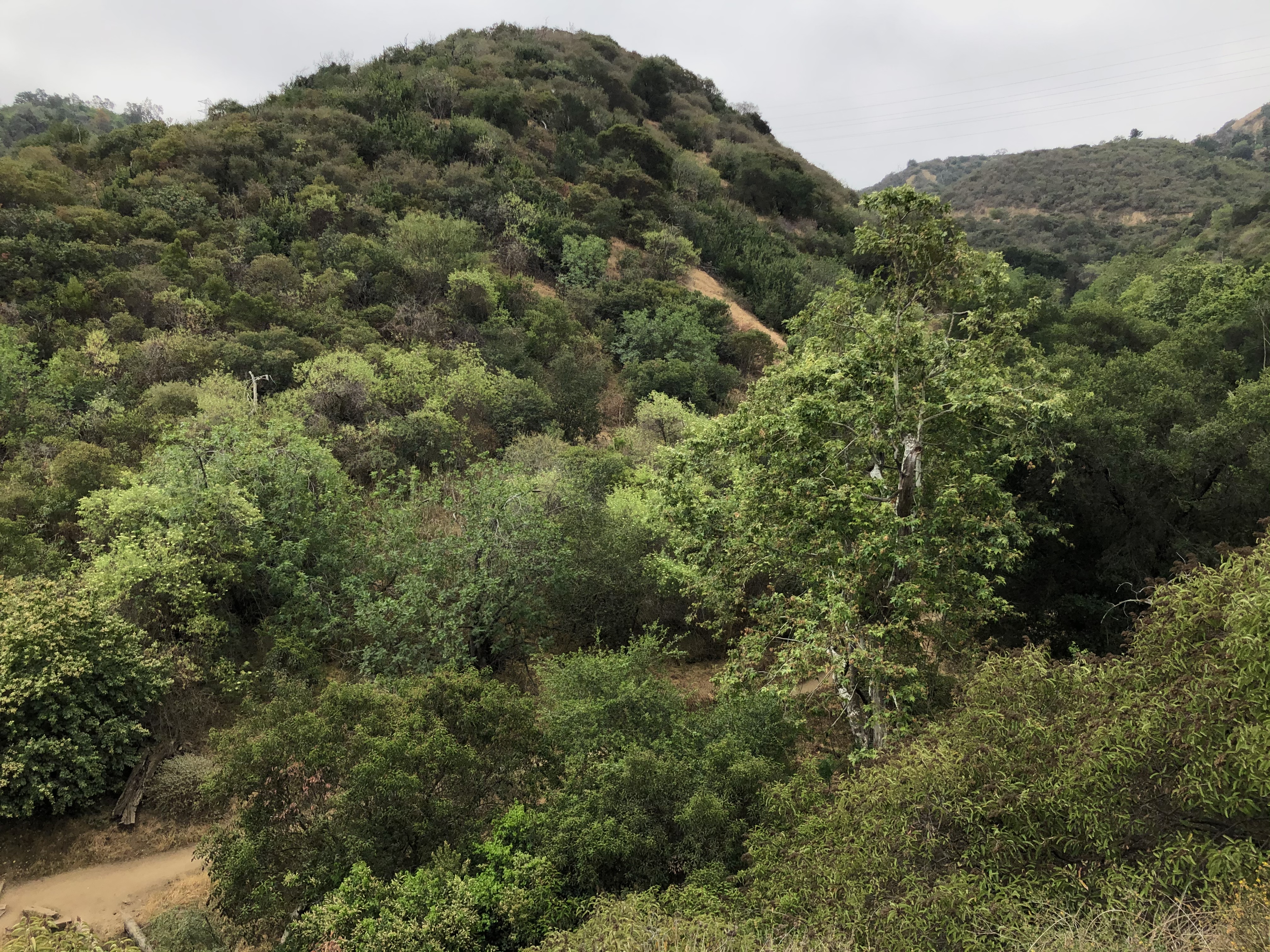
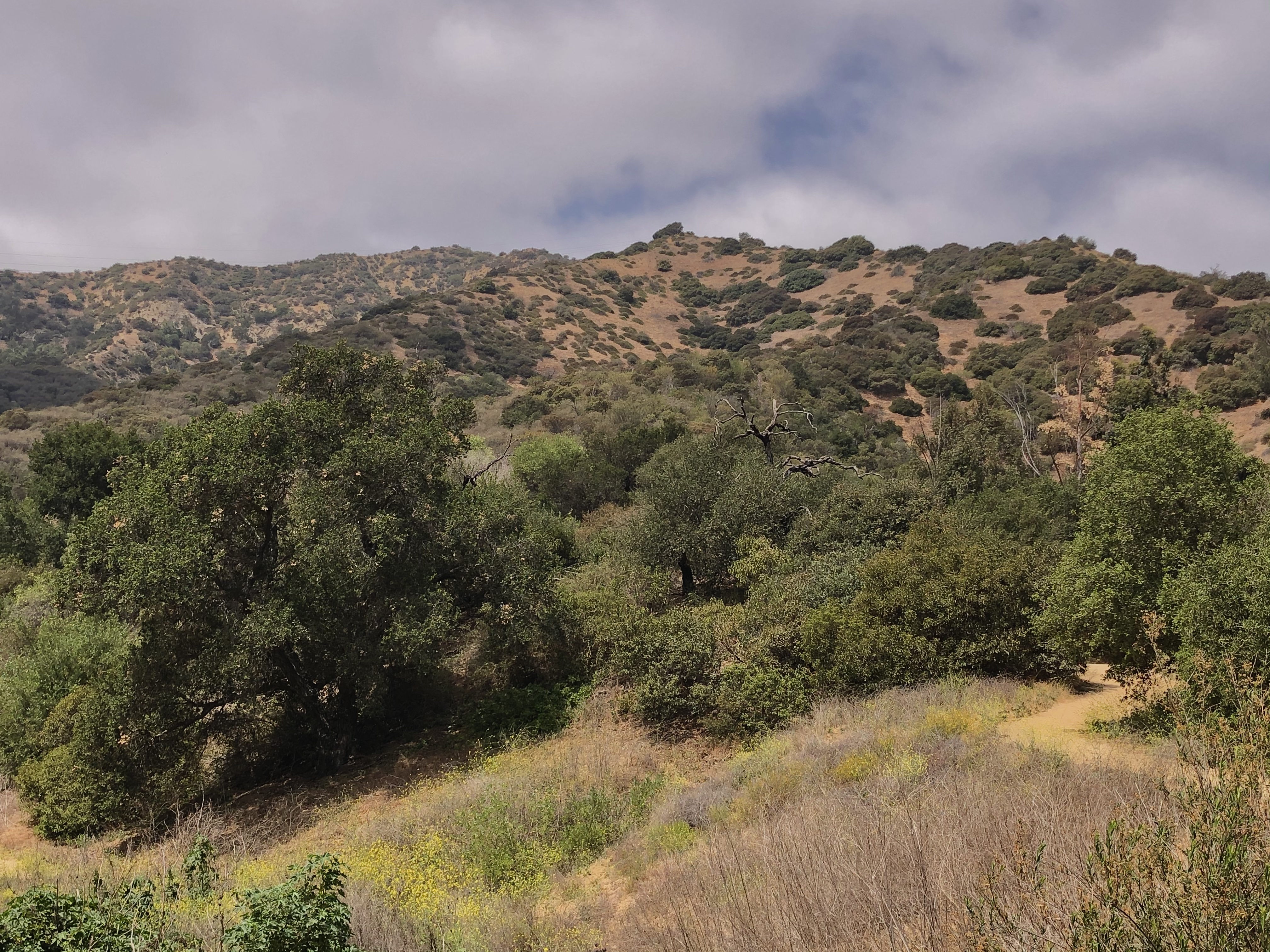
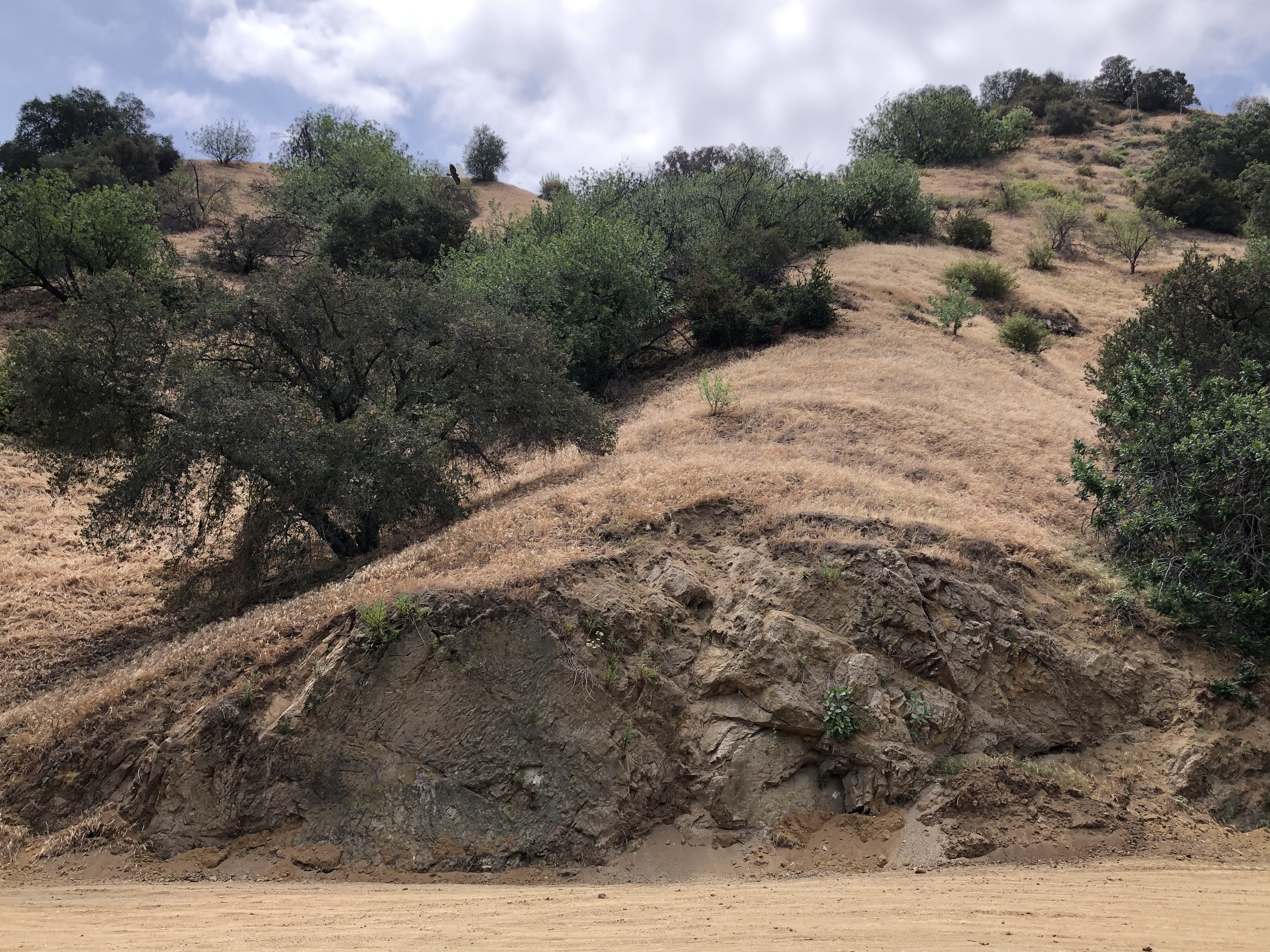
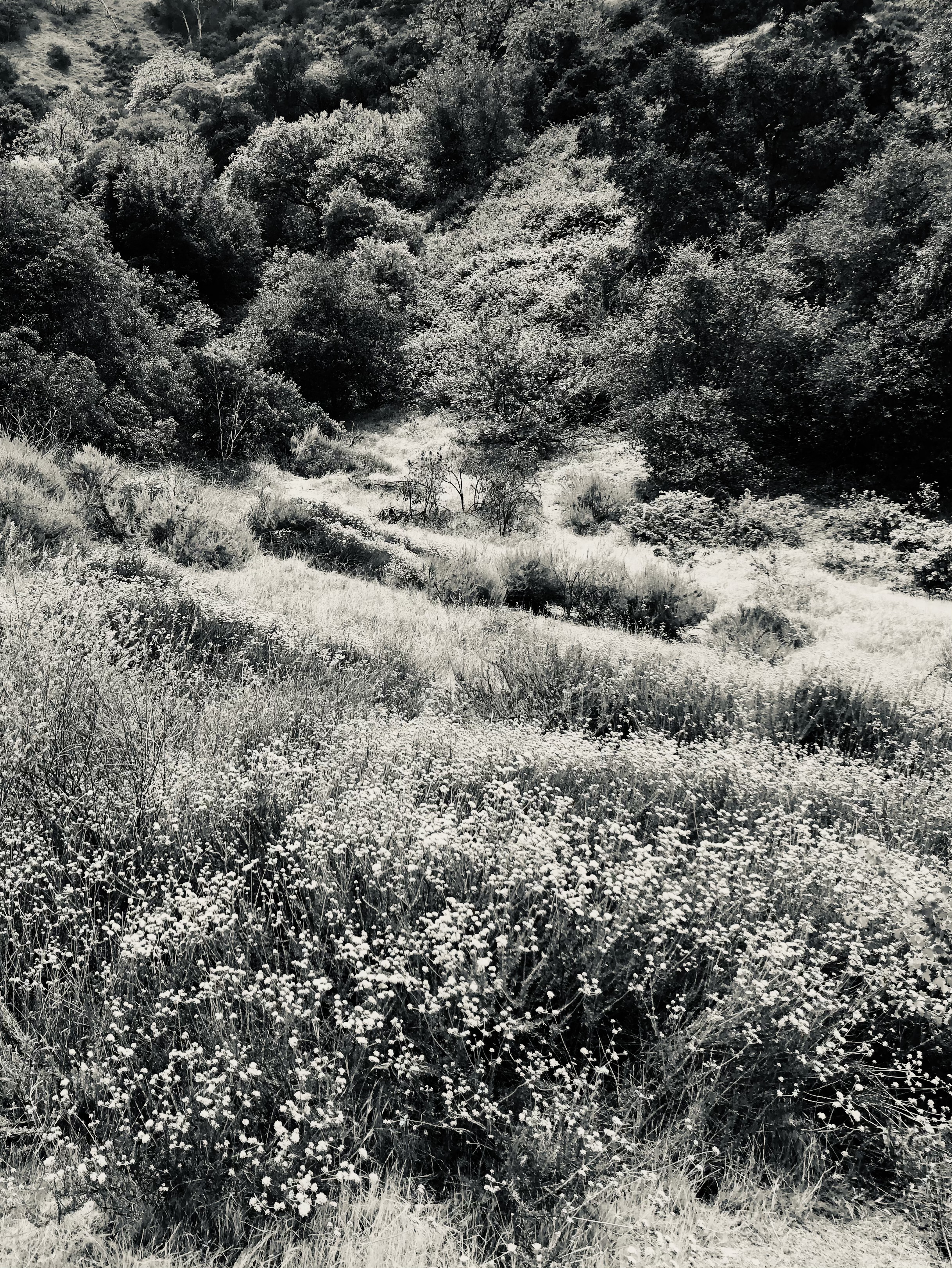
“The Transformation of Lopez Canyon” is an ongoing story that gives me hope for all of Southern California. If this abused, misunderstood sand-trap of hills can spring back from fires and floods and pollution and launch a mighty Superbloom of rare, even endangered species, as Lopez did in May-June of 2020, any place can. The CFP is robust and fit and apt and beguiling, and eager to steal your heart with water-sparing beauty and butterflies year-round, California, if you just let the dumb Connecticut-green lawn aesthetic die already. Of course, Lopez Canyon is also where I realized the Sylmar Hills were remnants of ancient mud volcanoes. This amazing revelation prompted the View to propose “San Fernando Valley National Geologic Monument,” (which is still an awesome idea) and led to a good survey of the rocks and rills round the rim.

I’m really sad to have to leave off “Van Nuys – A Viewing” in the middle. The story tells of how Isaac N. Van Nuys, one of the greatest wheat farmers and agricultural developers in California history, was descended from Dutch wheat farmers who settled in New Netherland in 1651. The story winds around to Brooklyn and New Jersey and to the Genesee Valley of upstate New York — each place, in its day, the center of a wheat-farming bonanza belt. The Van Nuys family story was revealed as a central thread in a much bigger story, that of the Anglo-Dutch commodity wheat culture of the former New Netherland counties. This family-based, small-freeholder, mercantile farming model was the economic and cultural template of settlement of the middle colonies, and it emerged from the English conquest of New Netherland. Wheat agriculture was carefully implanted along with religious freedom, when neither wheat nor free thought was flourishing elsewhere. Eventually, it was the norm that prevailed across the American frontier and drew in millions of immigrant homesteaders eager to copy it. But just as the riled heartland of sober, small-farming, reformed-religious Prairie Populists seemed ready to rise to national power under Wm. Jennings Bryan, the price of wheat collapsed, and the whole family-farm commodity wheat culture retreated. The rush of farm-leavers from rural counties fed the teeming cities. Part of the reason wheat went bust in Kansas and Missouri and Oklahoma, was that one Isaac Van Nuys had athsma, and got the jump on the prairie homesteaders by moving clear out to California. By the 1880s Van Nuys was shipping huge cargoes of Pacific wheat to the grain market at Liverpool, and that encouraged other Californians to go big in wheat. Thus, one of the descendants of the original Van Nuys. who helped found family-farm wheat culture, was so successful he helped strangle it as a settlement pattern. When Ike Van Nuys sold off his massive Valley holdings to developers in 1911, the hay-day of America’s Anglo-Dutch freethinking commodity wheat agriculture was over; exemplified when hundreds of thousands of displaced and dispossessed Okie farmers arrived in the Valley for one last chance at land, and found LA instead. I regret I didn’t get to finish this story of family farms, religious freedom and progressive ideals; but it helped build America, and the future is full of time.

Thank you for following the Valley Village View. If anyone stumbles in here after this, I hope they will find working links and hashtags. I hope the site will still be useful and beautiful for you. I hope it encourages understanding of the phenomenally rich culture of Los Angeles. I hope the photography, especially of the native landscapes, inspires visions of the vast renewal that is waiting for us, could we only learn to give this remarkable land our attention, love and respect.

The Sunkist Building, Sherman Oaks

Fans of LA architecture, as of LA geology, must kneel to a brutal truth: here today, gone tomorrow. Please appreciate the former Sunkist Growers’ Headquarters Building (1969; A.C. Martin and Assoc., arch.), while ye may. She will never again be a prominent landmark, since the parking lots that surround the building are being developed into a massive new mall.

Mid-November; an underground parking lot is being made out of the old loading dock. (A good idea. A much better idea would have been to ban cars from the campus entirely and use that portal for transit to give the development a “Sunkist Station”stop. Na ga happen.

Strange But False: Despite the anecdotes, the Sunkist Building wasn’t meant to look like an orange crate, or a wine crate, or even a milk crate. It seems the design was purely an economical way to house and park xxx workers in x,xxx square feet. It’s also not true that Sunkist wanted to be near the Valley orange groves, or to honor the rich fruit-packing history of Van Nuys. The groves and packers by 1969 were already mostly gone, and the site was selected because it was cheap empty suburban land near a new freeway. Finally false, and for the same reasons, is the idea that when Sunkist abandoned this site for their new HQ in Valencia, they were following the orange growers, or honoring the namesake LA citrus variety that made their fortune. Nobody in the organization apparently gave a thought to Valenicia, the city, as related to its product. (Sunkist is a corporation, even if it was founded by farmers.)

Below: Dec. 2019. This was after Sunkist had moved out, but the building was still intact with the original plantings.

Brutalism, that ghastly concrete corporate 1960’s-1980’s mistake, was mellowed here by an elegant and austere classicism. That drawn-in waist; she courts the eye with that Grecian bend. In the 1970s, when Sunkist Building was a landmark visible from the freeway, it subtly “matched” the craggy white slate hills of Sherman Oaks. (Thought I doubt that fitting in with local geology was intentional.)

At any rate, it seems they intend to keep the building and its courtyard as the center for the mall. A noble choice for this lovely site.

The Threatened Swan

VAN NUYS A VIEWING PART 7 Continuing View of the American experience of wheat farmer Aucke Jansen van Nuys, immigrant ancestor of the Valley’s wheat farmer Isaac Van Nuys…

New Netherland, Old Netherland, Old York, New York 1654-1664 the pivotal decade

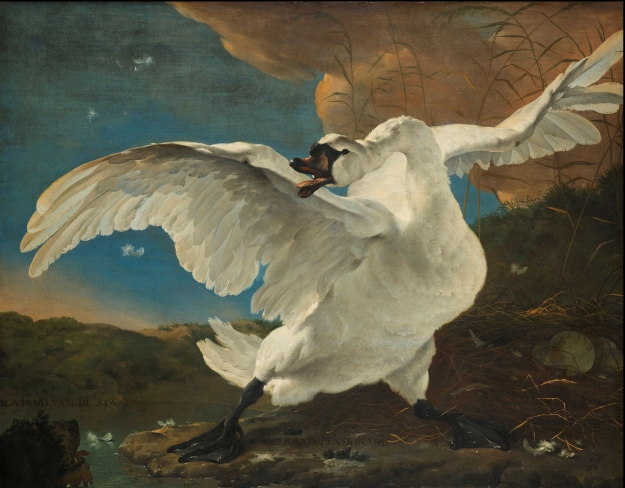
The Threatened Swan, by Jan Asselijn, 1650

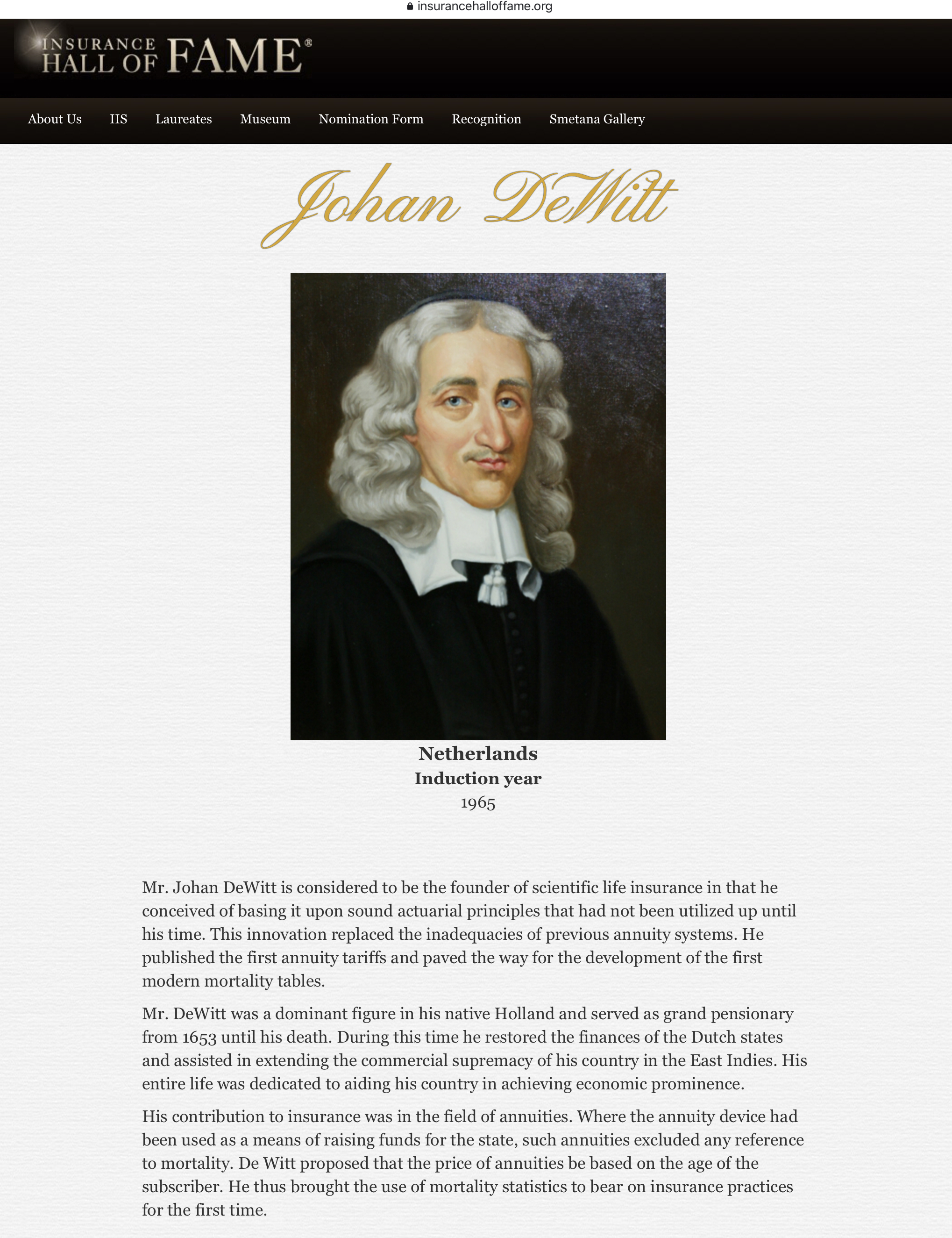
This famous image was for years erroneously analyzed as an allegory. Decades after it was painted, a nostalgic old-timer had graffitied the canvas with captions for the dog: ”Enemy of the State” and for the egg: ”Holland” and for the noble swan, ”The Grand Pensionary.” Ever since, people assumed it was meant as a political fable, depicting the heroism of the Grand Pensionary of Holland, Johann De Witt, who fended off Monarchy when he led the republican oligarchy in the States General from 1652.

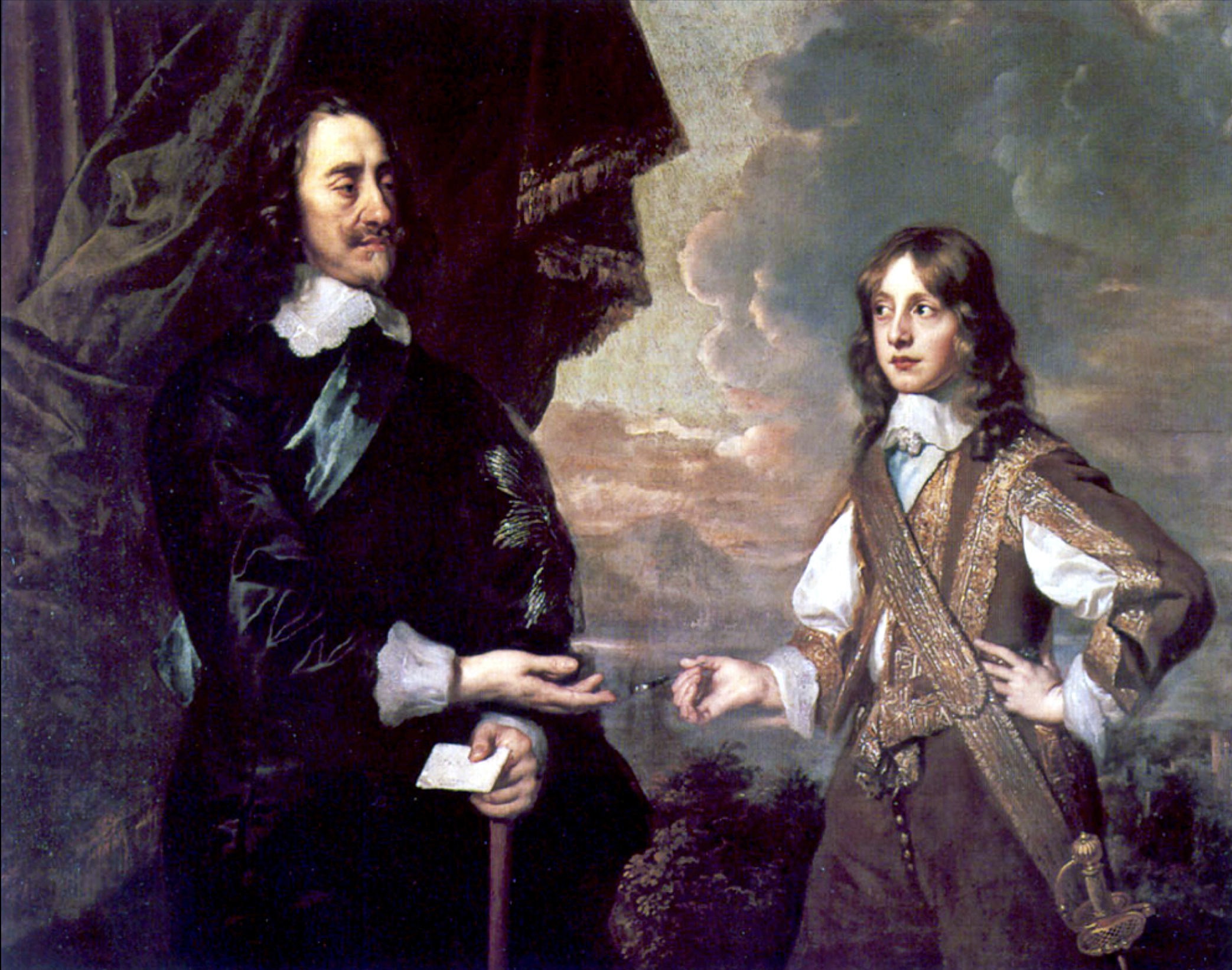
With his officious brother Cornelis, De Witt led the ”True Freedom” party or machine or cabal. They passed laws limiting the traditional powers of the House of Orange, popular defenders of de Kerk and military guardians of The Garden of Holland. De Witt forced through laws in the name of Republicanism (not democracy) that decreed no member of the Orange-Nassau dynasty could be appointed as stadholder of any province. Bizarrely, Amsterdam’s anti-monarchical program was driven by a secret treaty that Cromwell had forced upon the Dutch in 1654: Cromwell, one mafioso dealing with De Witt, another, foresaw a time when a combined Dutch-English force under a popular Protestant Orange, would end Parliamentary Supremacy in both countries, and bring back monarchy. At bottom: the current Prince, a boy of 4, was half-Stuart, and the English court-in-exile was holed up in Het Mauritshuis. De Witt’s role, the price of peace, was to keep Orange, and his relatives the other popular Princes and Counts, and their guests the Stuarts Charles and James, out of Dutch civilian politics forever. The power of the De Witts lasted 20 years, until the Disaster Year — the Rampjaar 1672 – when the silver swans met their fates in the street, amid desperate shouts of ”up the Orange!” …..more anon.

But it turns out, Asselijn painted it in 1650, when De Witt was green in politics and merely a geeky theoretical mathematician, busy inventing numerical alchemy, e.g., actuarial insurance. So the Swan is innocent of politics. Still, Patient Reader, consider the graffiti artist didn’t caption the dogThe Prince of Orange,” who actually (and brutally) deposed De Witt. The tagger instead invites us to identify, in the Light of Experience, in our own consciences, just what are the true enemies of any peoples’ state? Oh, sure, alphabetically? Everything from apathy to zeal… Maybe our own Dutch hero stuck his thumb in it: Fear Itself is the only real enemy.That’s what Asselijn’s swan is trumpeting too, no allegory about that.
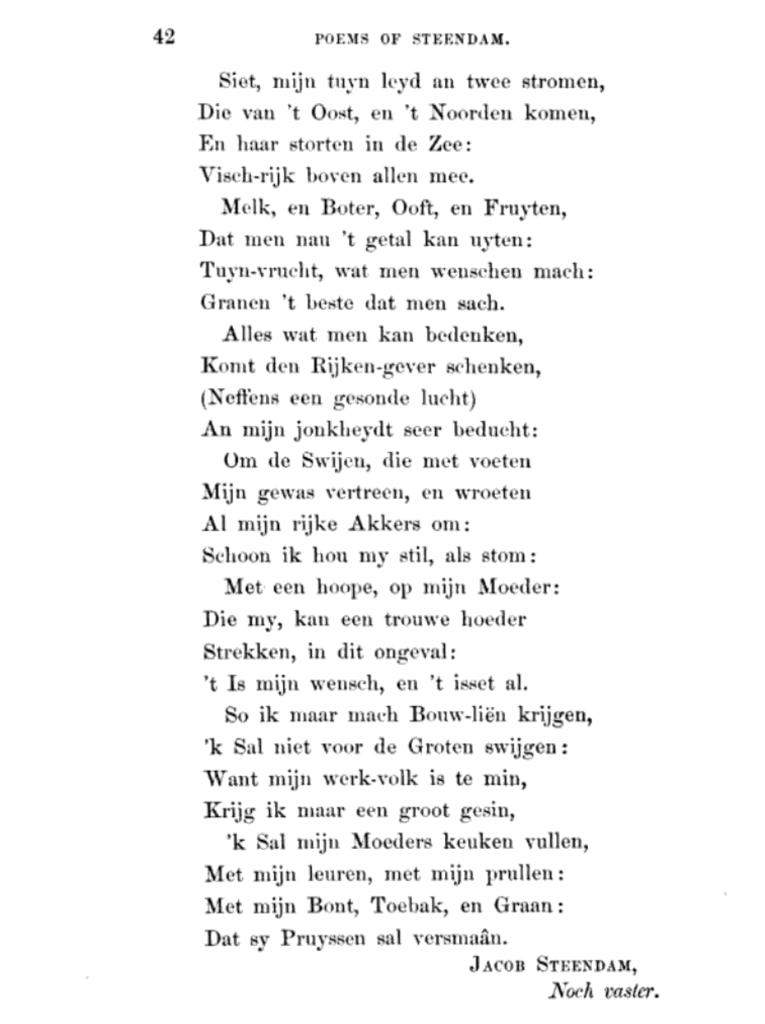
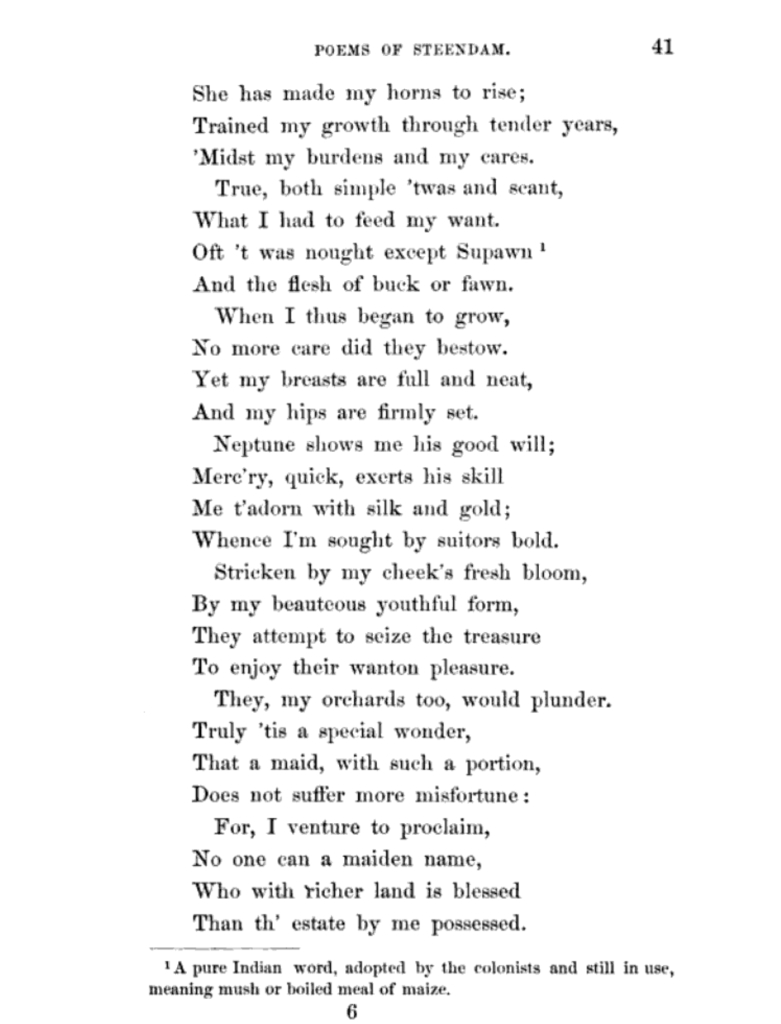
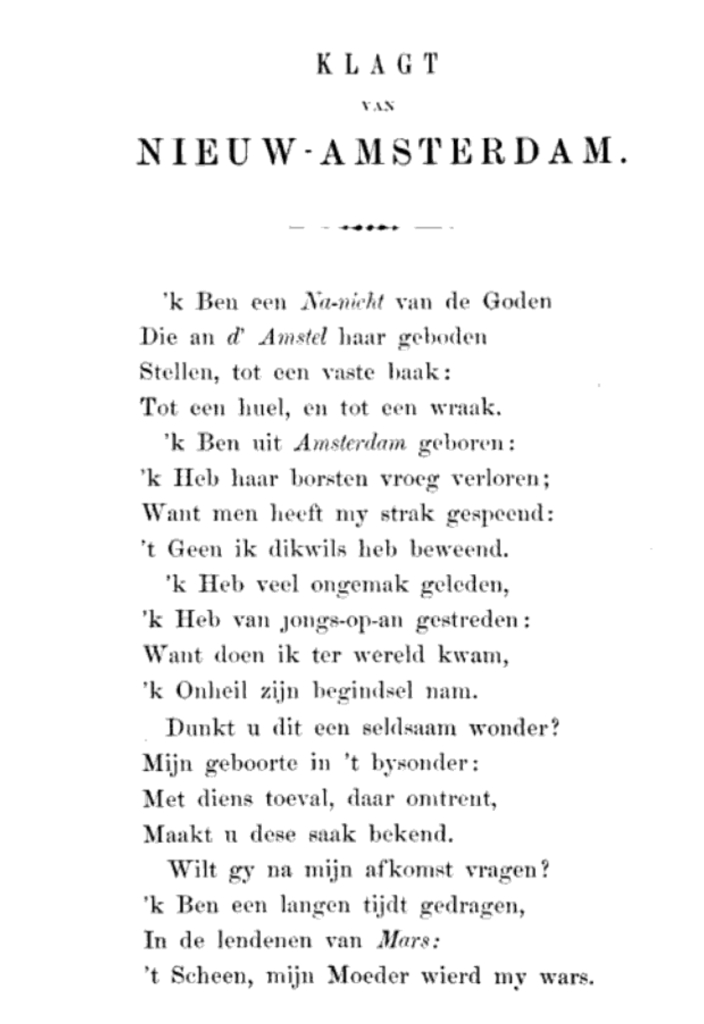
Jacob Steendam, Aucke’s land partner, was one of many local and vocal critics of the WIC; in 1659 he had published and circulated in Mother Amsterdam, the cries of her helpless daughter:

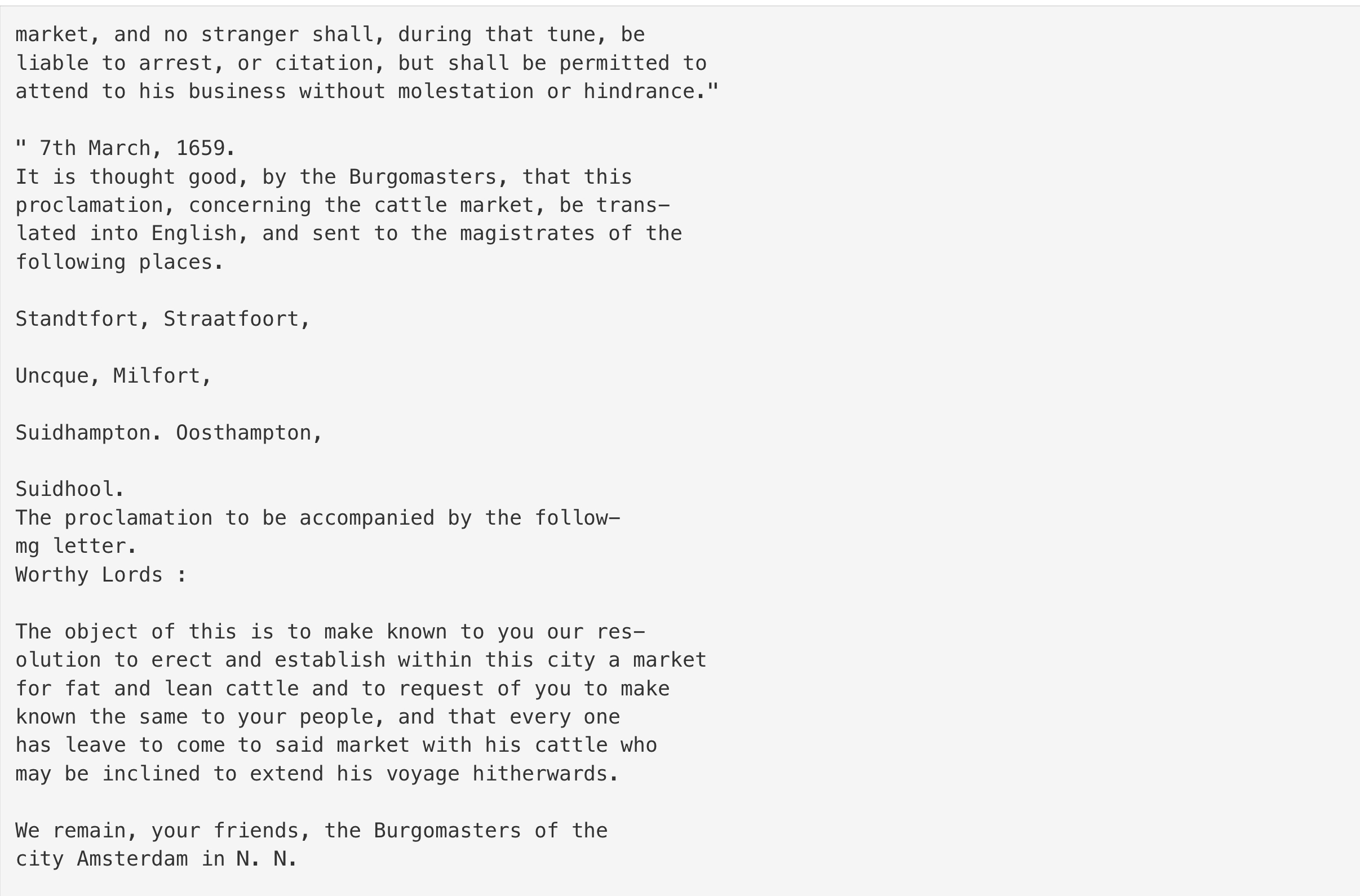
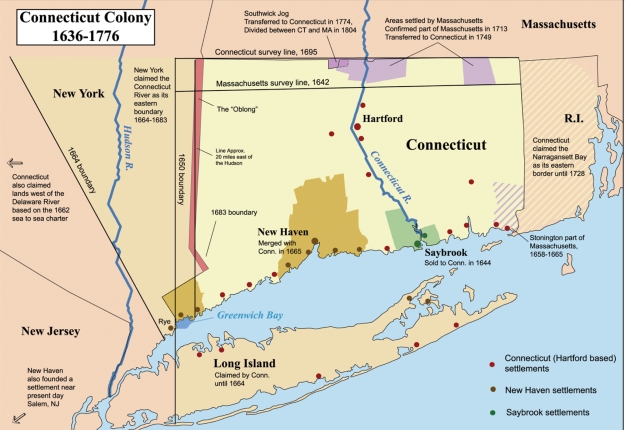
Stuyvesant’s plan for ”breadbasket Long Island” was remarkably successful, on the whole, but it was too slow to achieve its real goal — that is, to make New Netherland permanently dominant in its territory. The onslaught of English settlers, Puritans but others with crazy religions, continued to encroach on the Delaware, in New Jersey and in Connecticut. On the other hand, he favored many other colonies of English, hoping they would be the free-spending marks shoppers thronging his new Farmer’s Market.

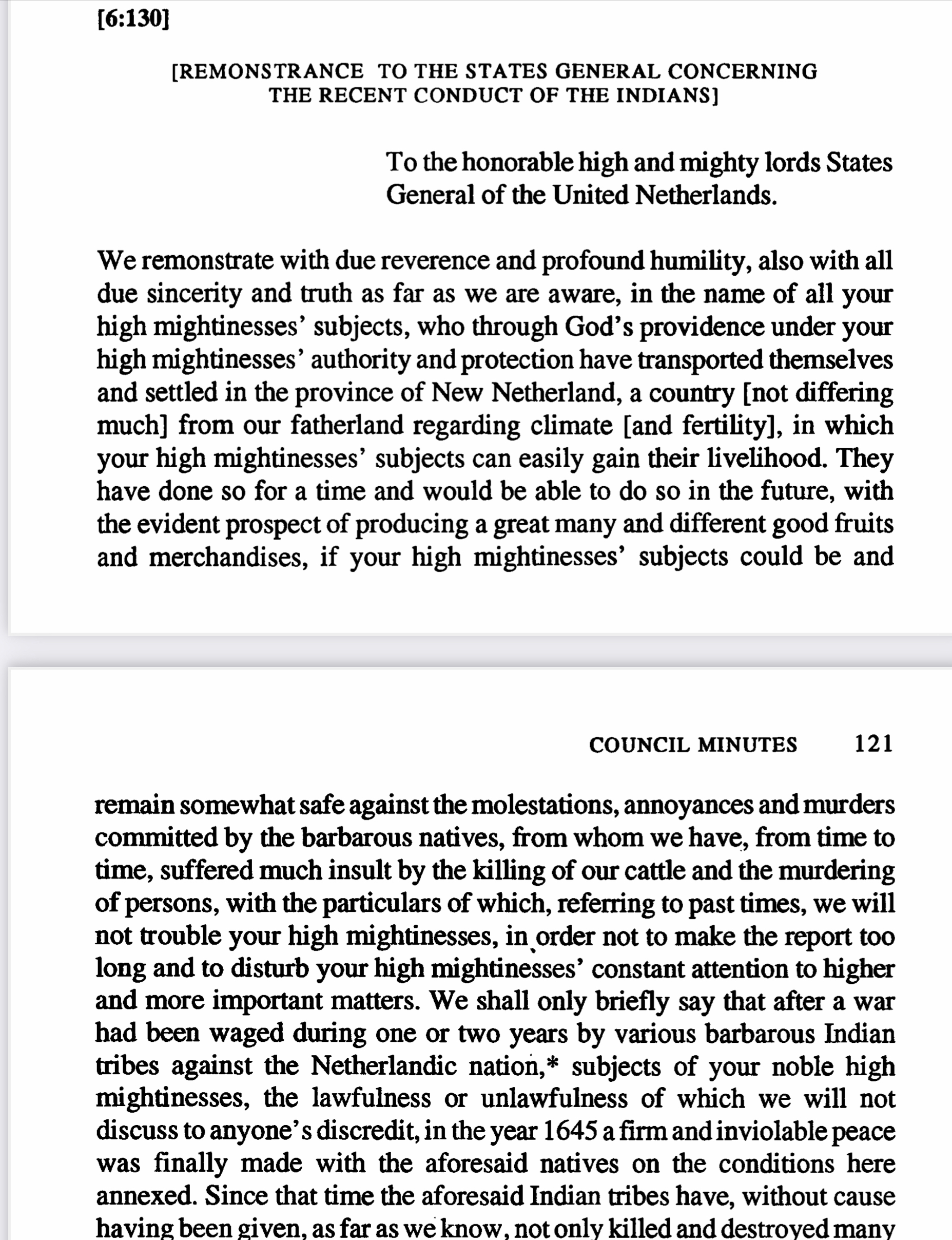
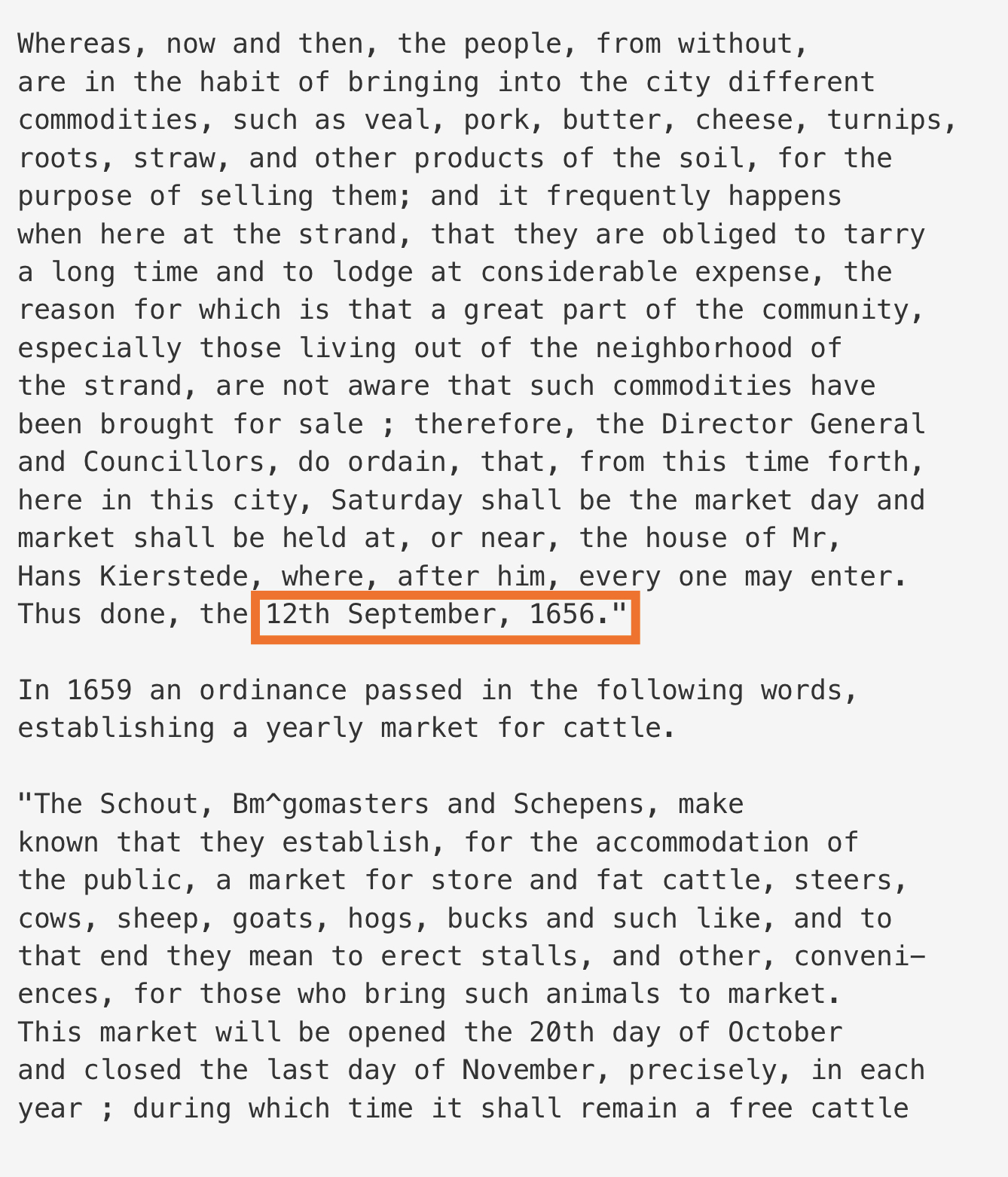
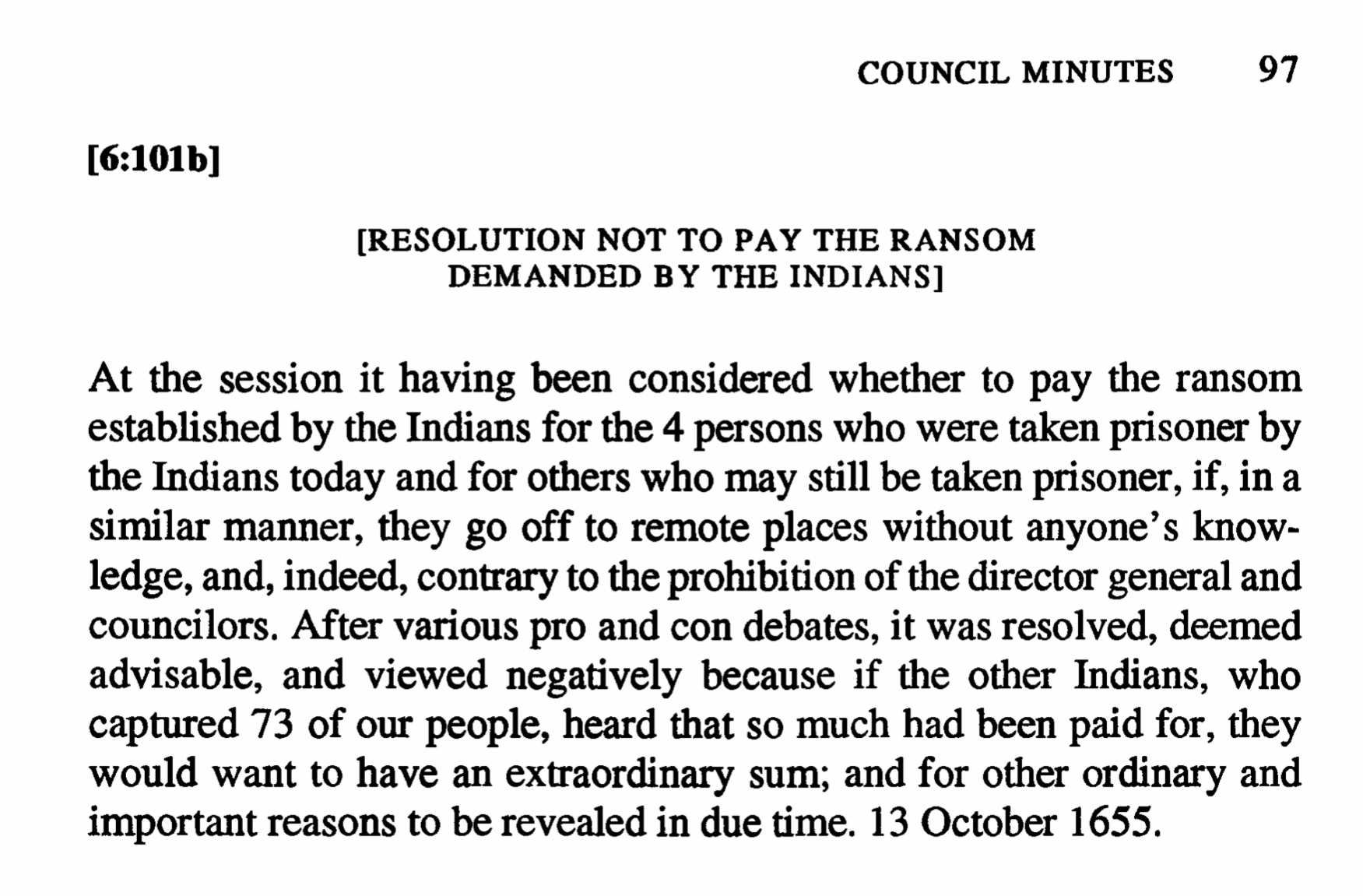
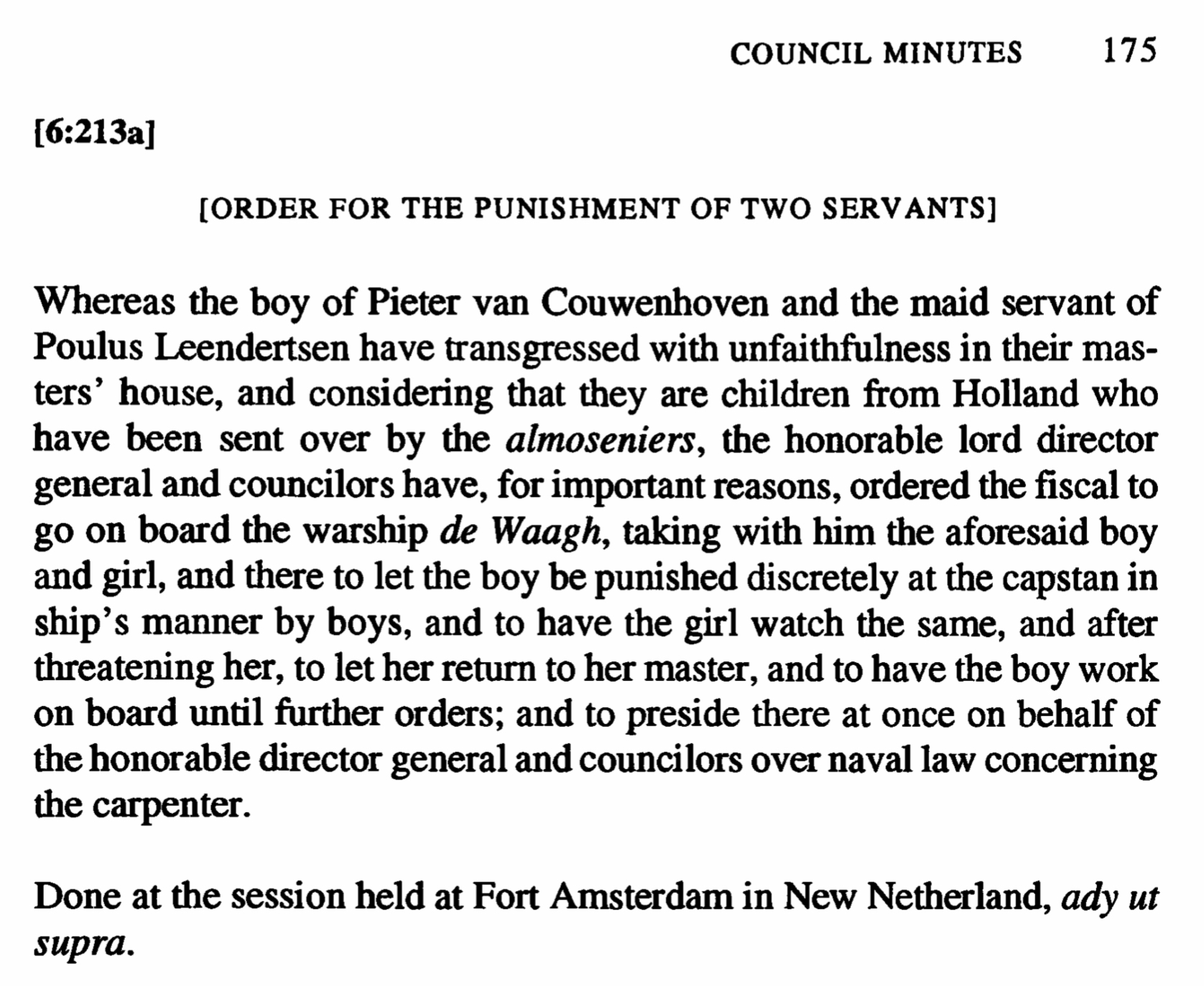
Internally, there was the horrifying violence of the Peach Tree War. This was a Raritan reprisal on the Dutch in 1655, prompted when the Company fiscal, van Dyke, went out of a sparkling morning to scratch on his stoep, and spied a little Raritan girl in his garden. She had been drawn by the luscious peaches on his tree; naughtily, she slipped over his swine-trampled fence to pick one. Of course he shot her dead over the stolen peach. During the general Indian conflagration that resulted, the Rockaway tribe — clients to Mohawks — wiped out the Keskachauge, and demanded Stuyvesant re-negotiate the land sales Great Sachem Penhawitz had made. They claimed the patents were extinguished. At first Stuyvesant haughtily refused it as ”protection” money; but he was embarrassed into paying and reporting it when Midwout neighbor Jan Snedeker shouted publicly that it was his land (and Aucke’s) land the Indians were sore about:

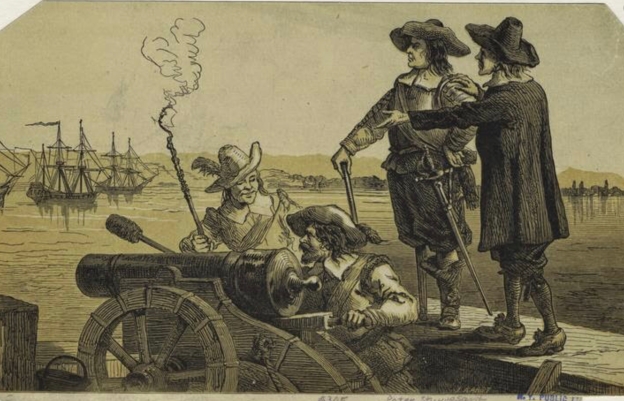
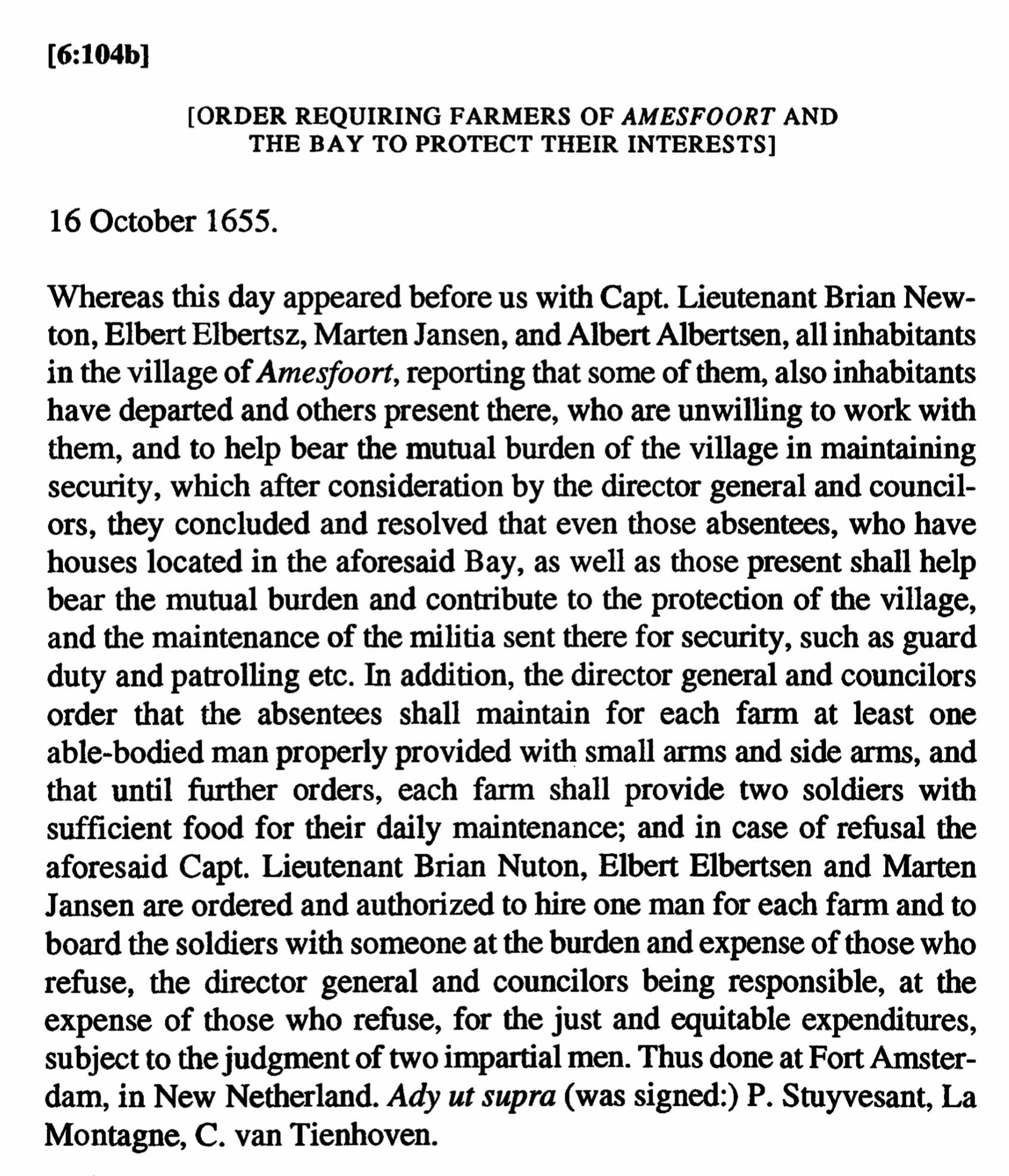
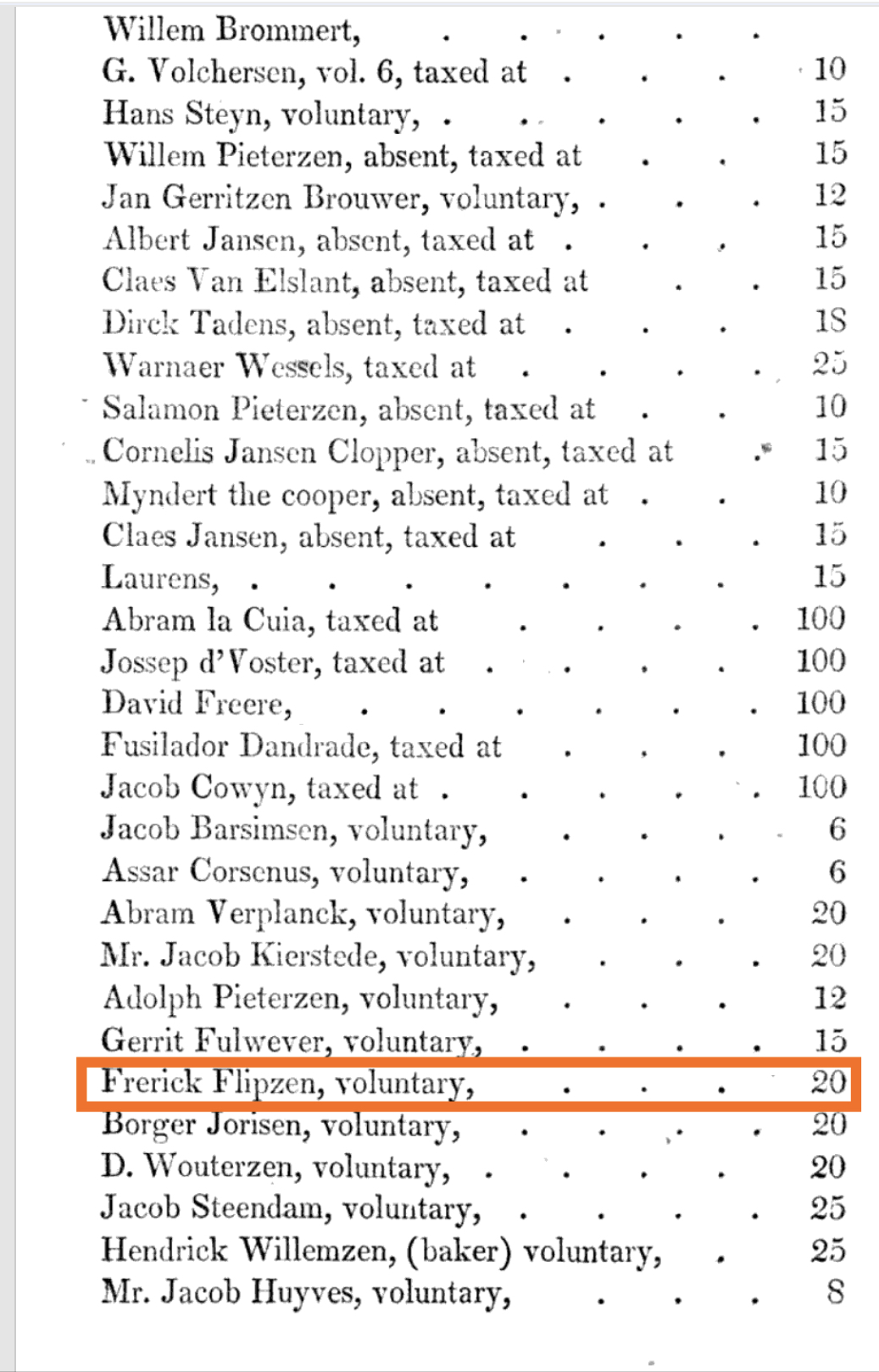
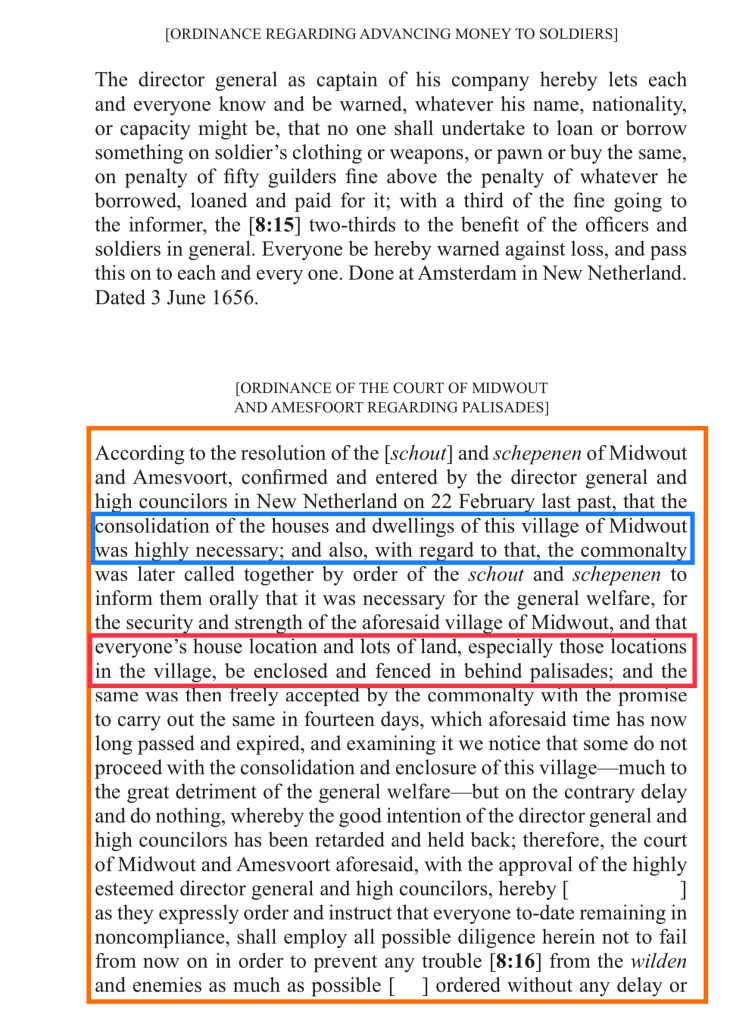
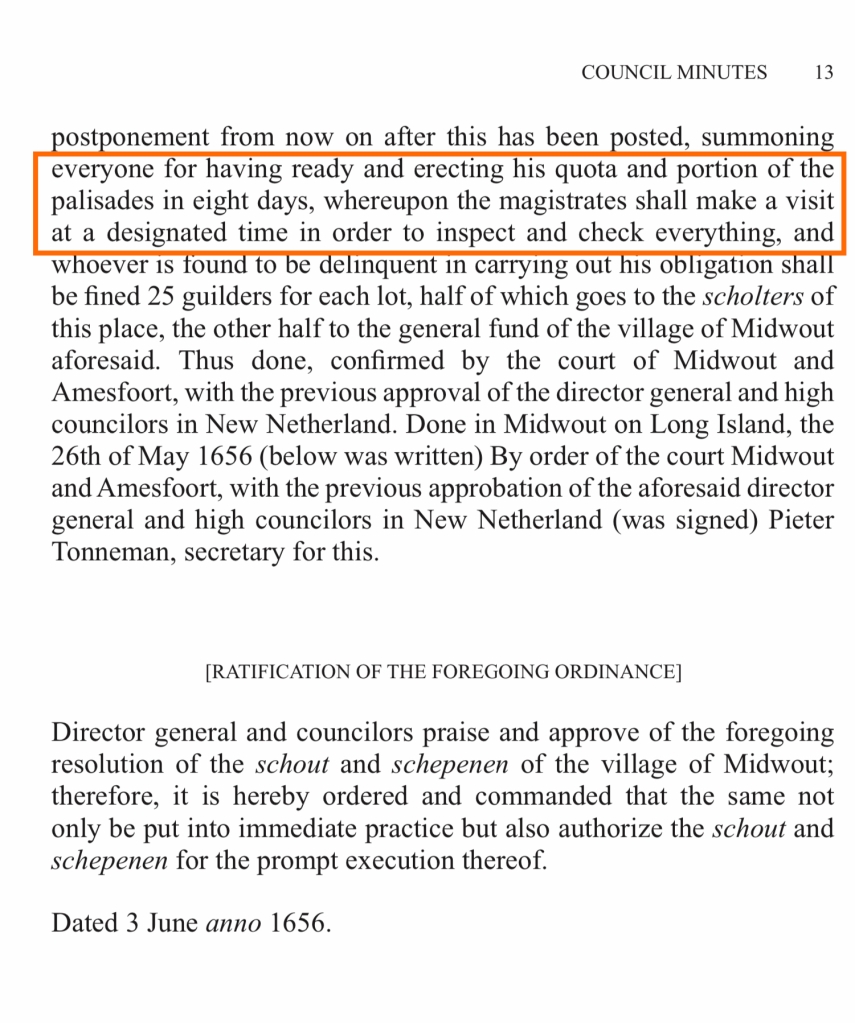
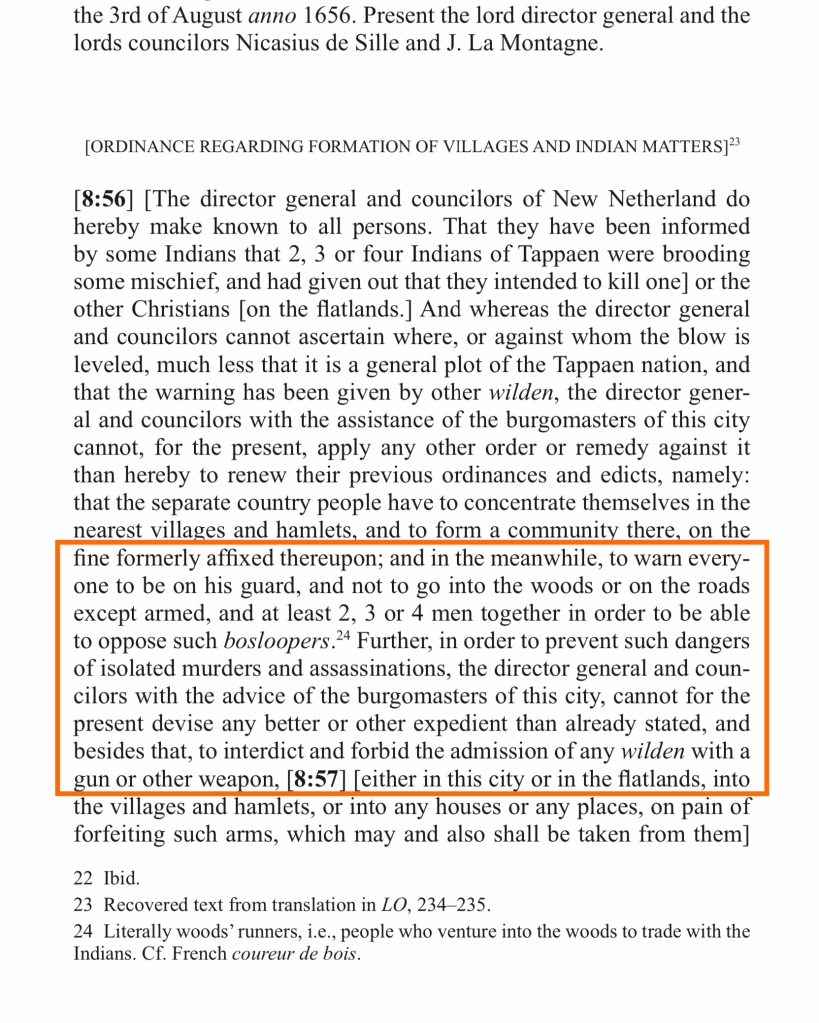
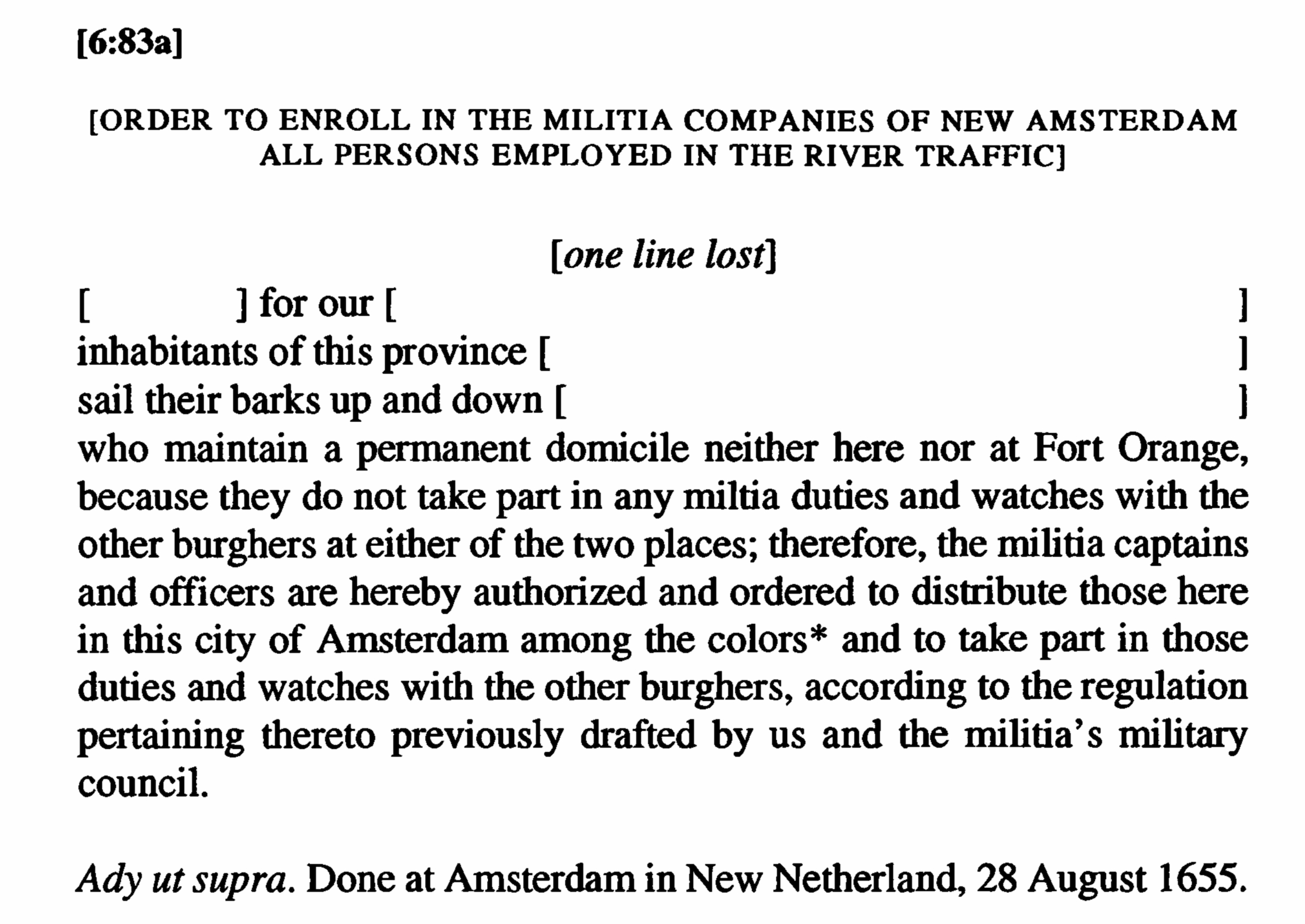
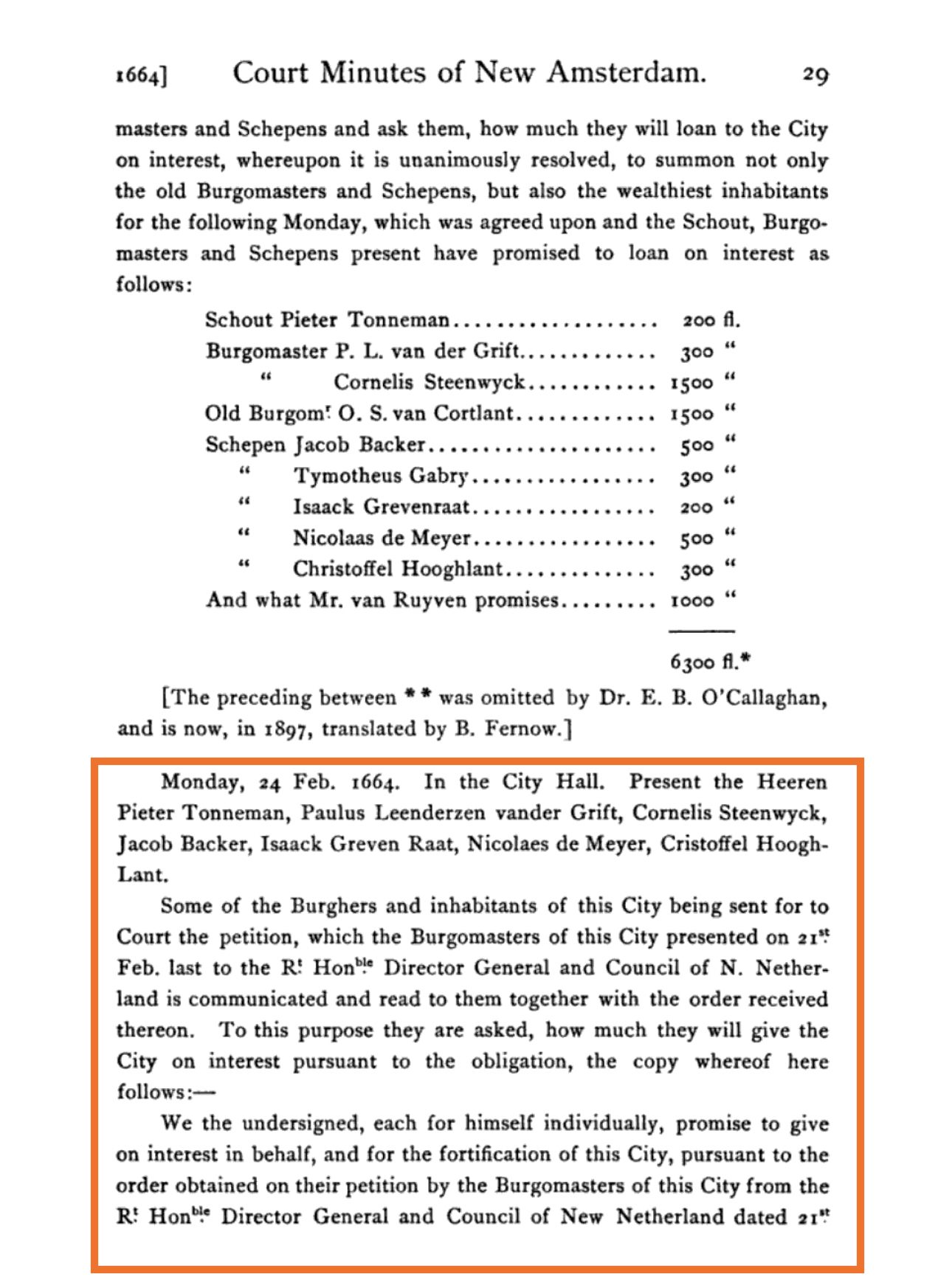
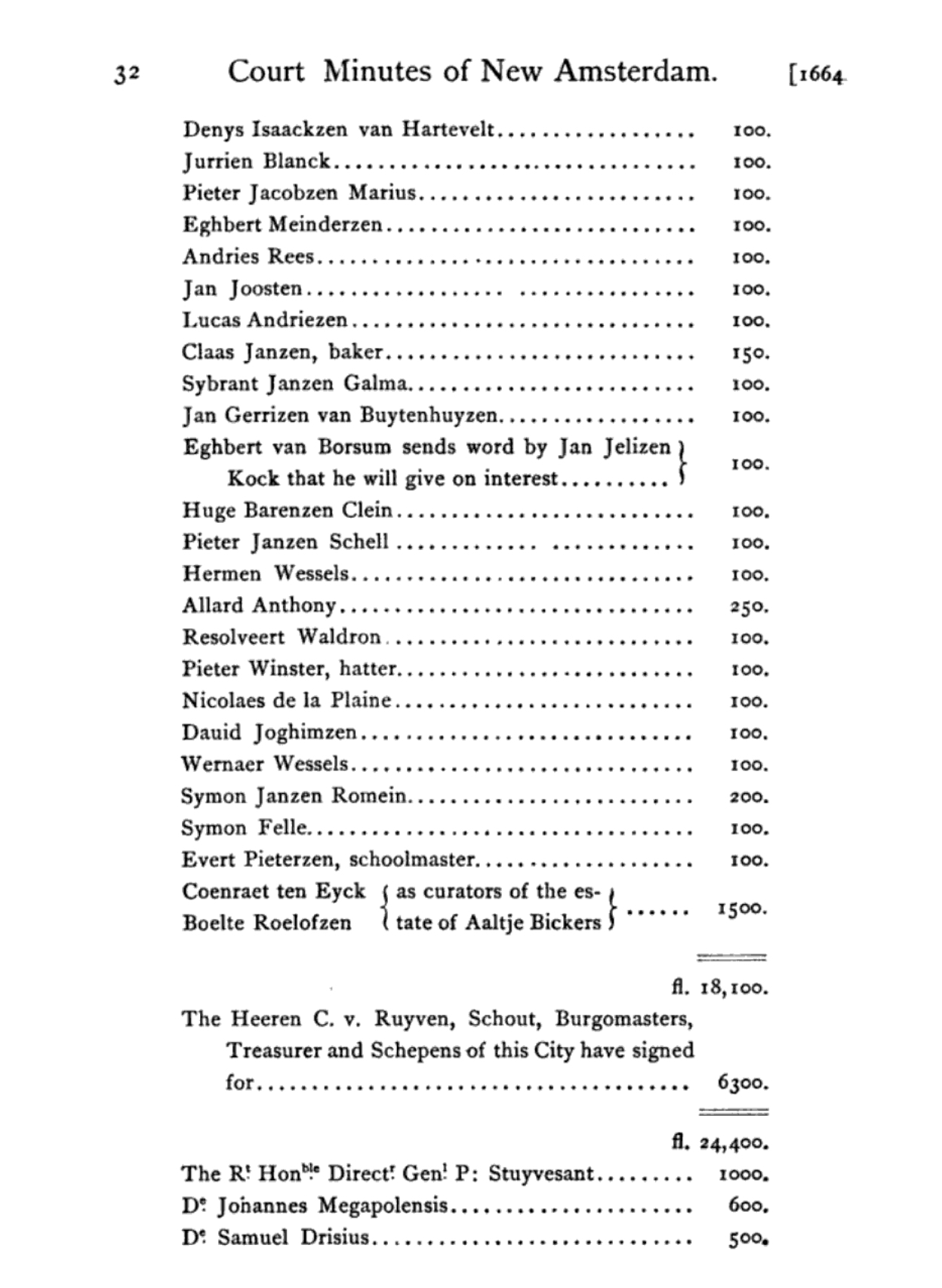
To shore up defences against the English as well as the Indians, Midwout and all the towns were to be stockaded and militia-ed up, and Nightwatches set. Aucke Jansen was there, hammering, watching. Stuyvesant’s next challenge was silencing the burghers’, and WIC’s whines — ”how’s it going to be paid for?” — by telling them just how. First a new whip-around, for the constant Fort and Wall and palisade maintenance. Stuyvesant had the medieval law of the wijk, the modern de Stapel, on his side; merchants were traditionally responsible for defence contributions to the sovereign, in case the favored port were attacked. De Stapel, the Law of the Staple, was held in common across all the wijk-wereld. Now it prevailed, too, on Hudson’s River:

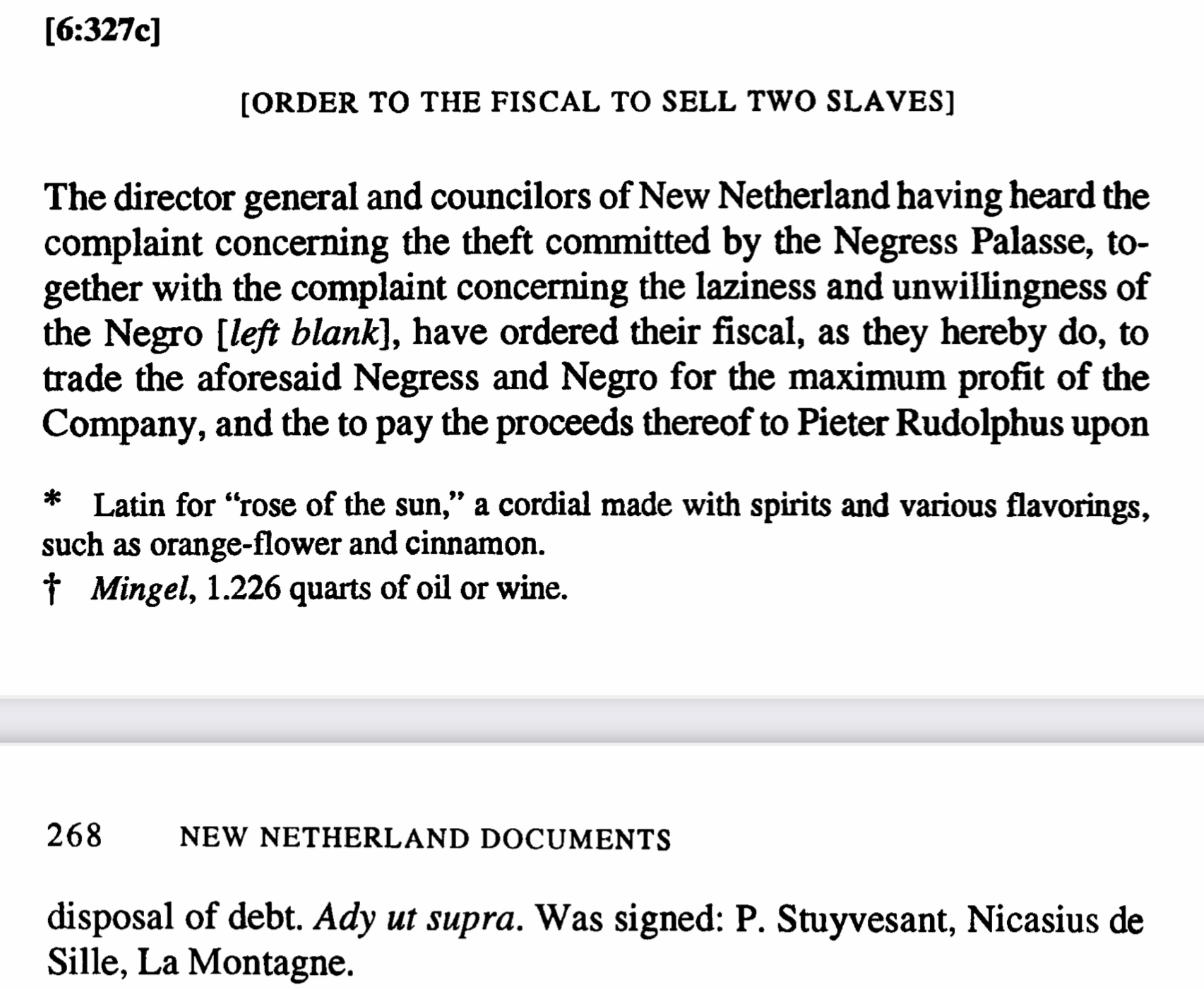
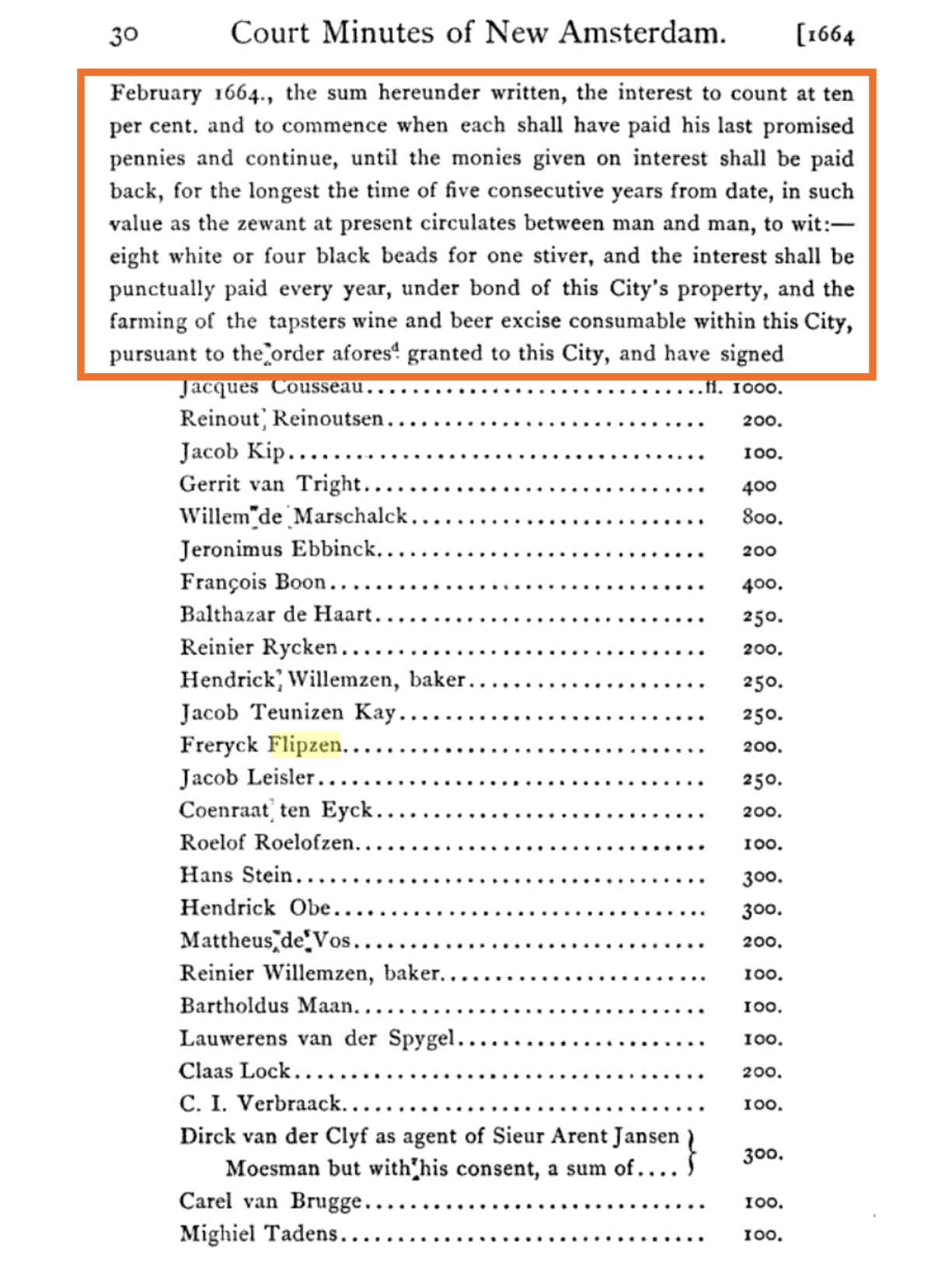
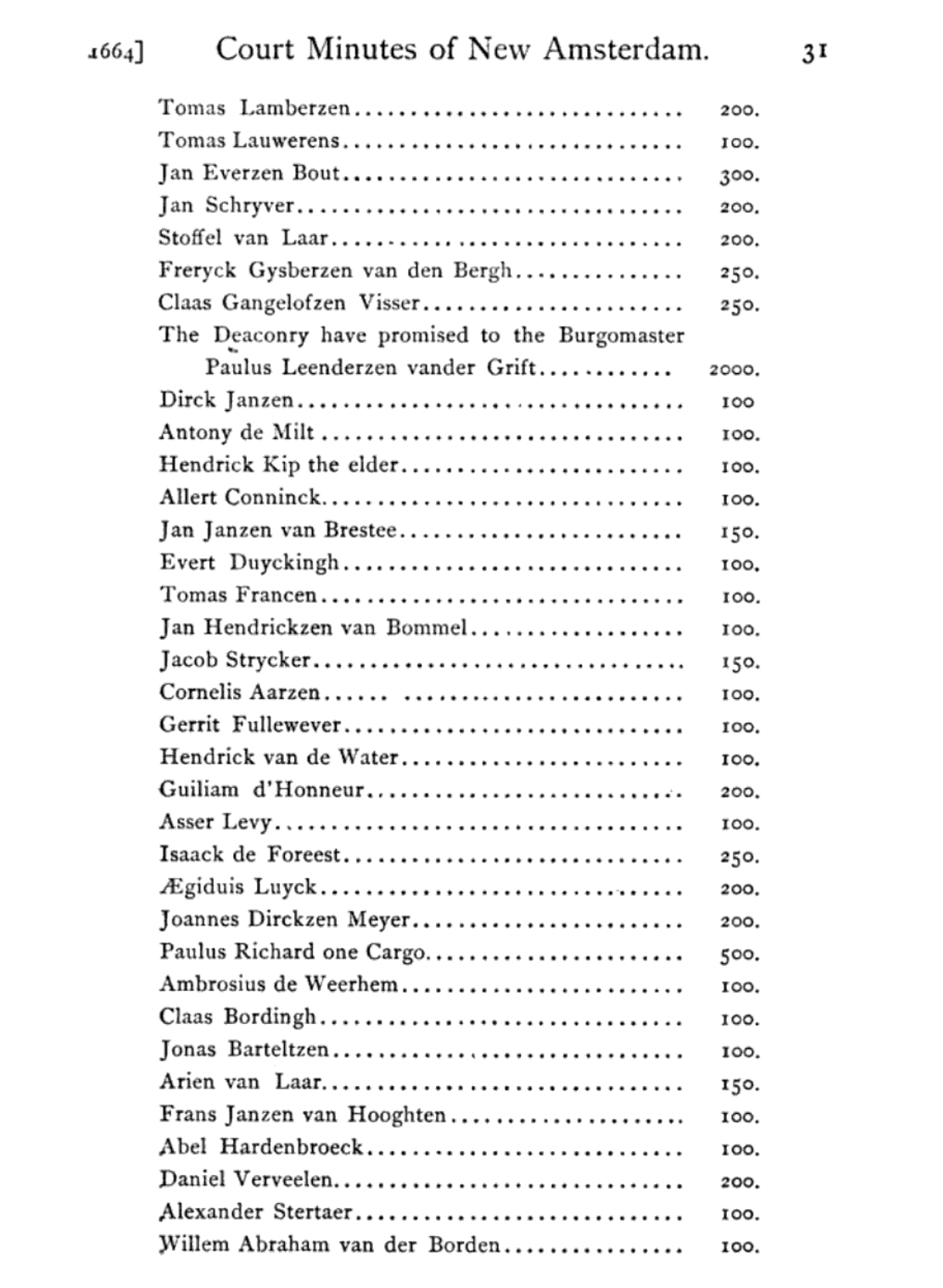
Above, note Aucke’s assessment. Note too, the voluntary offering of fat Freddie Flypzen, Aucken’s Midwout neighbor. He was another Company carpenter, and was certainly getting on in the New World to afford a double assessment. Of course he isn’t a family man, like Aucke; and anyway, building civilization isn’t a competition, is it? [Vlypzen may also have had a windfall from an interest in the cargo of Africans from the White Horse]. That Sybrant Jansen listed below Aucke must be Sybout Claesen, who was Aucke’s contracting partner (and relative?) on his various building projects (discussed in the previous post.) Gov. Upstate had to balance the demands of City Hall downstate (and downstairs) for revenues, with the nagging of his corporate board in Amsterdam for profits.

Aldus Spraakt Stuyvesant: In the face of tax revolt, cheating, inflation, and non-existence of other monies, a practical, anti-inflation feudal tax was levied: the quitrents and tithes were to be left standing in the field for collection, presumably by gangs of Company slaves. Thus wheat (and the other cereal grains, pro-rata) became officially legal tender; as well as pay; as well as pannekoeken. The Director-General still faced the fury of the people. He had to take the whip out several times. He even negotiated a tax-holiday for the first year of the levy, on behalf of the farmers. Still, some – even the Midwout schout – balked at having to pay anything at all.

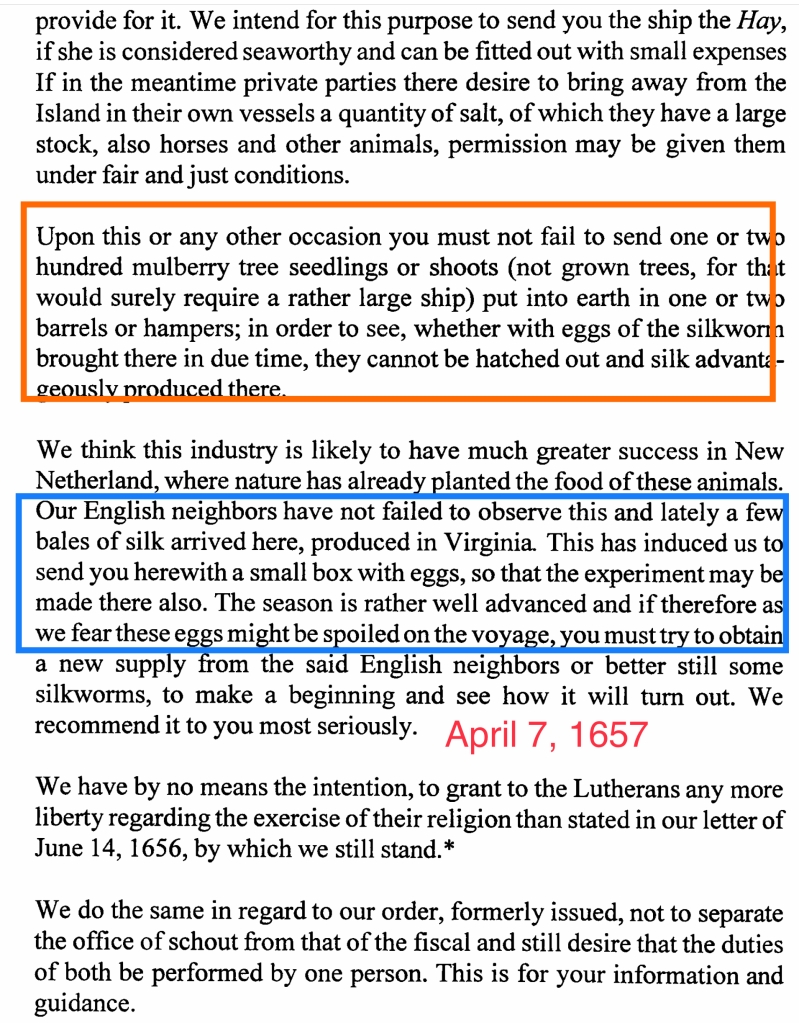
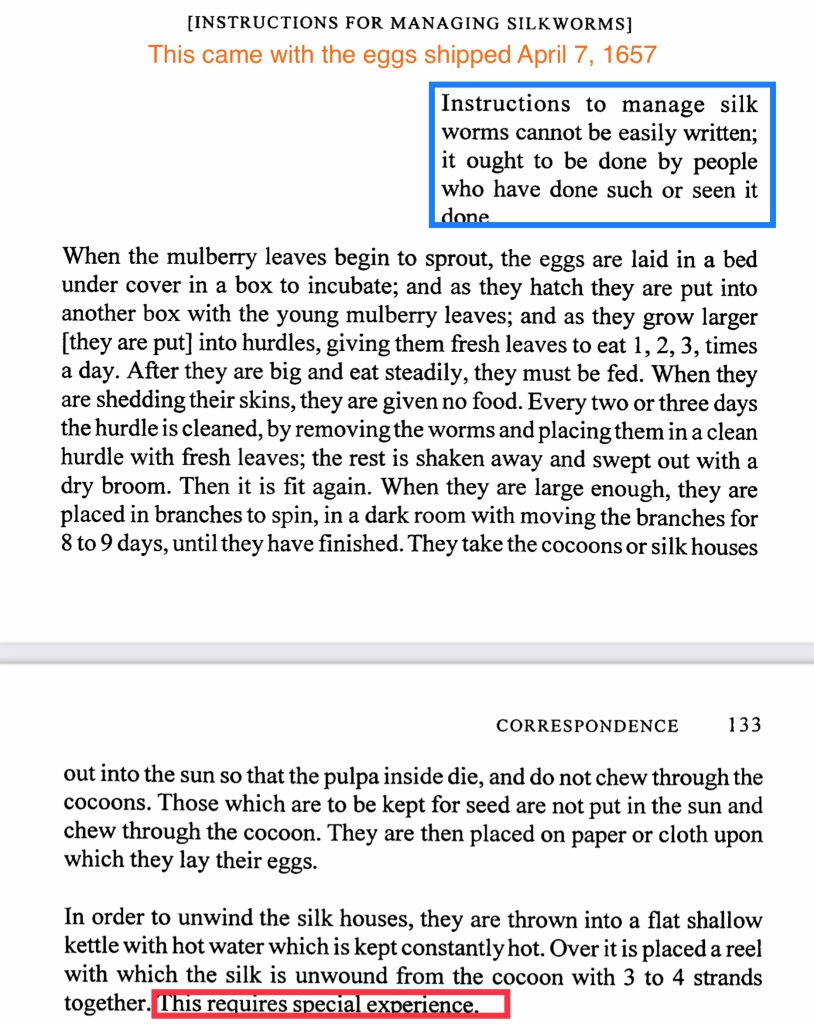
Eventually good grain cash flowed from the villages on those fecund prairies. It was not a big profit to the WIC, but individuals did quite well and the region’s economic course was set for two centuries of constant growth. Anyway it got the WIC off Stuyvesant’s back about his Max Bialystok bookkeeping. And where grain grows, so grows population; so grew Brooklyn. As we shall see, Stuyvesant’s success here implanted and nativized an agriculture that had an enormous effect on the history of the world. And I don’t mean silk.

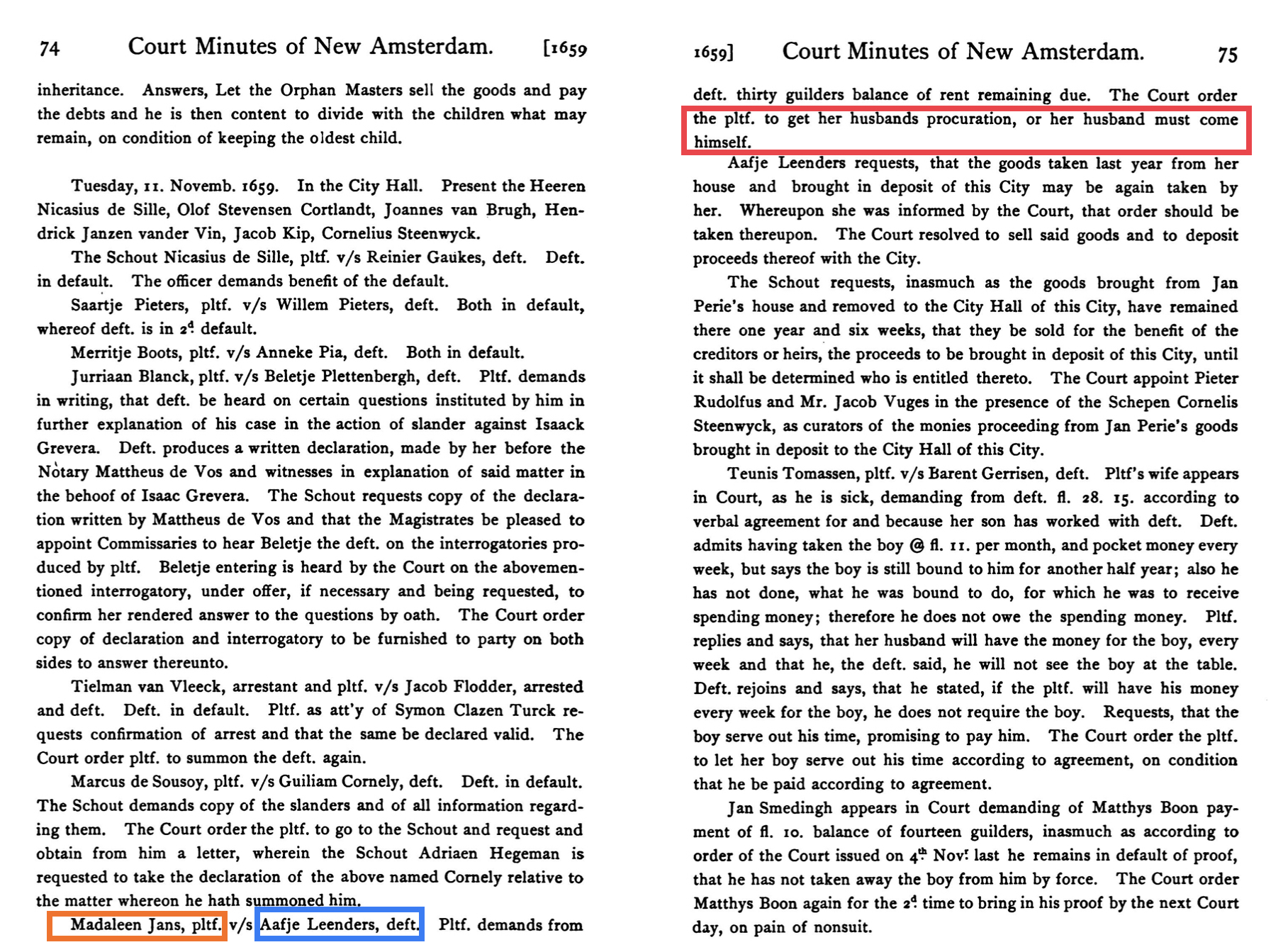
The last mention Of Magdaleen I found, was her 1659 attempt to collect rent in arrears. A bit oddly, she was told Aucke himself must come to demand it. Ordinarily, as we’ve seen, a wife ought to have power under Dutch law for such things. Even more bizarre: Aucke’s apparent arrest for stock rustling. Somehow Aucke ended up with somebody else’s cow. Oddest of all, and maybe explanatory of the whole thing, was that Aucke’s third wife, married after 1674, was one Geeritje Gyzbrechtsen — a relative, possibly the wife or daughter, or the very same person as, the owner of the cow, Geerit Gyzbersen. Secretarial sloppiness on spellings and names, and mistranslations are everywhere in the record. Maybe the court may have misinterpreted Aucke’s (embarrassed) testimony that Geertje WAS the woman he paid for the cow. So, was Aucke really that smooth an operator, getting his milk for free, without owning that cow?

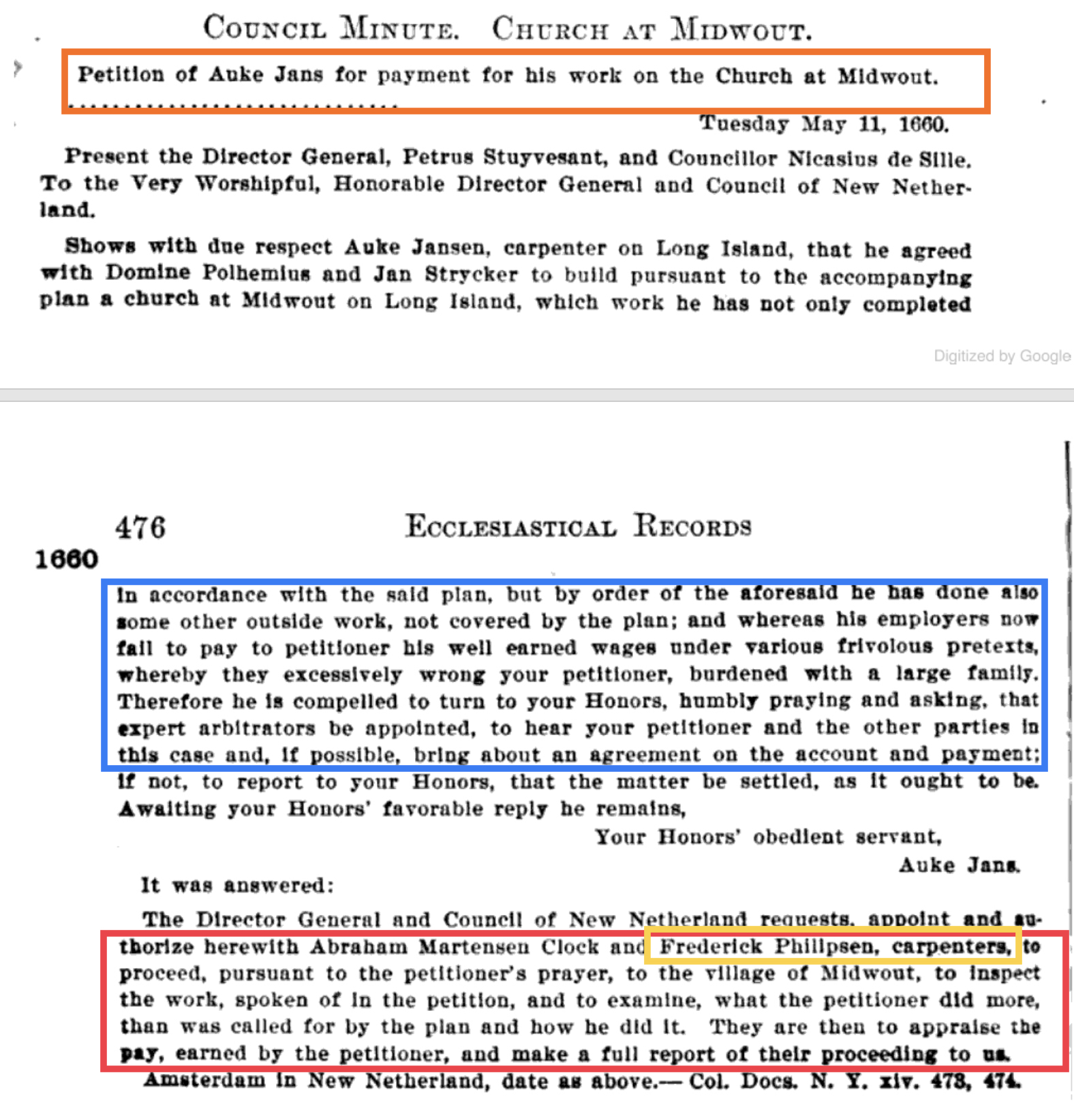
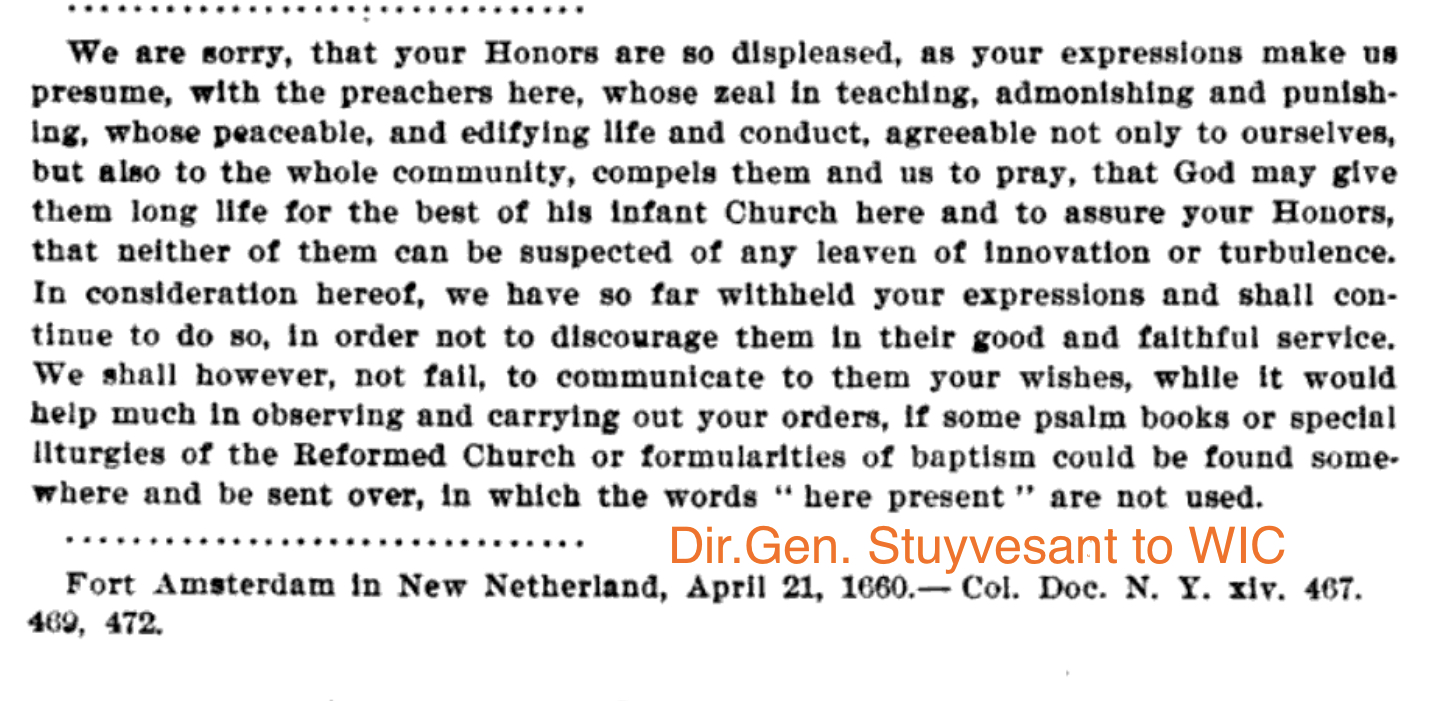
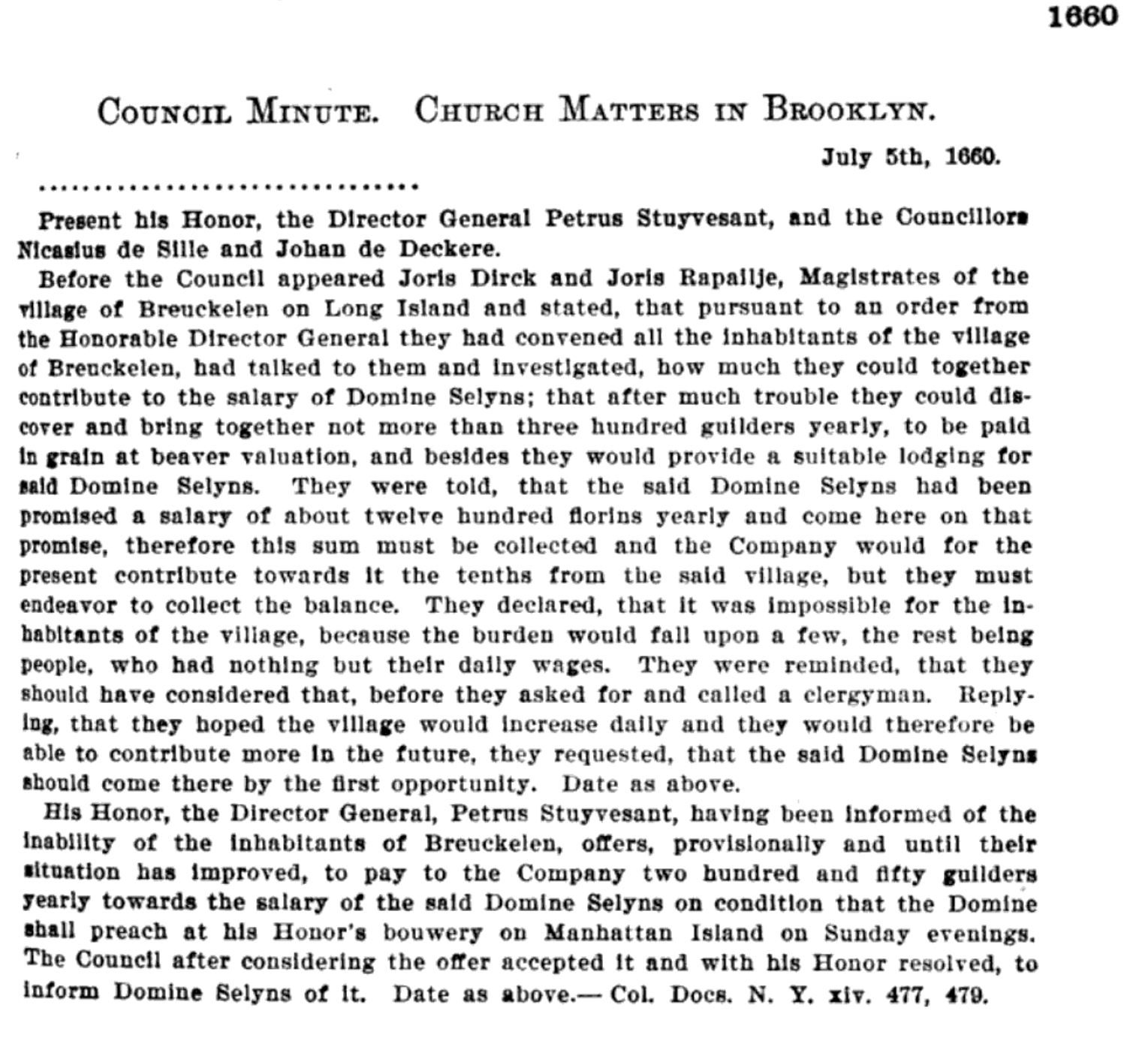
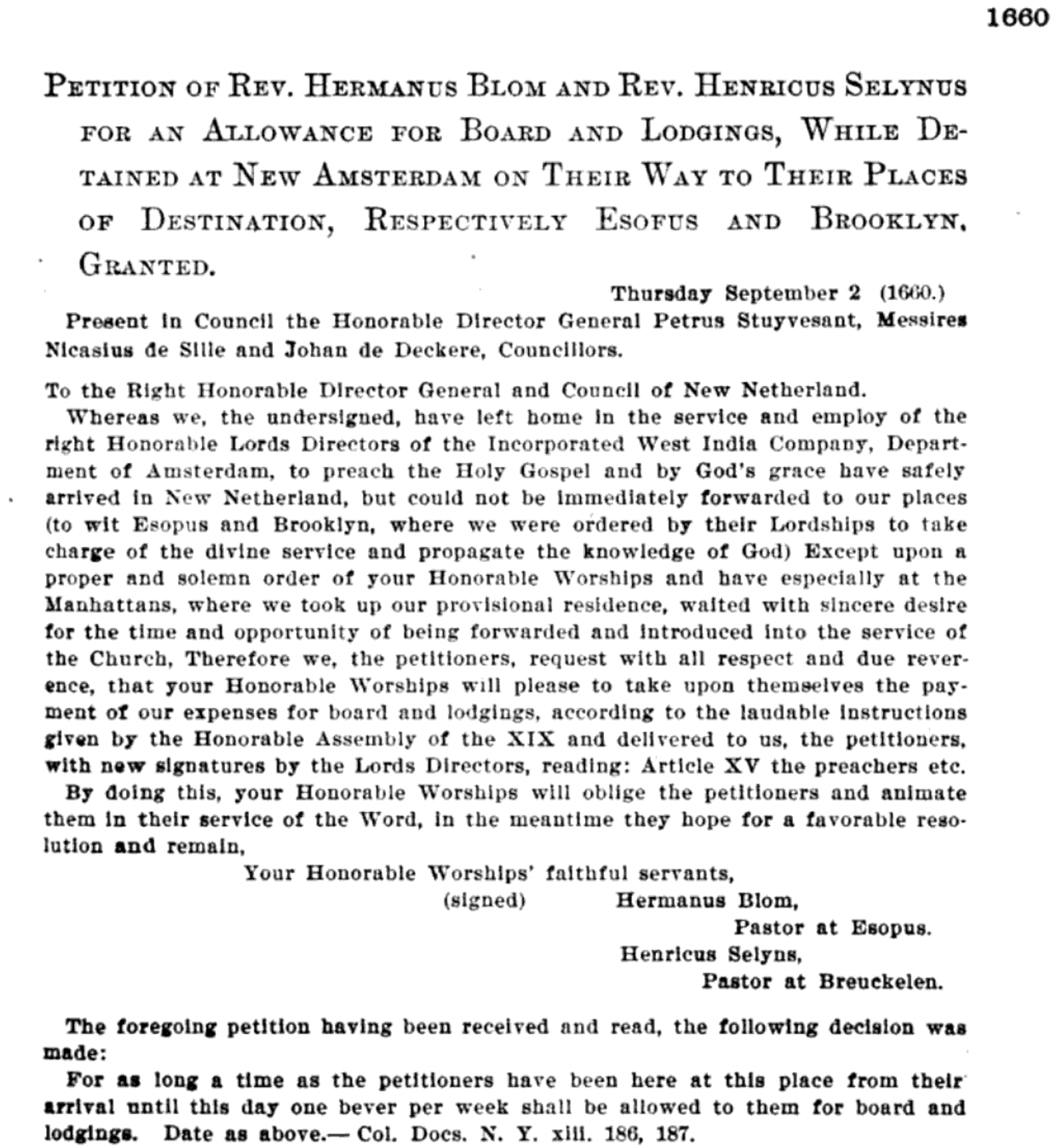
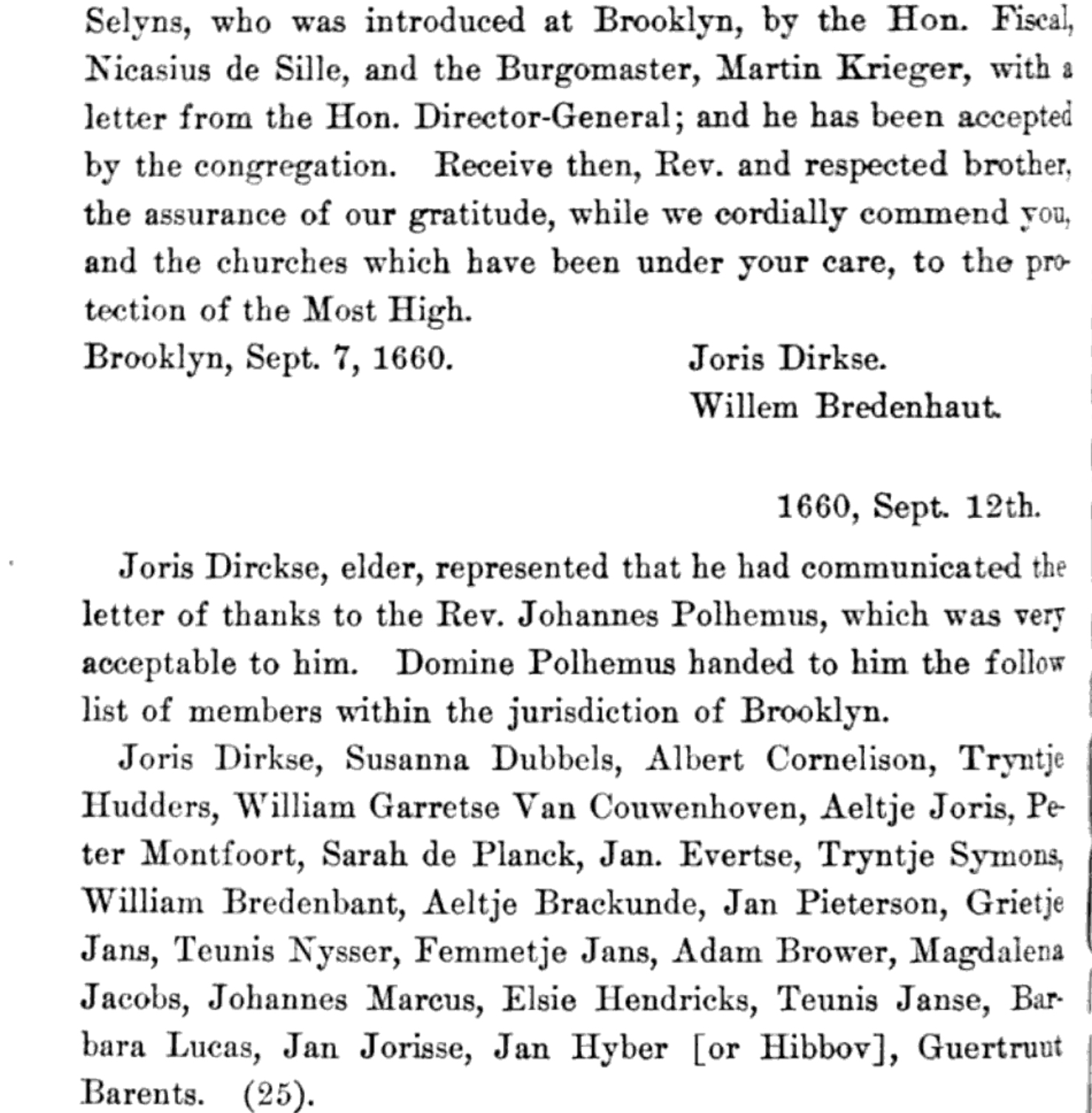
Sadly, Magi died very soon after in 1660 and was buried at the new Breukelen Kerk. Aucke was just putting the finishing touches on Midwout; the family home seems to have remained in Breukelen until her death. Magi must have been one of the first interrments. And she must have died in childbirth, because Femmetje Jans was listed as a founding church member, see in the last page below. I assume Aucke left the little girl with a family on the Slope, anyway with a nurse or nanny. Femmetje made a very nice marriage a few years later, as we’ll see. Aucke, in Midwout, recall, had to submit his work to Freddie Flypzen’s review to get his right wages. Poor Dr. Polhemus never got his full wages either, and in asking for a raise, only ended up having to do more work. He resigned himself to preaching at three different locations every week — Midwout, Breukelen, and vespers at the Bowery for the restful convenience of the Dir. Gen.’s household and guests. Finally he was joined by Dr. Selyns who took over in Breukelen. St. Nick’s, of course, in Ft. Amsterdam, was served by Dr. Megapolensis and his preacher son Sam. All four of these Dominees were important to the social and political structure of the colony downstate.The following classic is revealing of that side of Old New York society that is scarcely recalled today: https://books.google.com/books/about/History_of_the_First_Reformed_Protestant.html?id=ysXVAAAAMAAJ Only remember, reading about the humorous squabbles between two proud churches, Midwout was the First Reformed Church of Long Island. Breukelen, to Christ? Always a bridesmaid, always a bridesmaid.

Aucke moved to Midwout in 1661, and requested of the Breukelen congregation that they put a fence up around the cemetery to keep the infernal swine from rooting up his wife’s remains. The churchwardens replied with Dutch sympathy that if he wanted to add to the sanctity of the grounds, they would be oh, so grateful, praise God, to receive any gift of free fencing he was inclined to donate. I think I remember reading that he did the job.

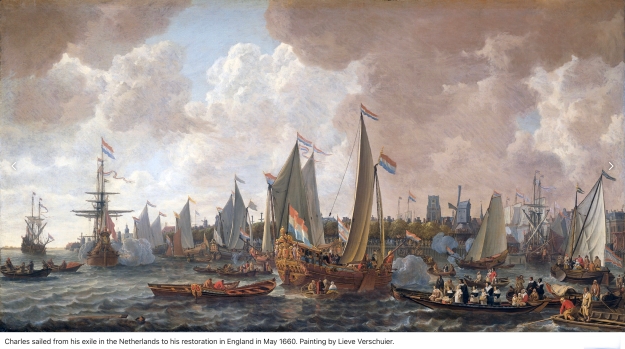
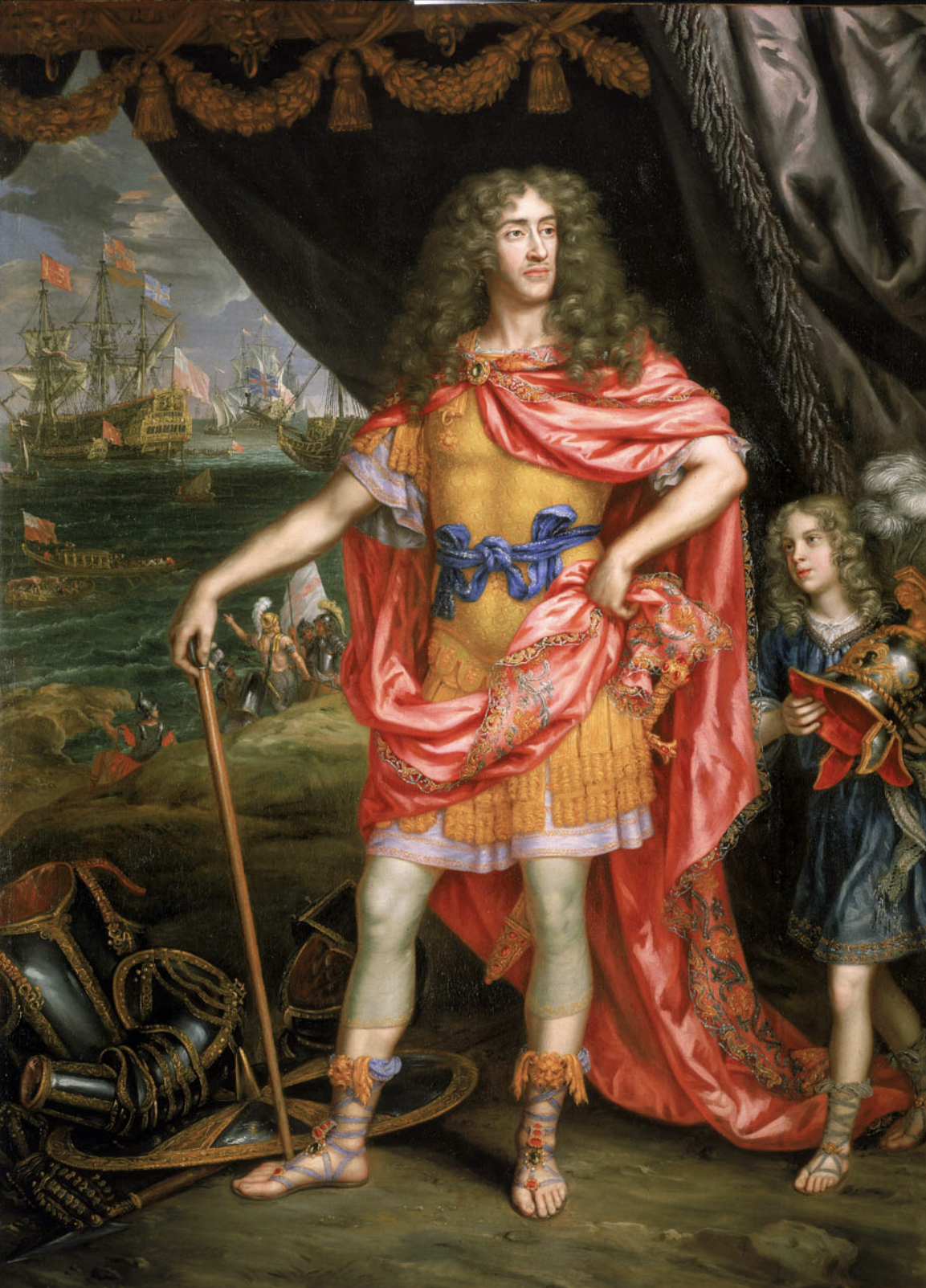
Meanwhile, back in Europe… Restoration of Charles II, 1660. He and James returned to England. They planned to use all they’d learned about their gracious hosts of Orange — not least from being inside the shooting barrel during Cromwell’s Naval War against Holland — and about Dutch sea-power and tolerance and politics in general (but not economics; figures made pretty Stuart heads swim) — to put their boots up the nether regions of those insufferable Jew-loving republican Calvinist Netherlands.

Antonio Verrio, The Sea Triumph of Charles II.

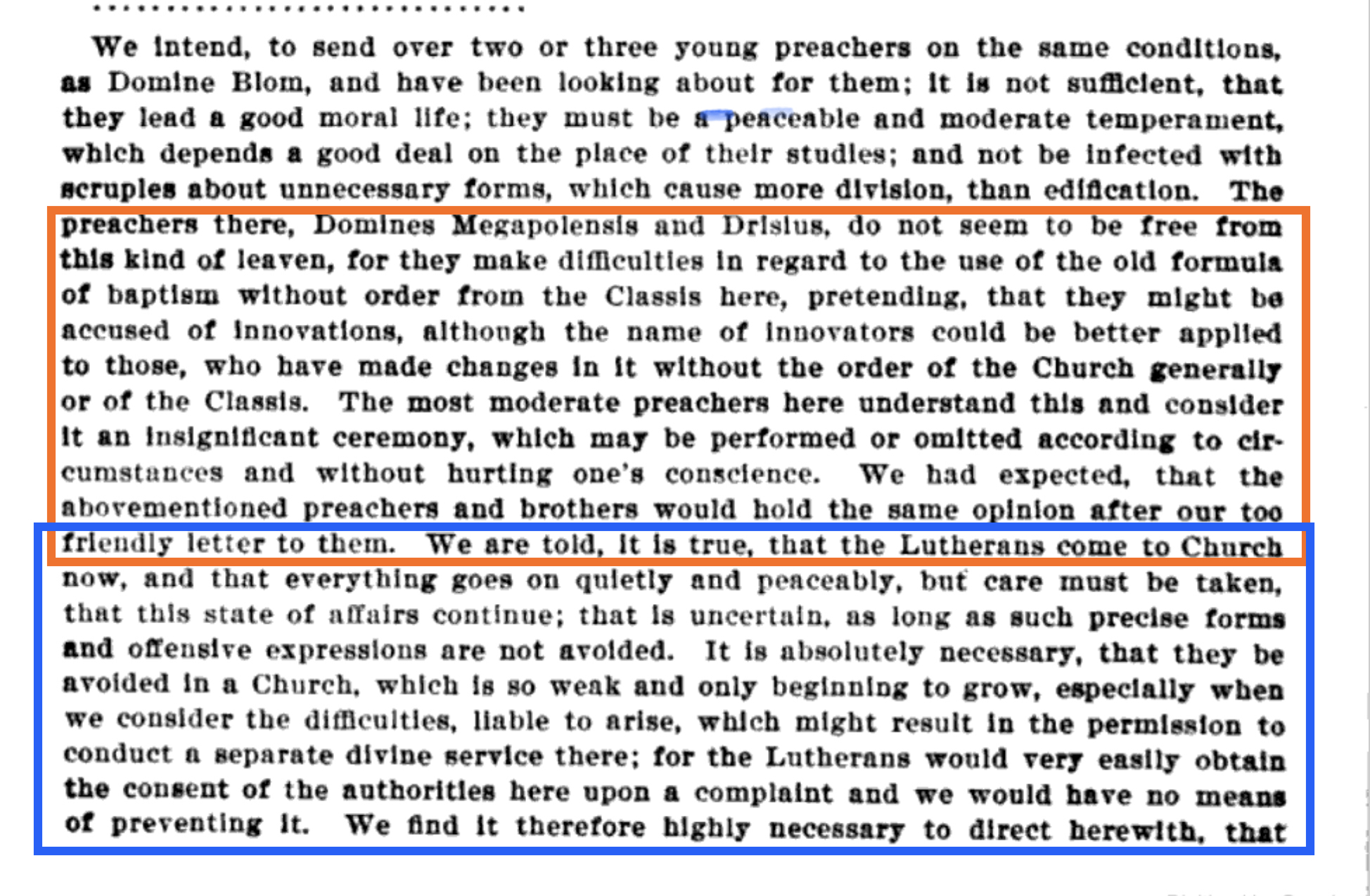
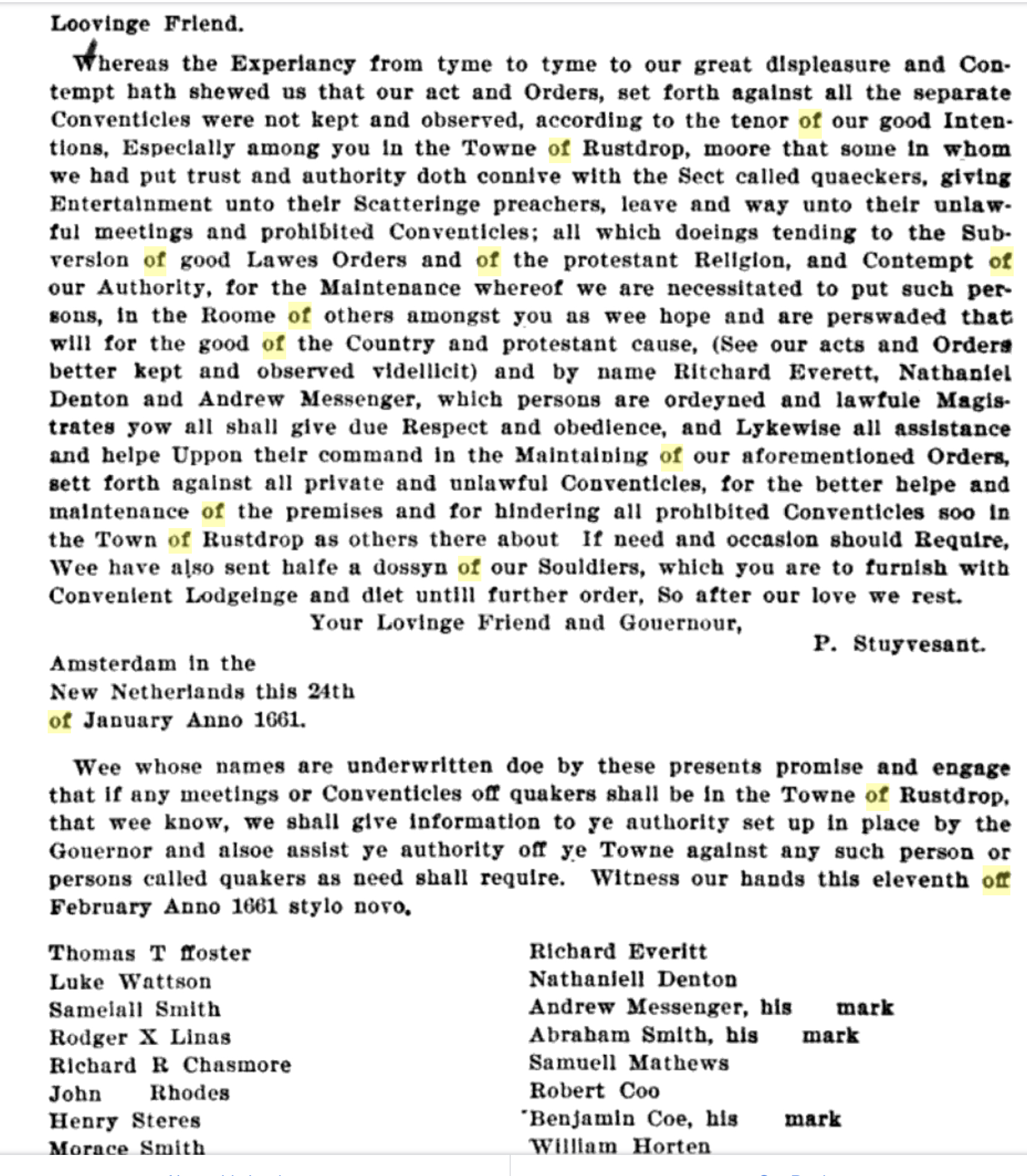
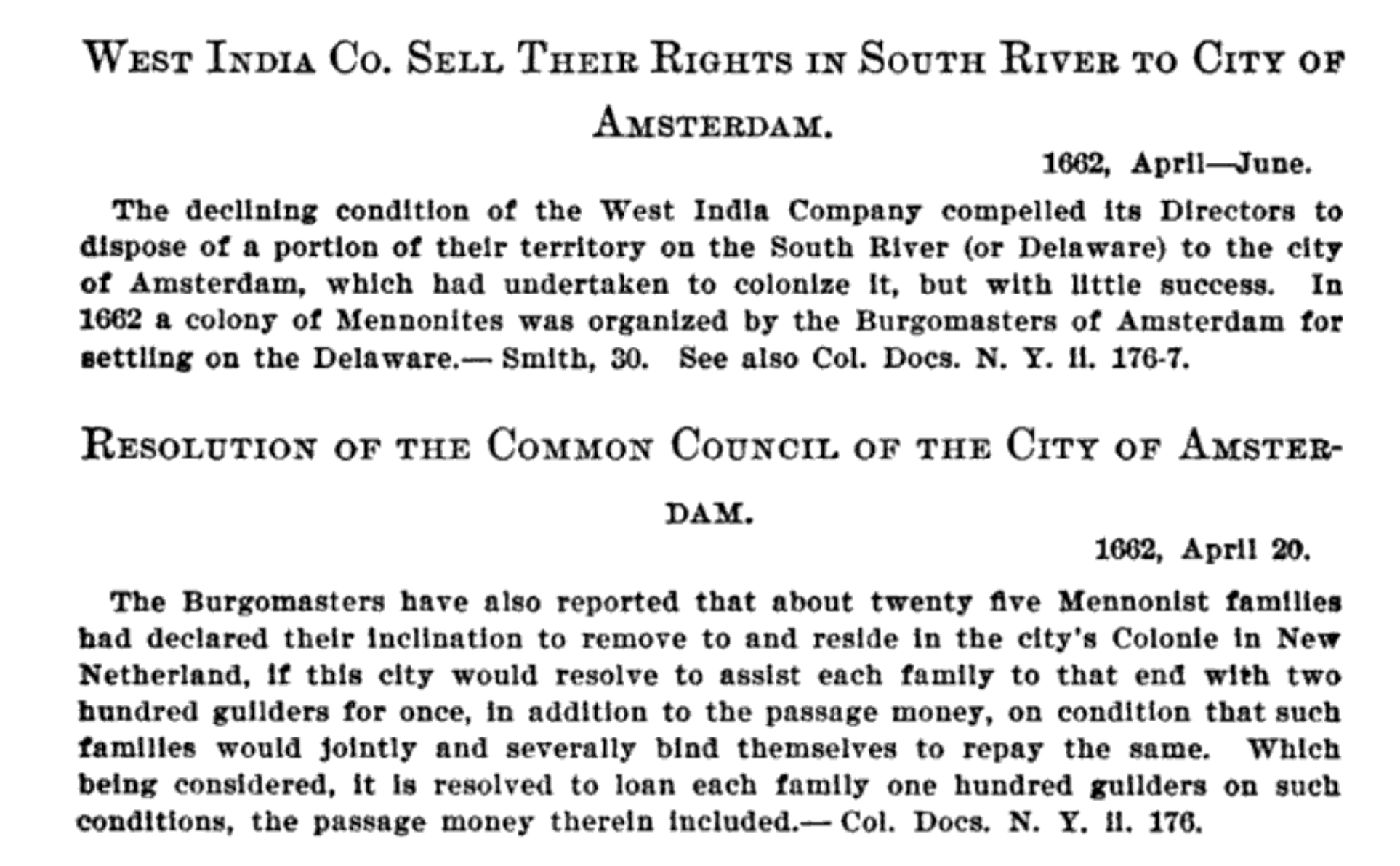
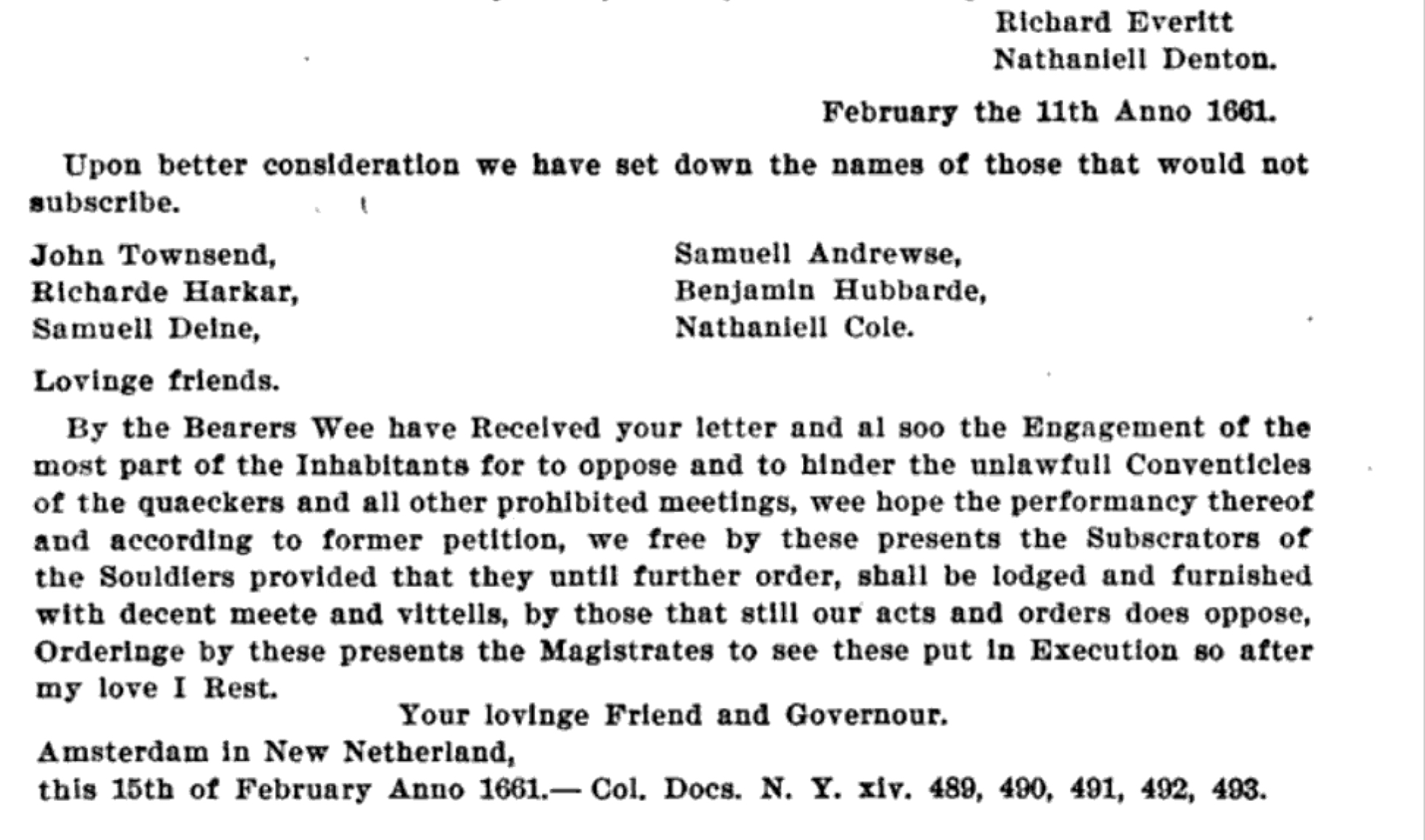
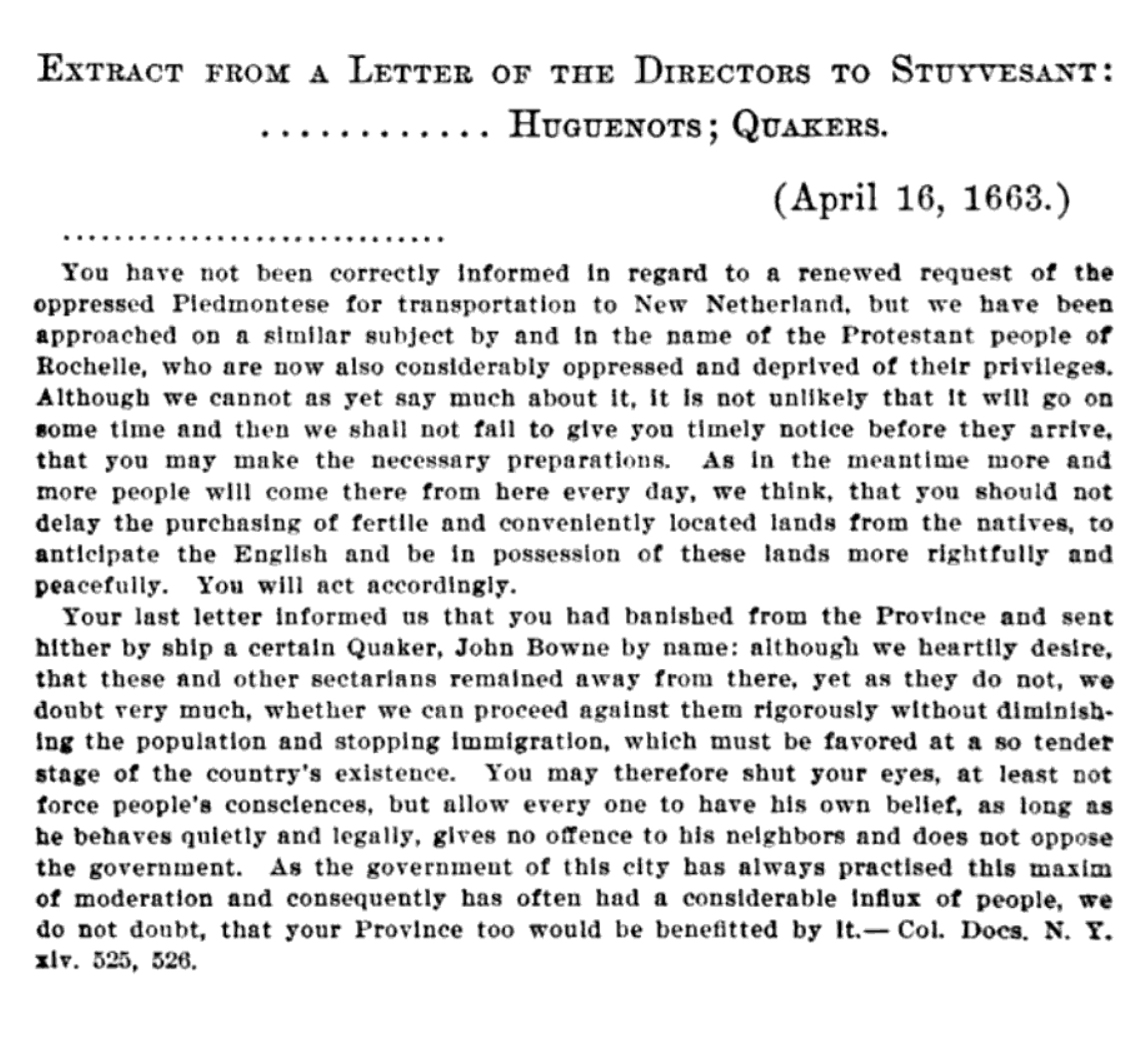
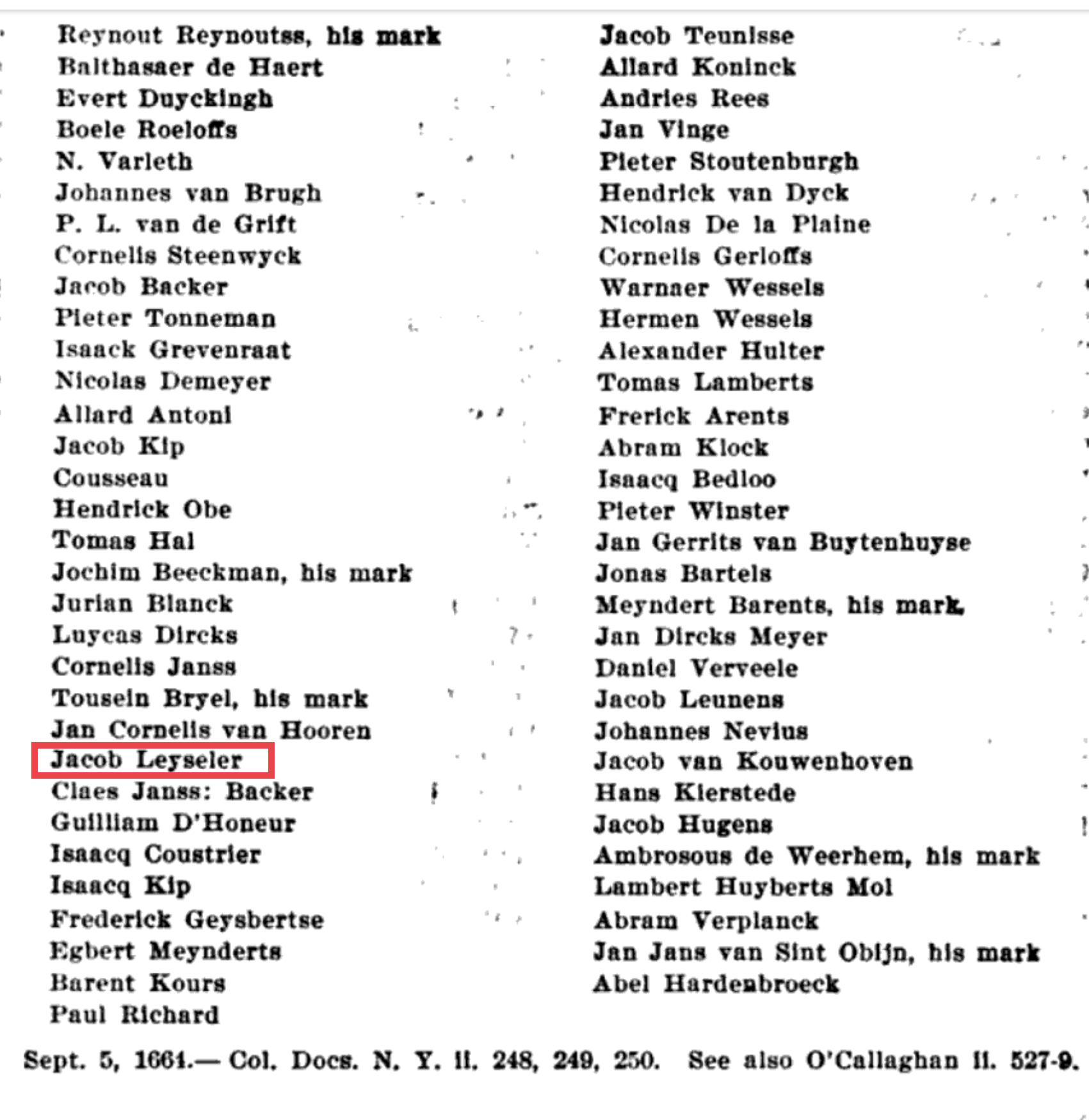
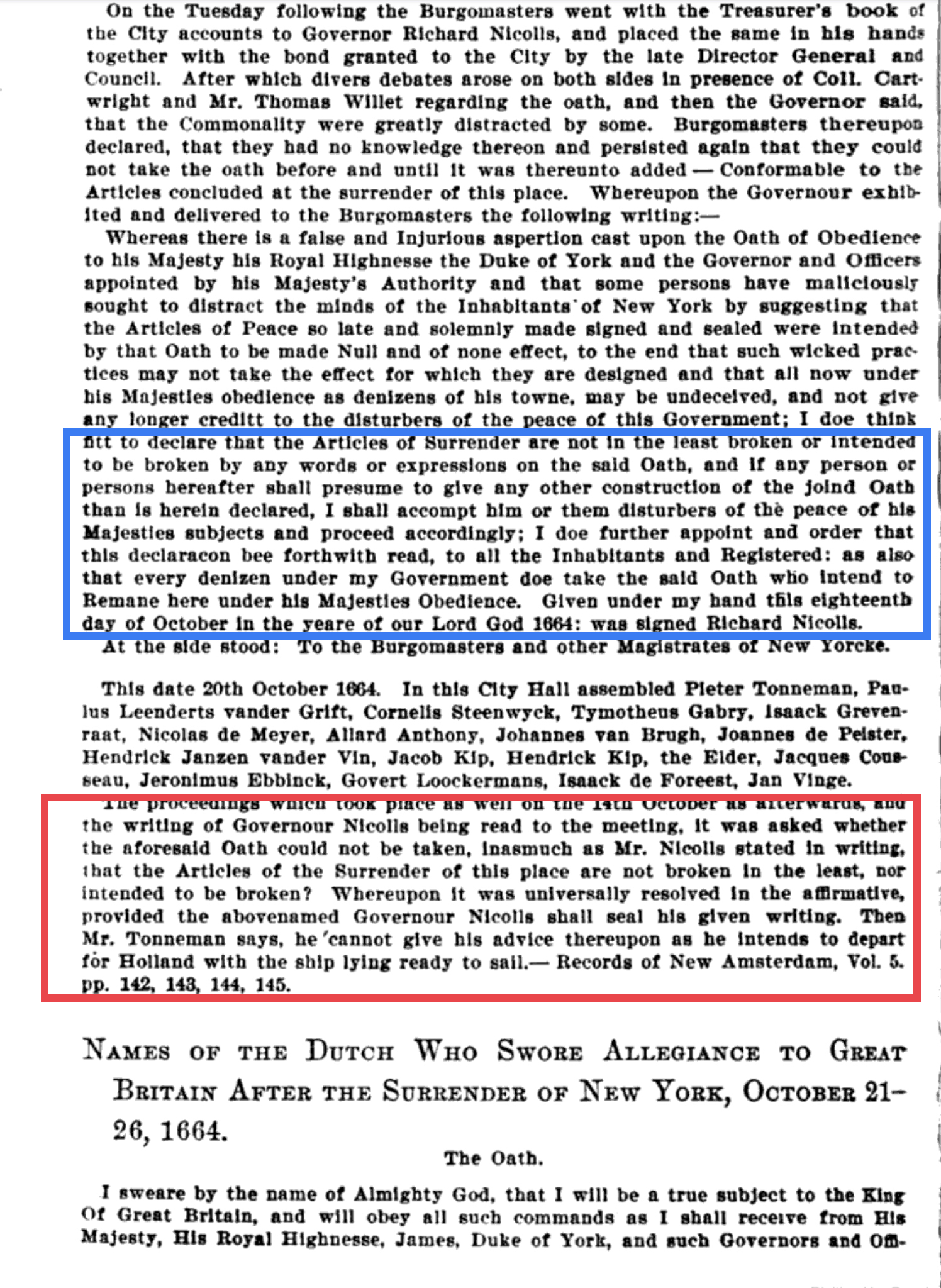
By 1661 the WIC was sailing on the Red Sea — ink that is. They sold off much of what became Pennsylvania, Delaware and West Jersey to the City of Amsterdam, who themselves sold it off to others who sold it off. Many of the buyers were those very Quakers and Mennonites and Lutherans of New Amsterdam, I’ll-treated under Belgic Lion Stuyvesant. Here is that fortunate fudging of foreign faiths in the former New Netherland counties; that complication of creeds that led the English to begin their rule there under presumption of religious liberty:

English movements among the Mohawks brought attacks on the upstate frontier

Just before the end came in 1664, there was another urgent whip-around for re-building the Singel, the Fortifications, out of stone, like Amsterdam was doing back home. Freddie Flypzen is prominent with a handsome contributionof 200 fl. Aucke’s contribution, I could find nowhere.

In 1662s Flypzen had married Margaret Hardenbroek Jacobsen, wealthy and driven ship-owning widow played by Agnes Moorehed in my movie. With this tower of strength by his side (and united by a very interesting Dutch law called usus, a kind of pre-nup that allowed Margaret to be the dominant business and trading partner in the marriage) fat Freddie’s ship had come in, see he’s pointing it out! And, since it was really Margaret’s ship, it came laden with gold, spice, molasses, rum, and slaves, and was sent out again, holds groaning with their burden of golden wheat, with Margaret sailing as her own super-cargo to drive the shrewdest bargains she could get.

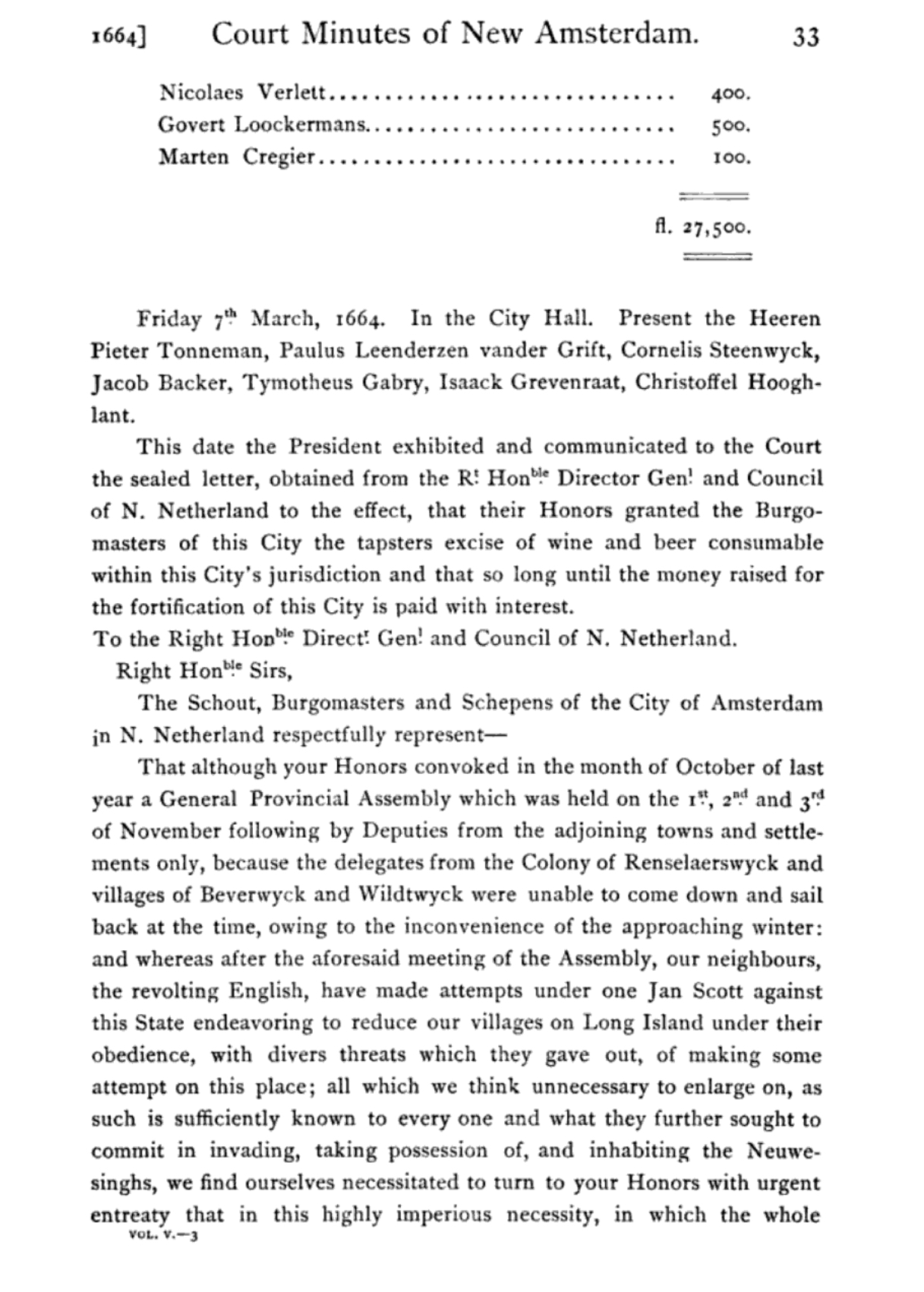
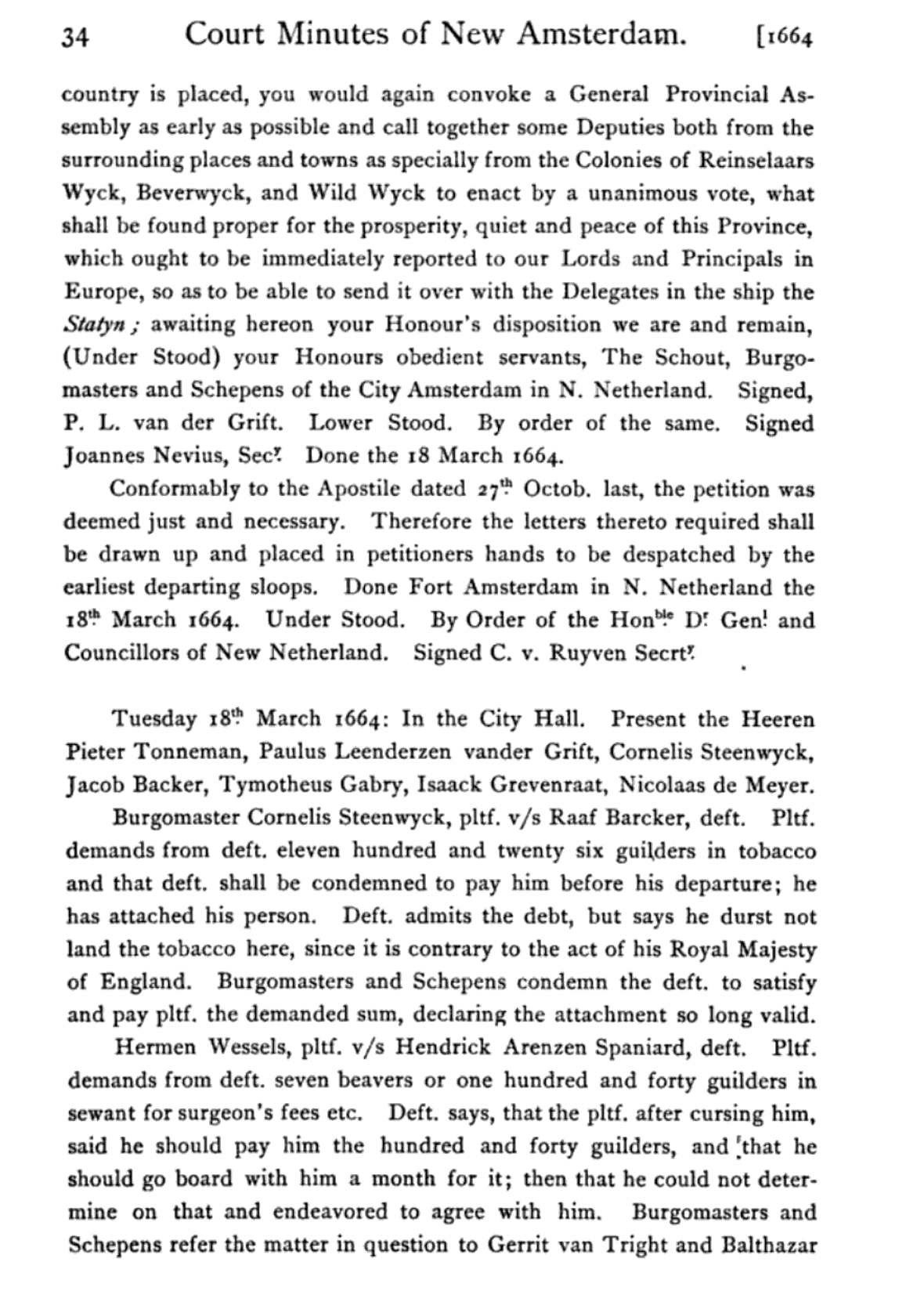
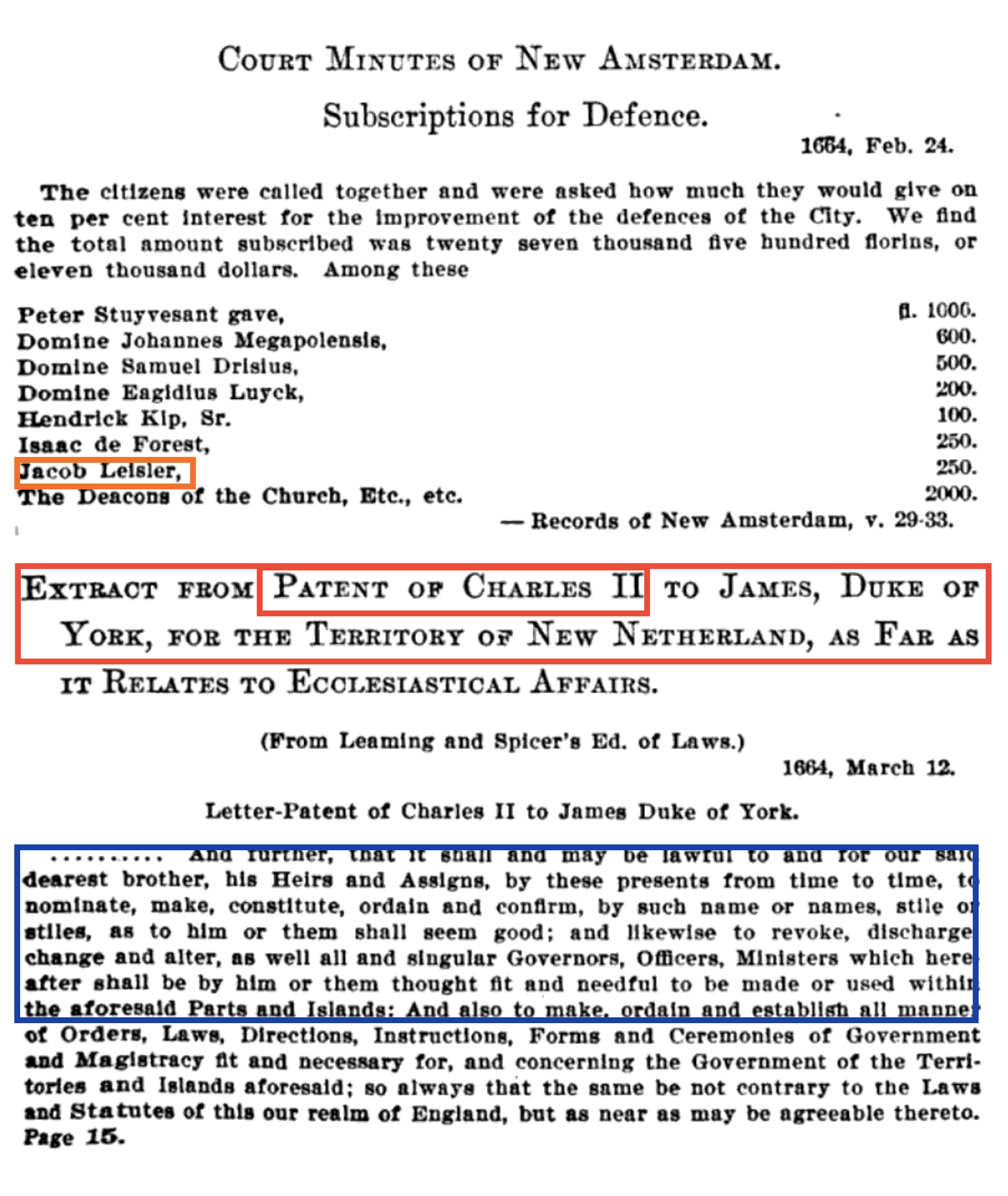
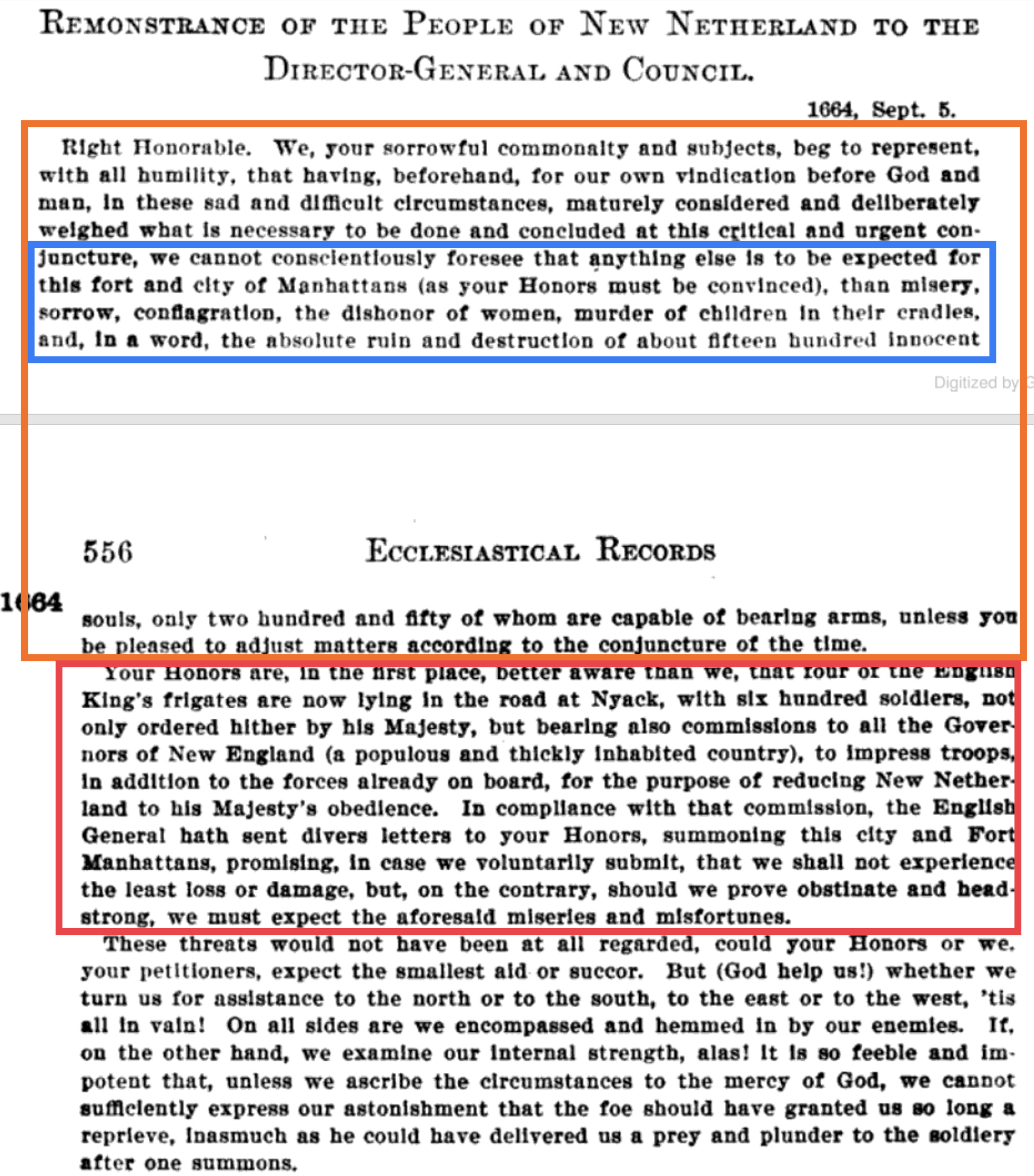
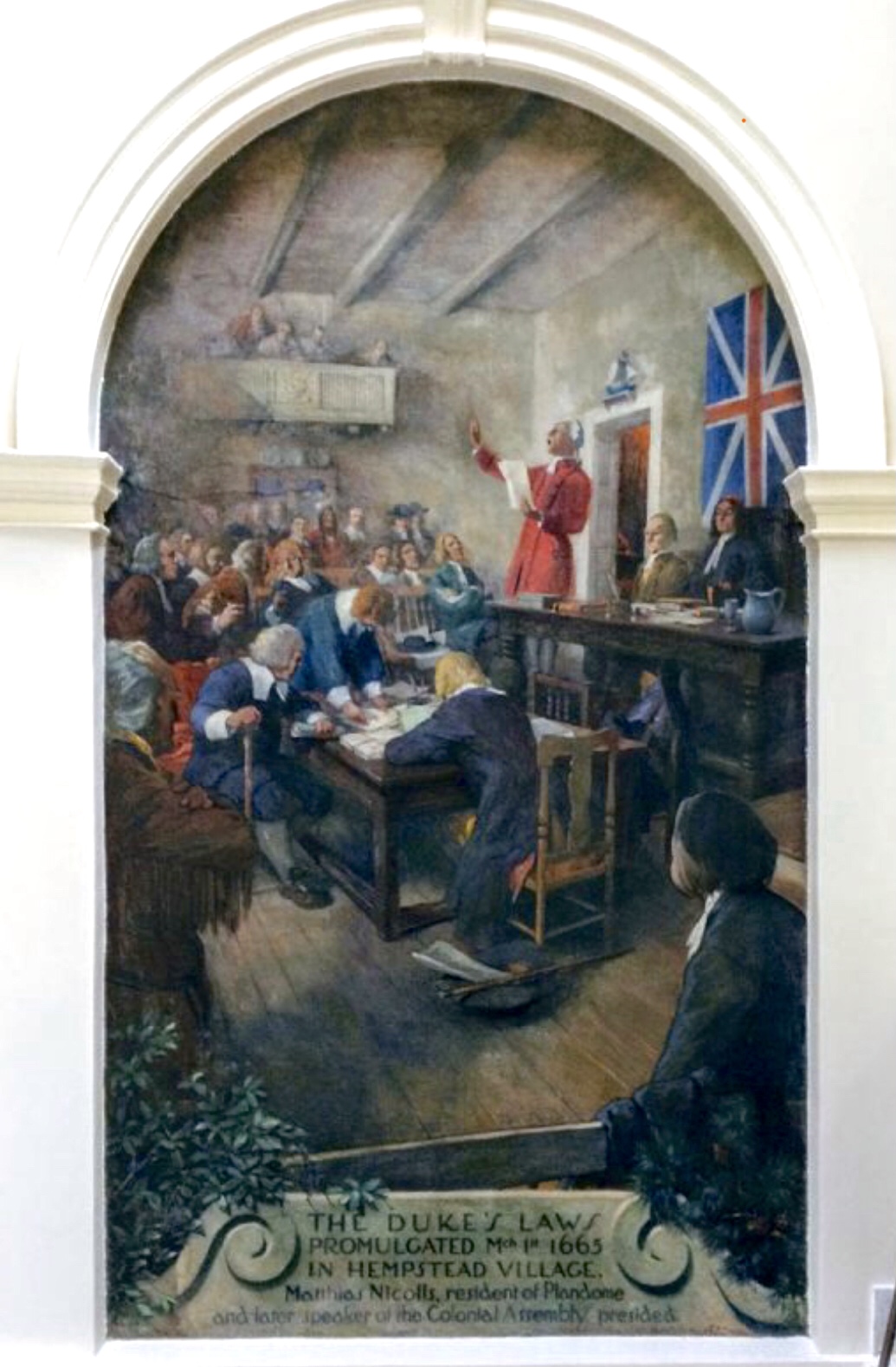
And there it is above: a caesura, then sudden concern over His Royal Majesty of England. That March, 1664, Charles had granted the land of New Netherland to his brother James Duke of York. A marine-commando invasion force was already being assembled.

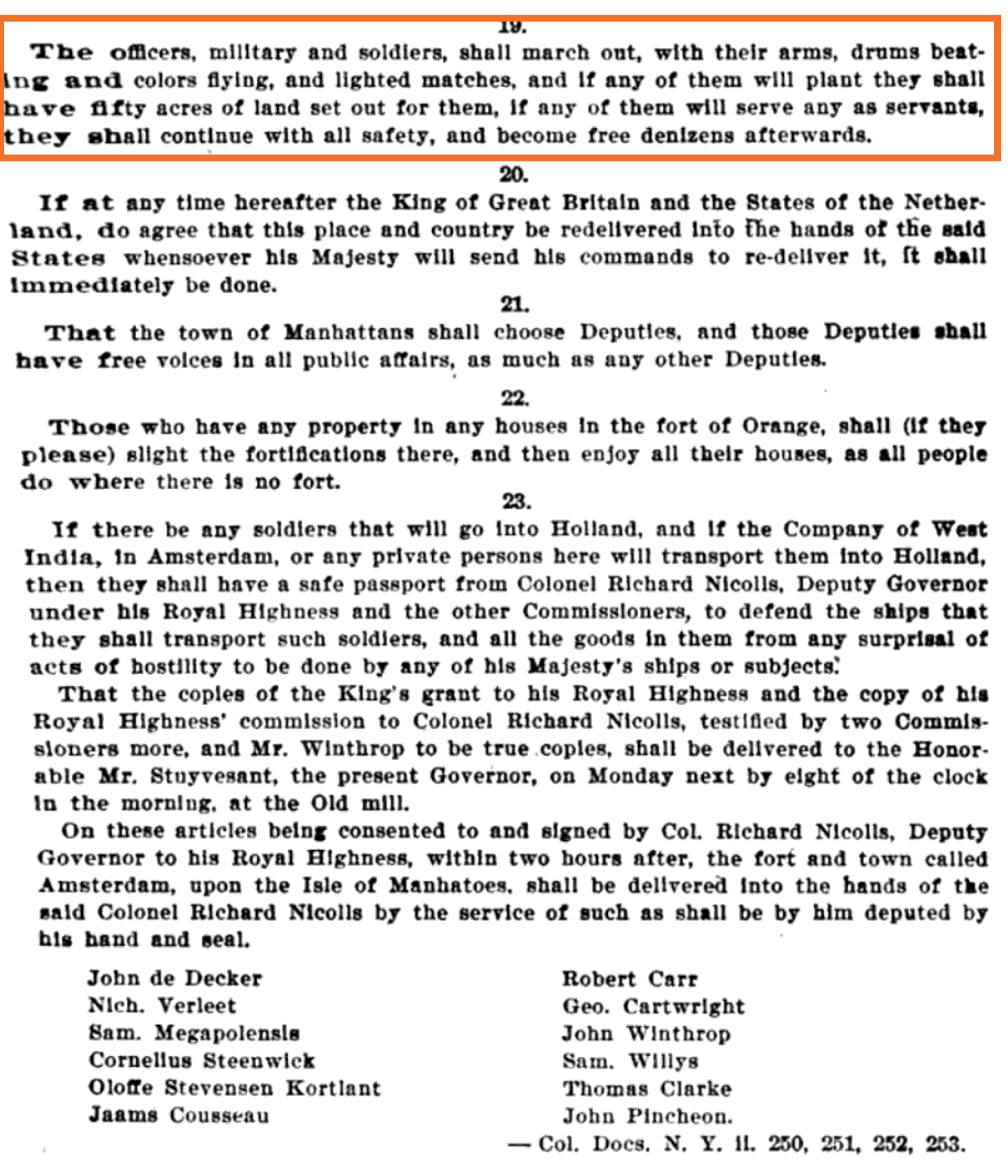
I pulled this section out to note the poignant parallel with Cap. Gen. Andres Pico’s 1847 capitulation of Los Angeles and California to the Yankees:

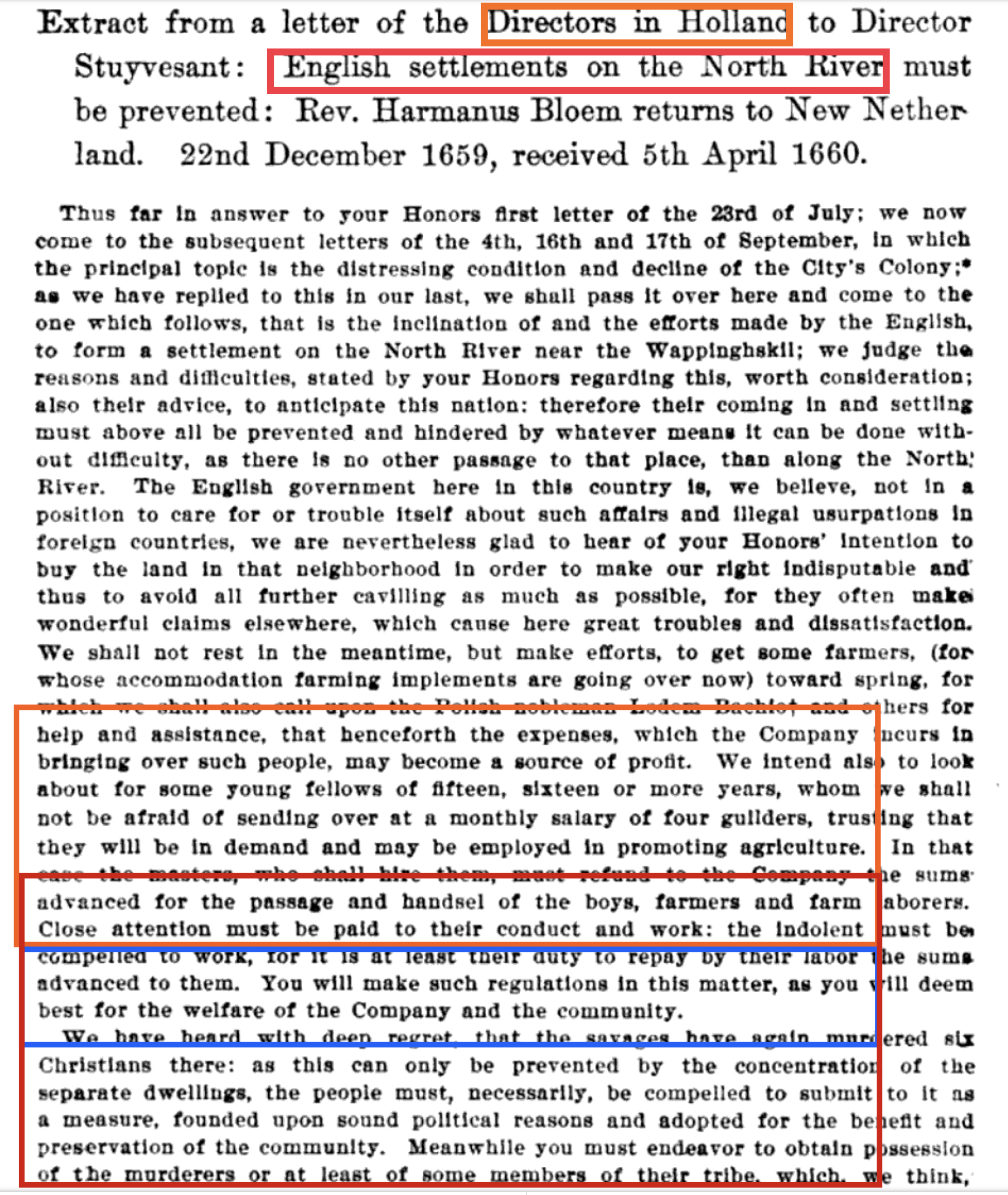
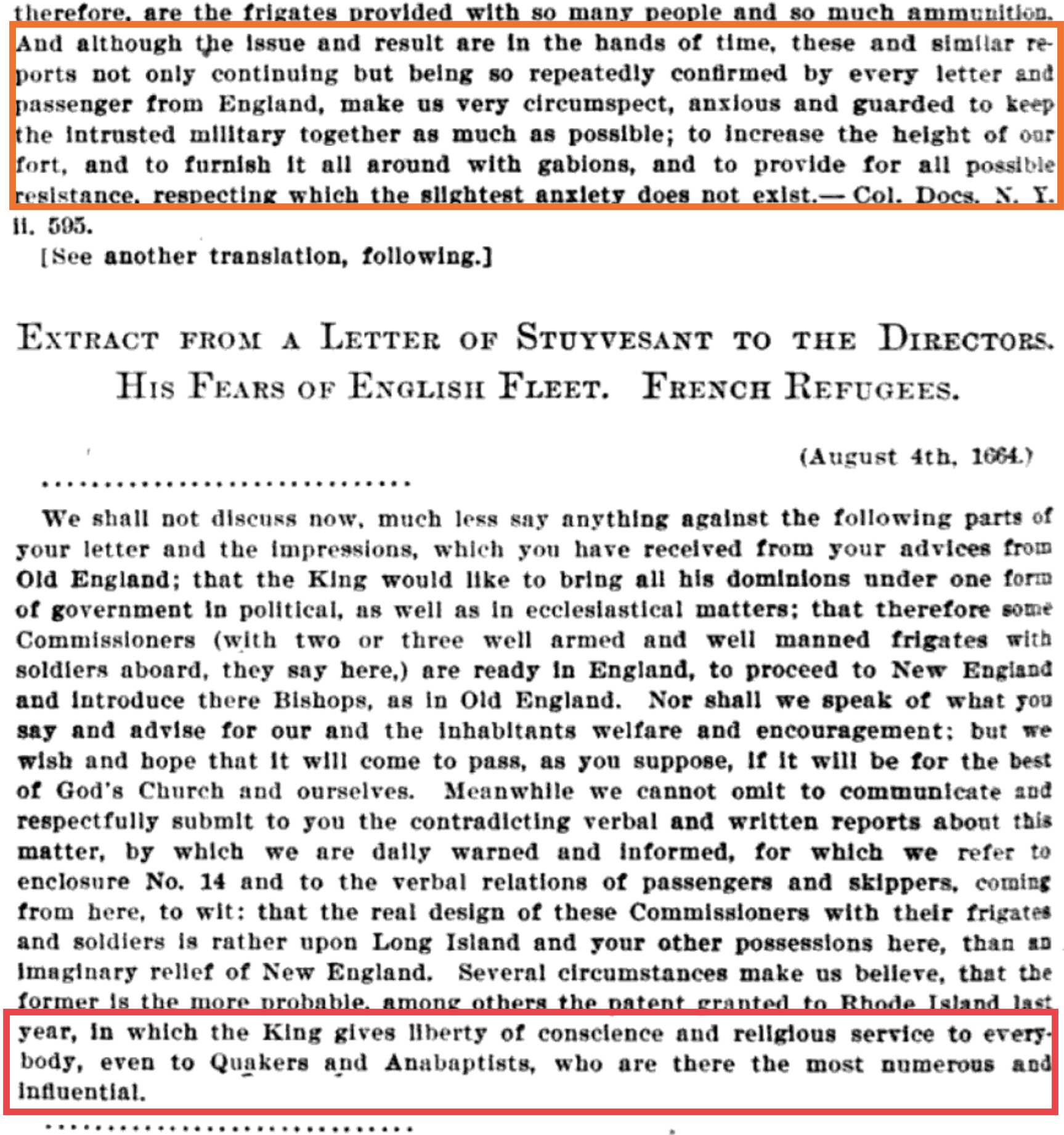
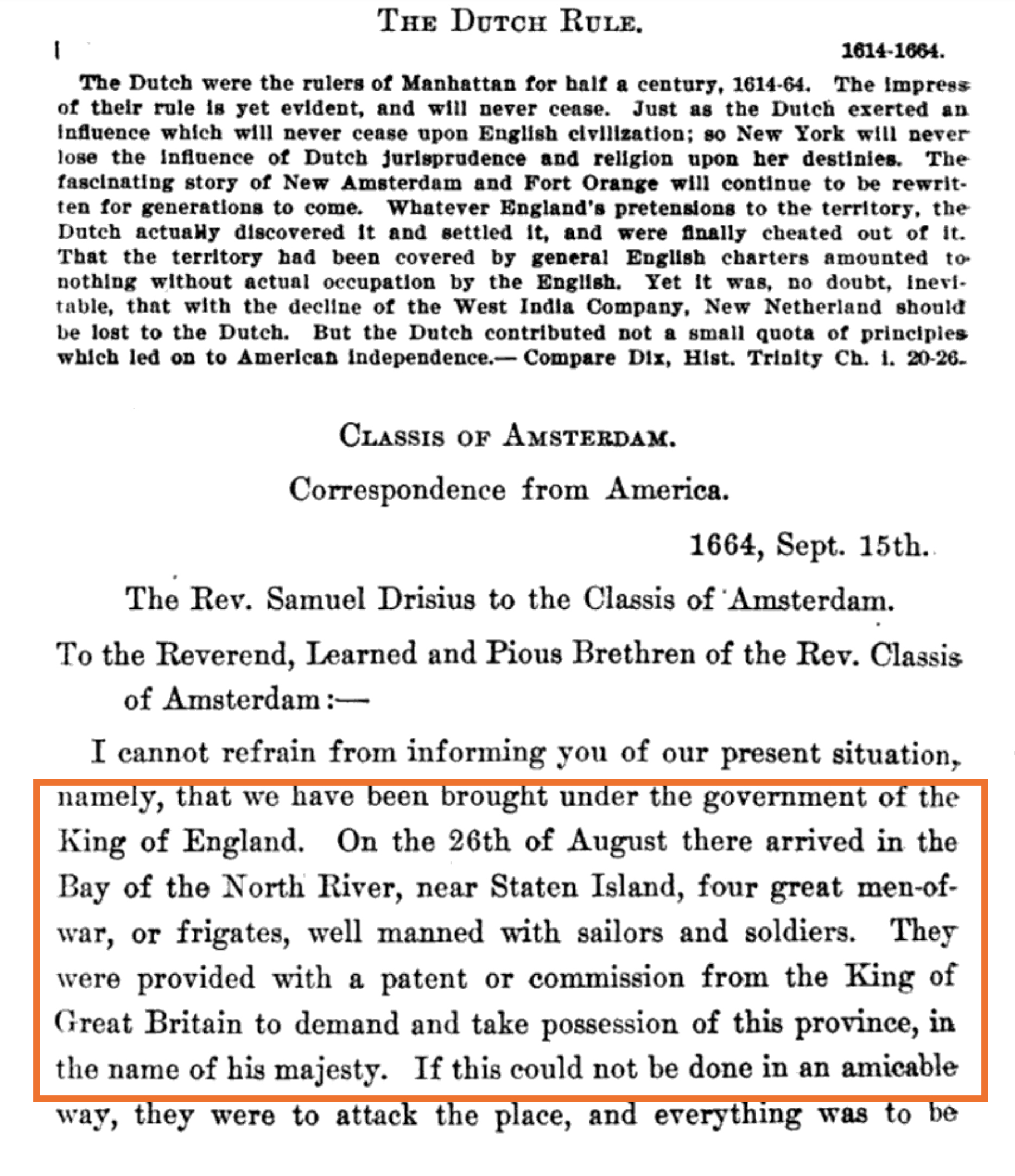
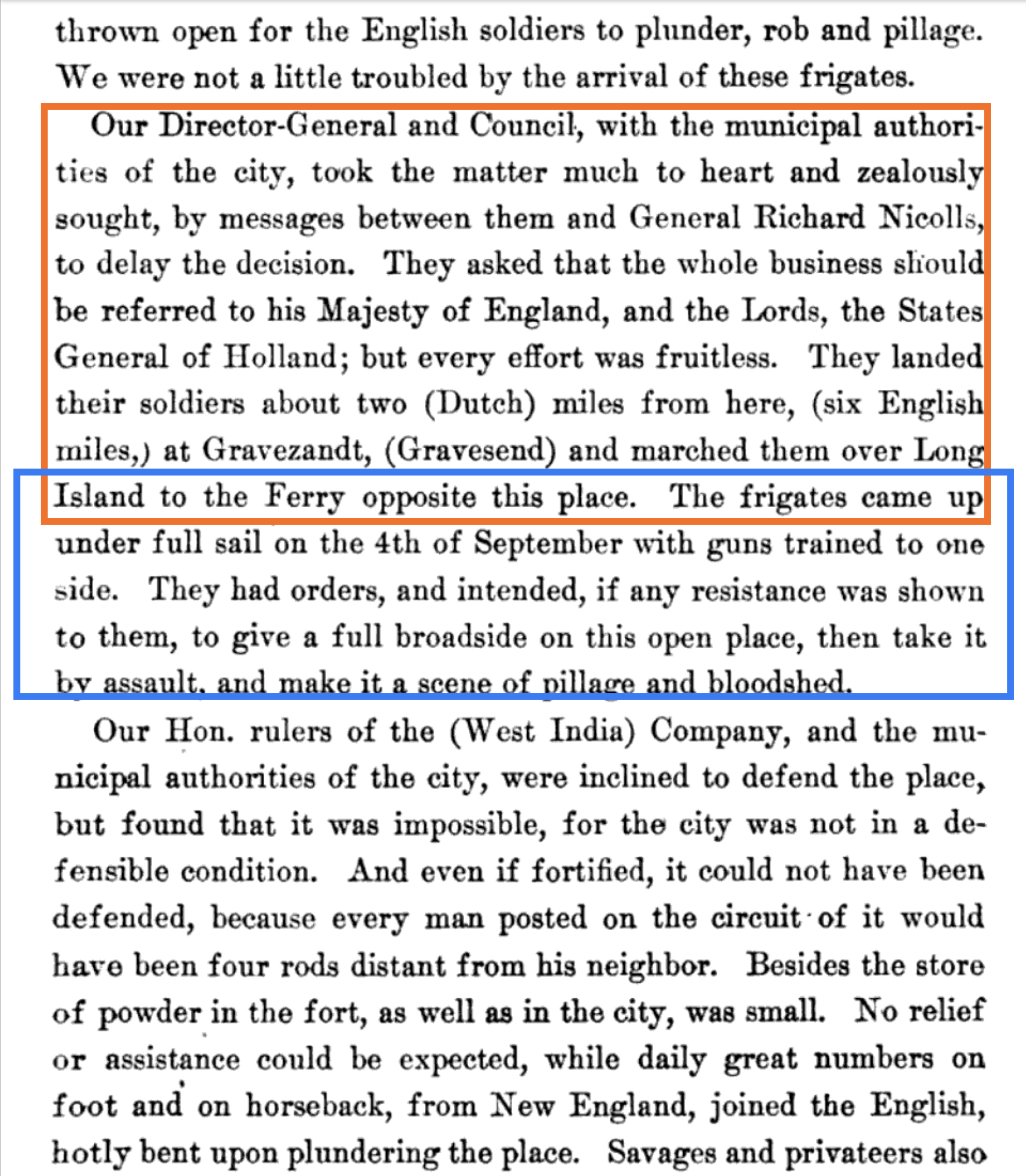
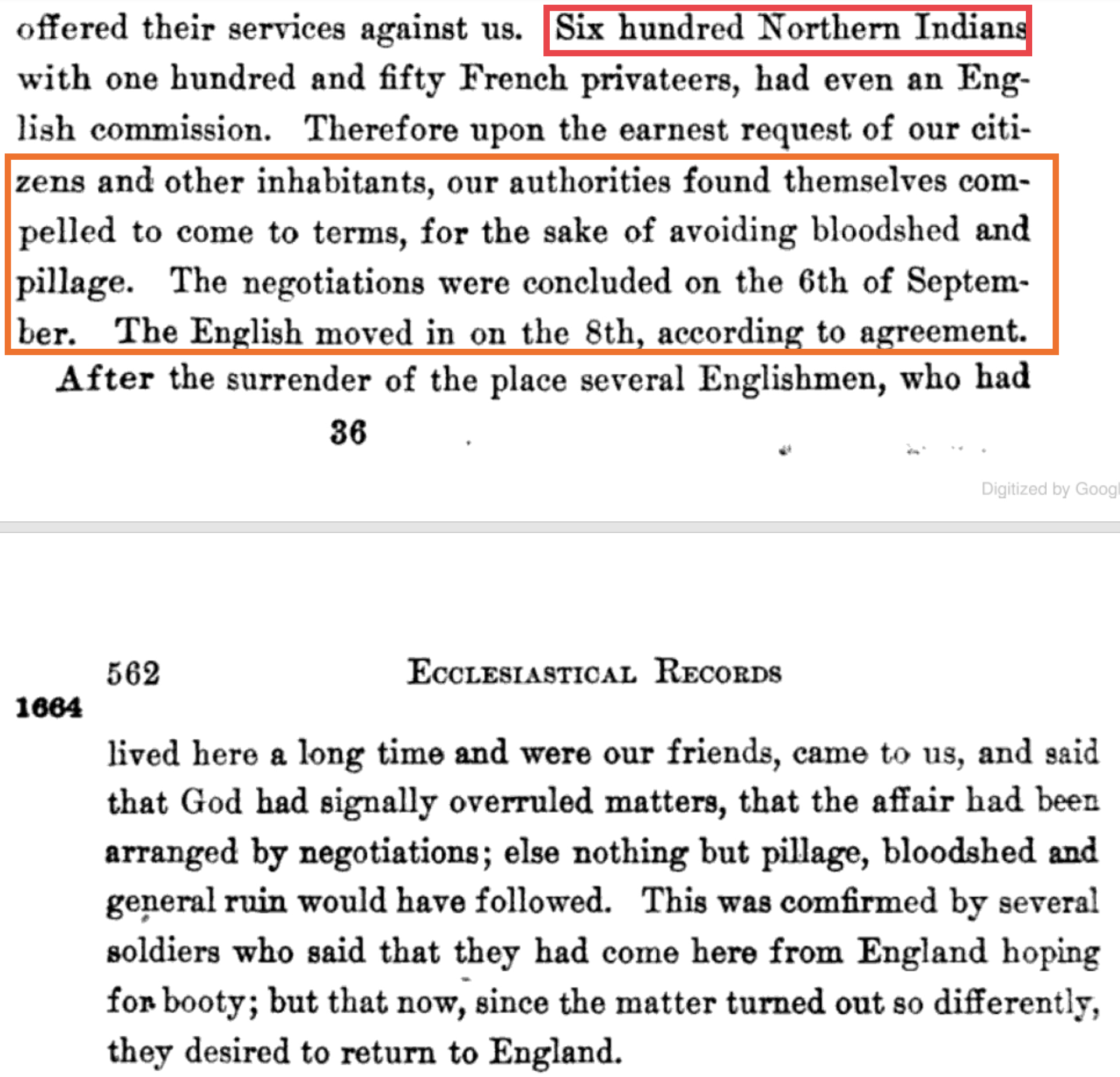
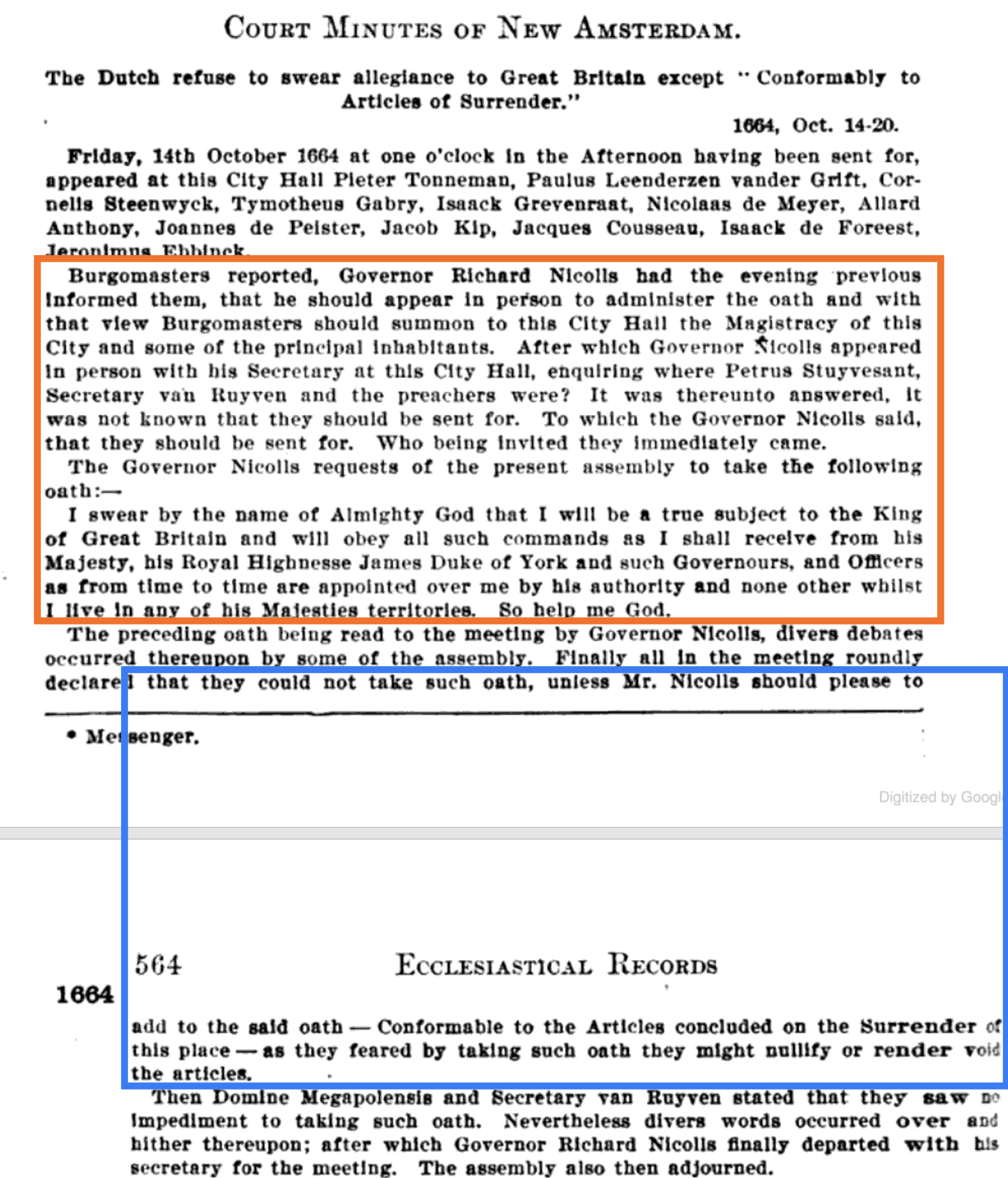
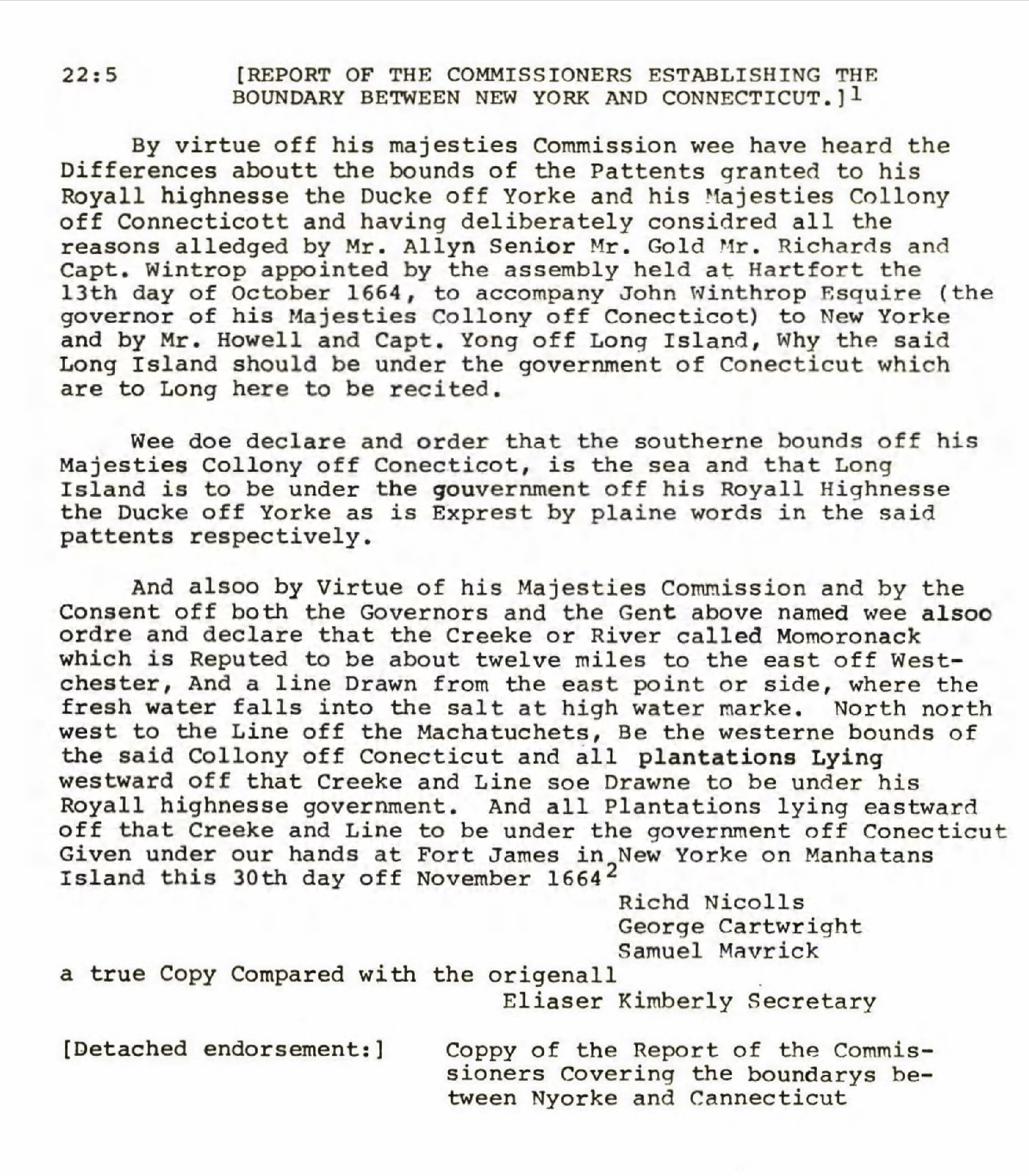
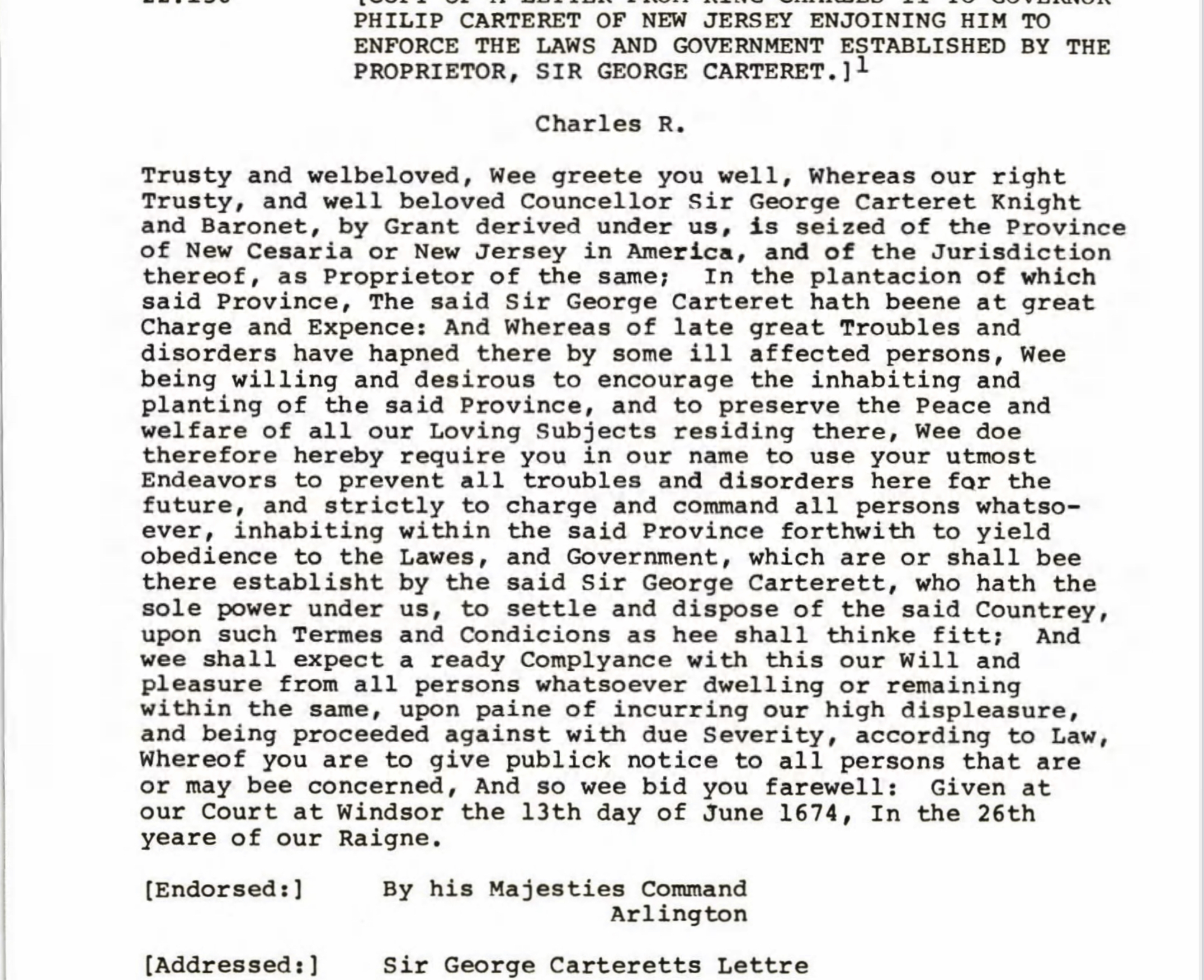
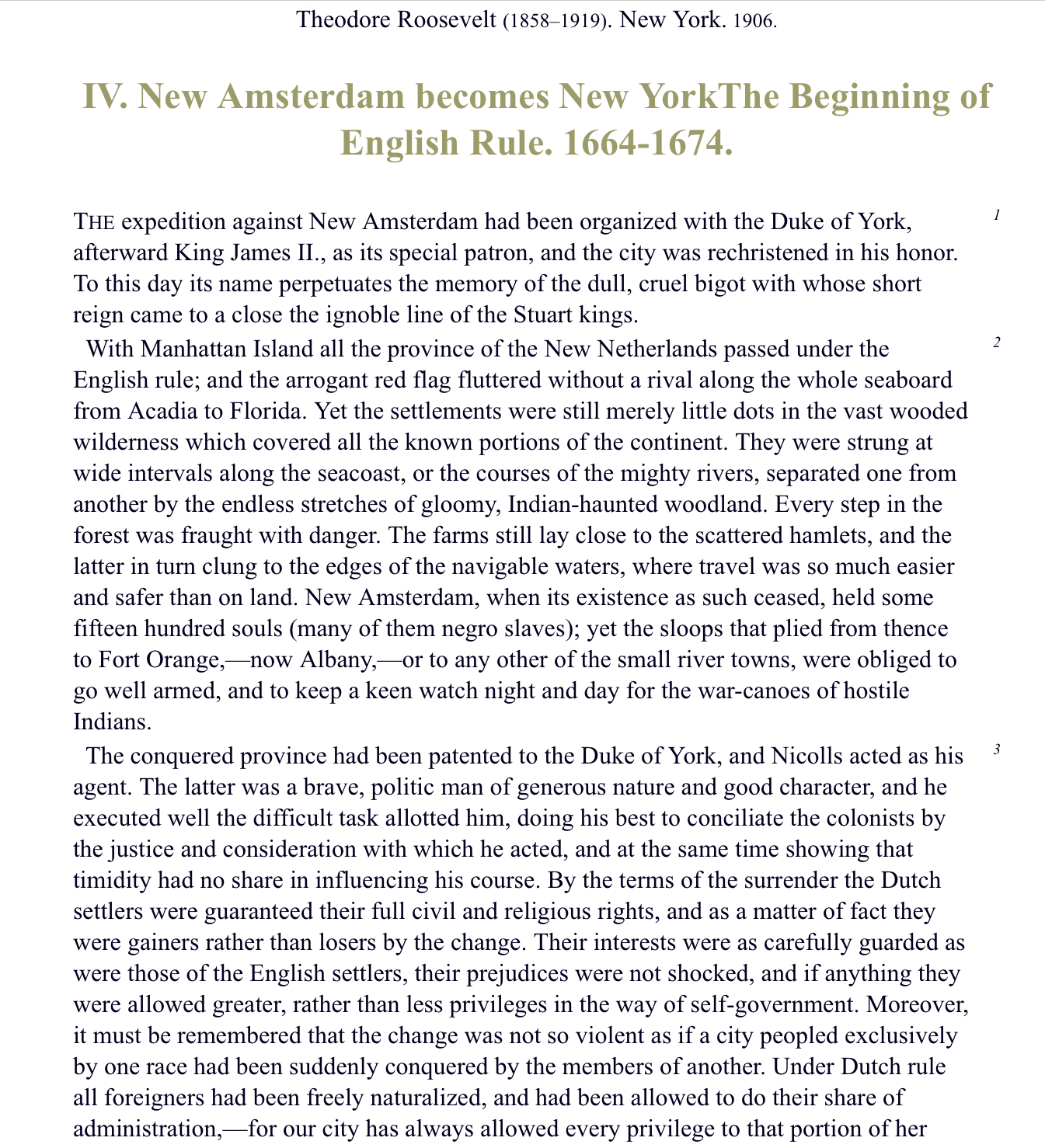
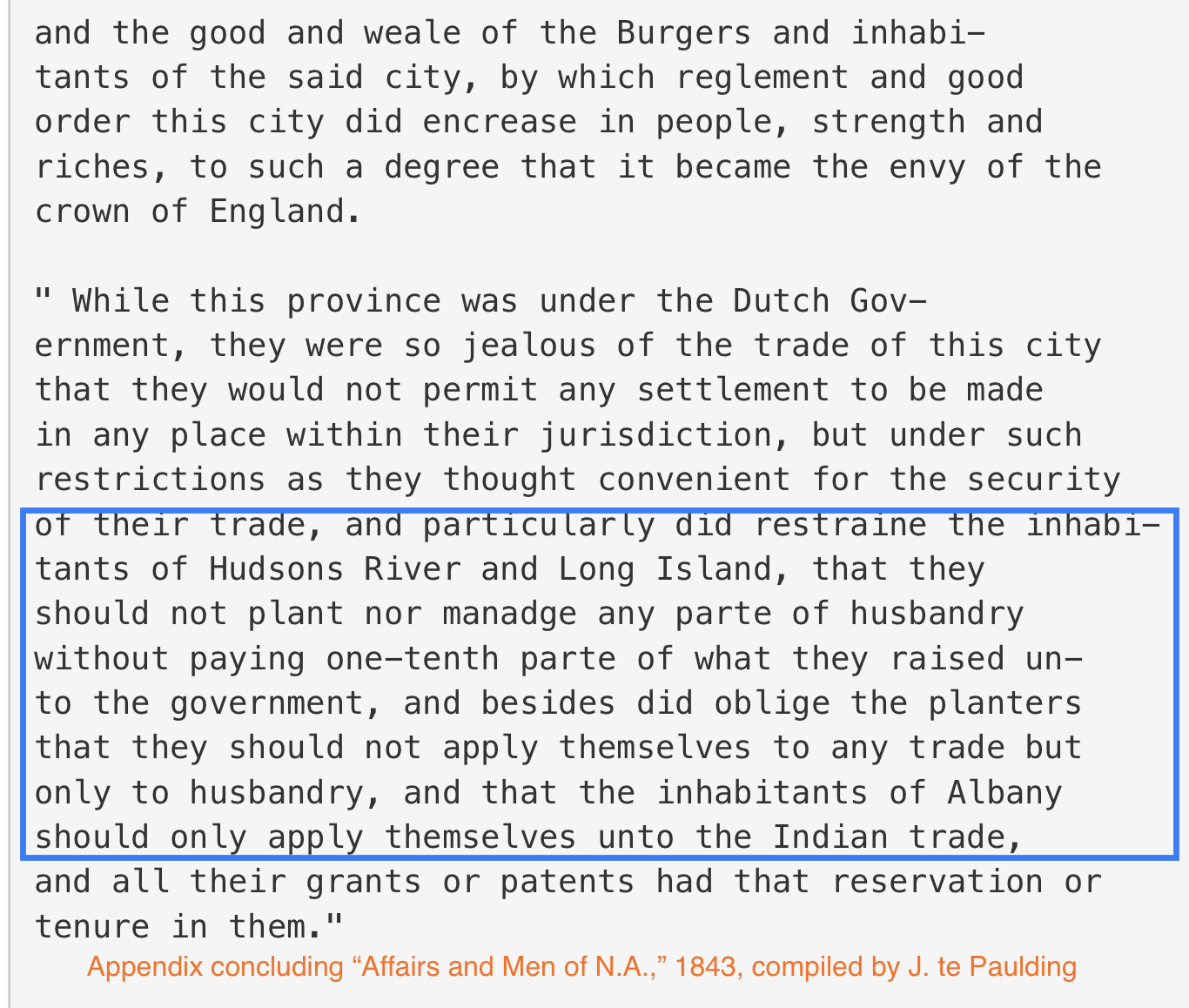
Much more on the history of Yorkshire-on-the-Bay next time. But I was excited to find a rare document, anonymous but informed, appended to a useful early document compilation by te Paulding. It more or less confirmed to my satisfaction that the historical themes I’d been following, and you’ve been following, are in fact not just wills-o’-the-wisp. In sum:

Griffith Park – 125?

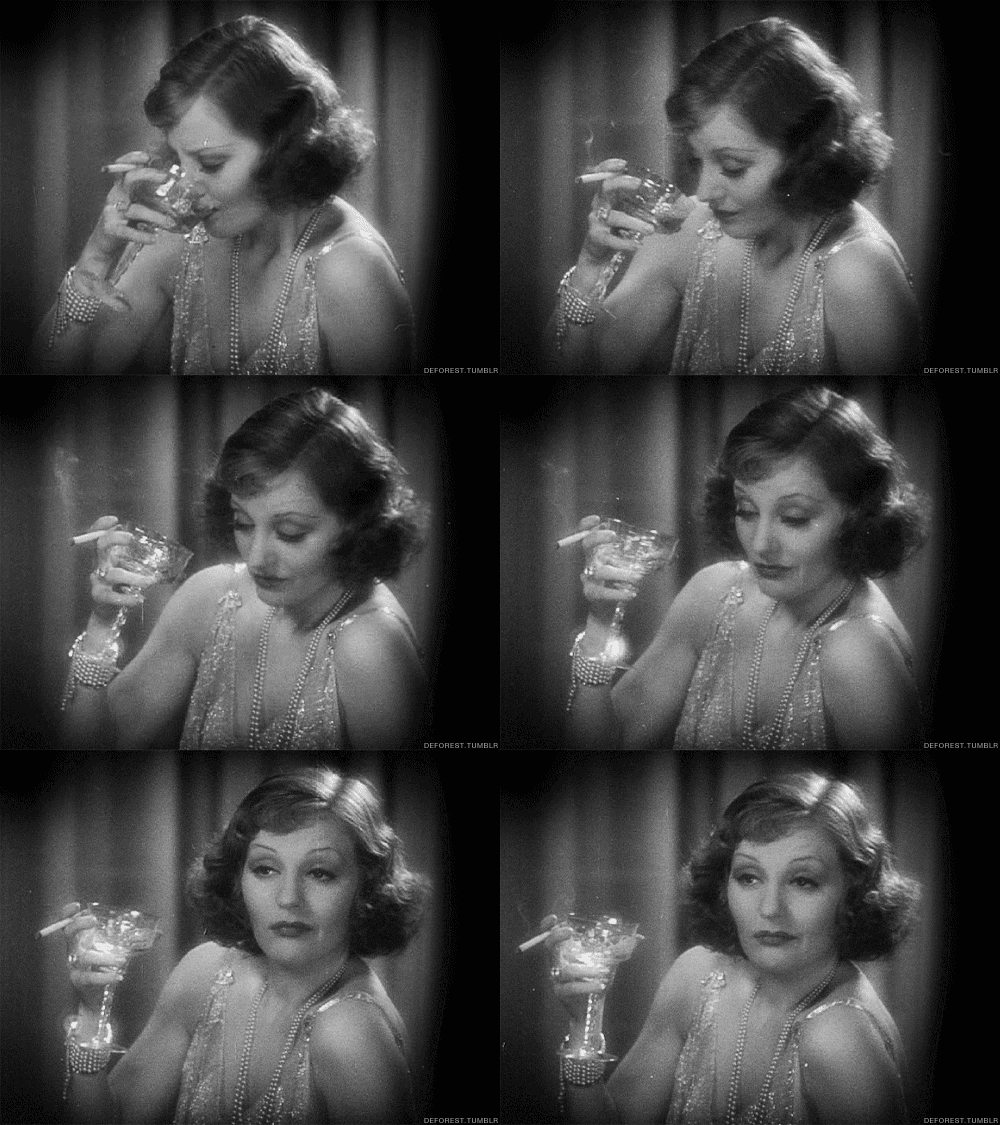
Not half as old as I feel, darling.”

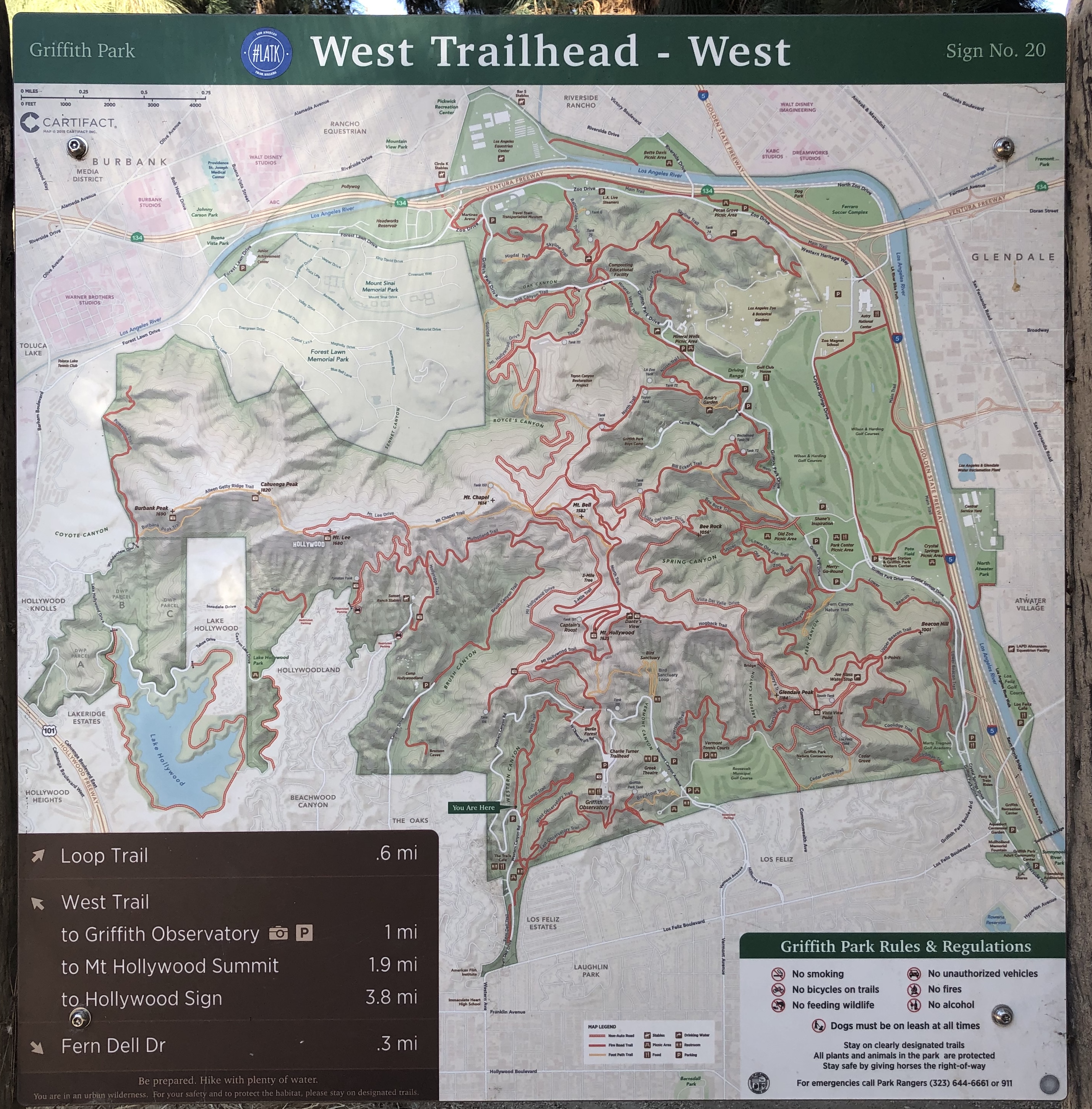
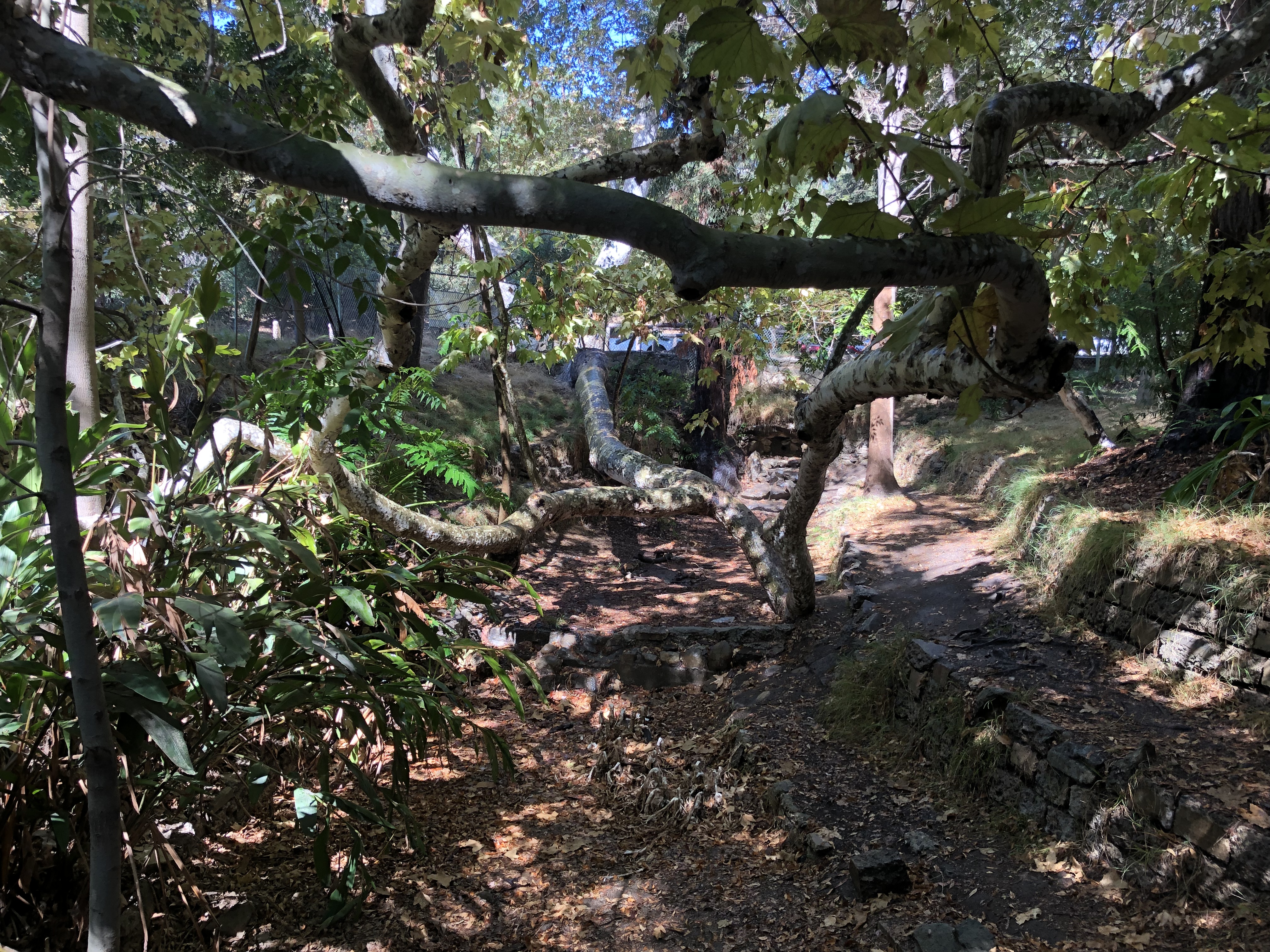
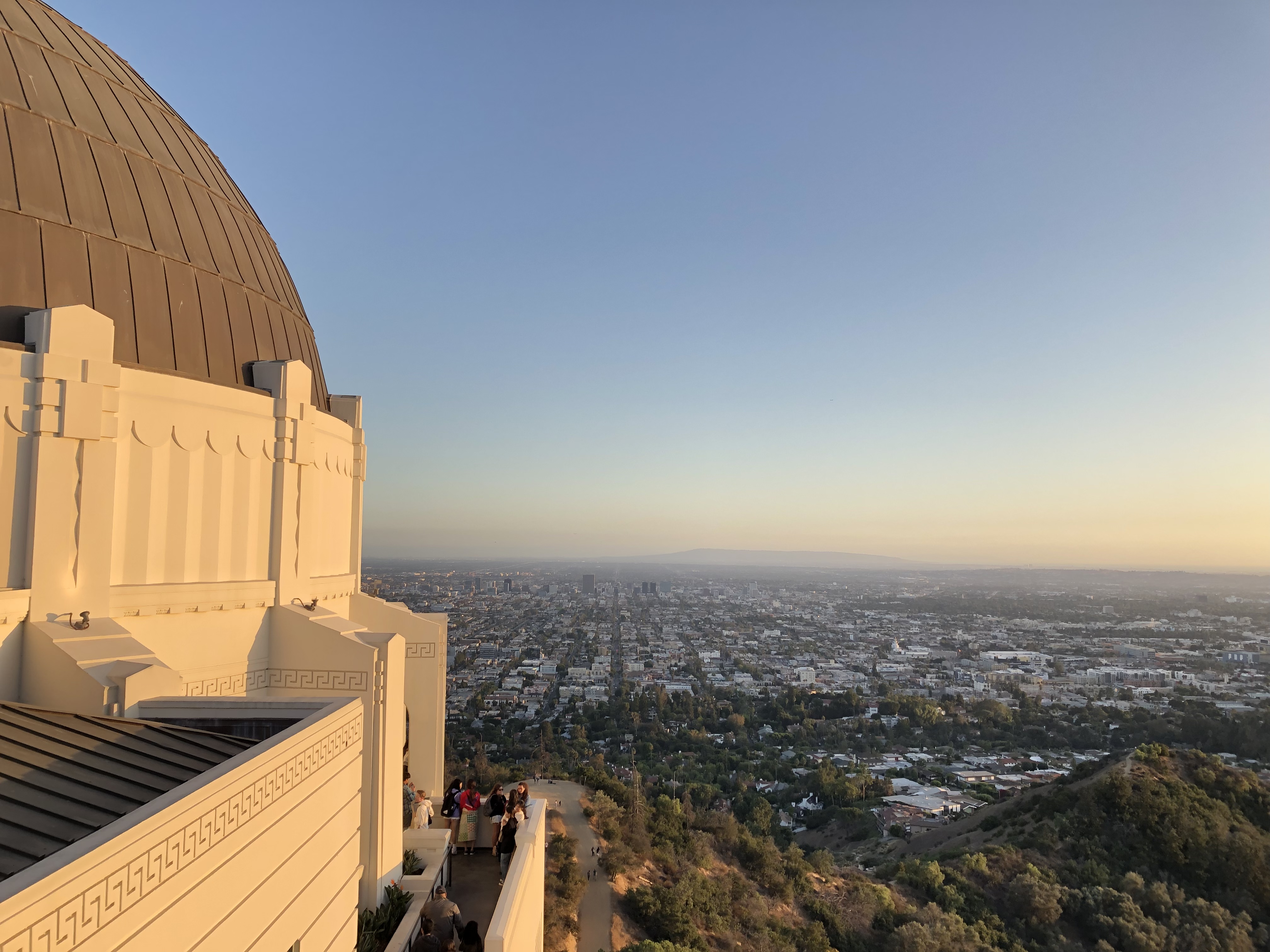
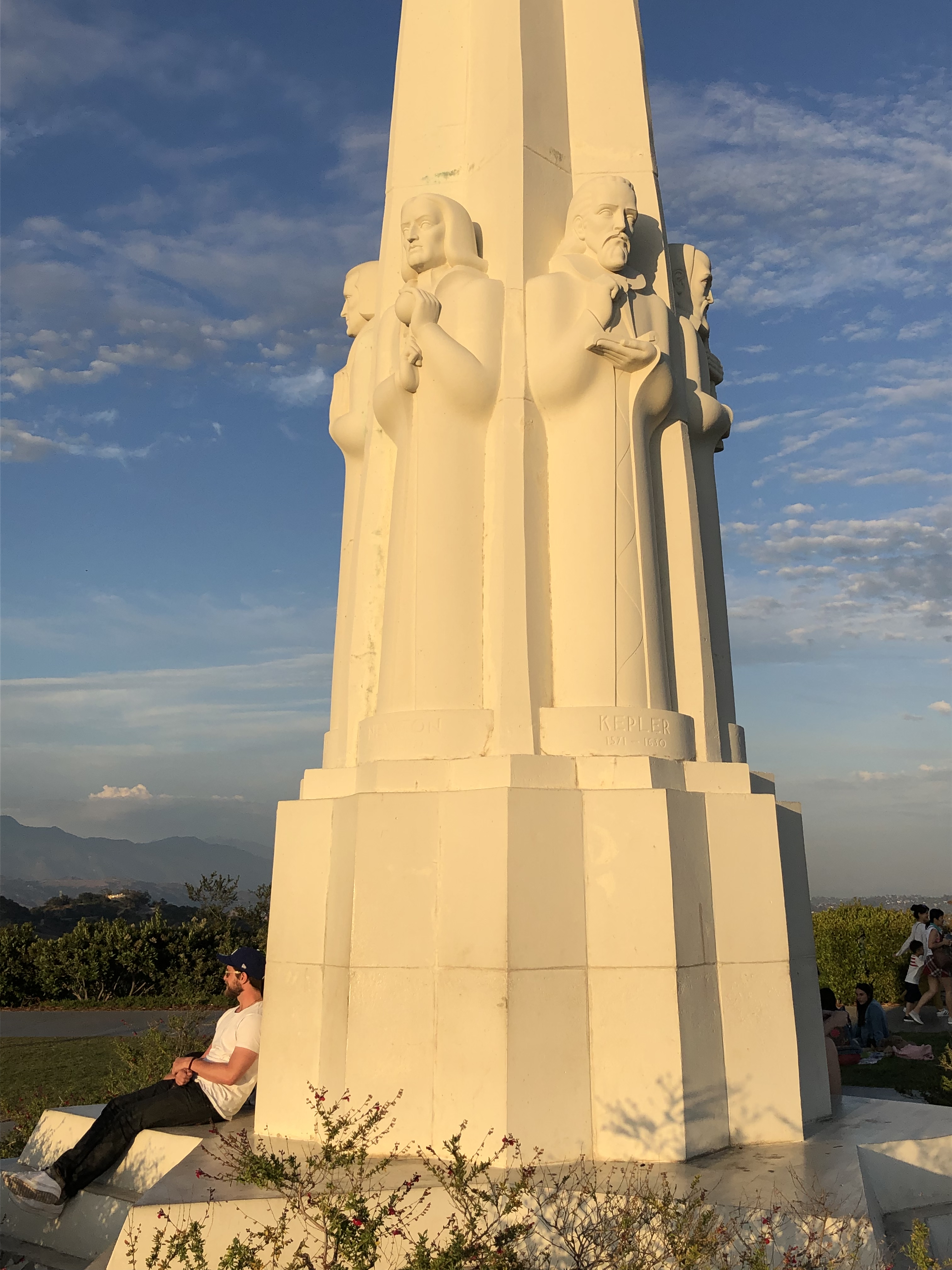
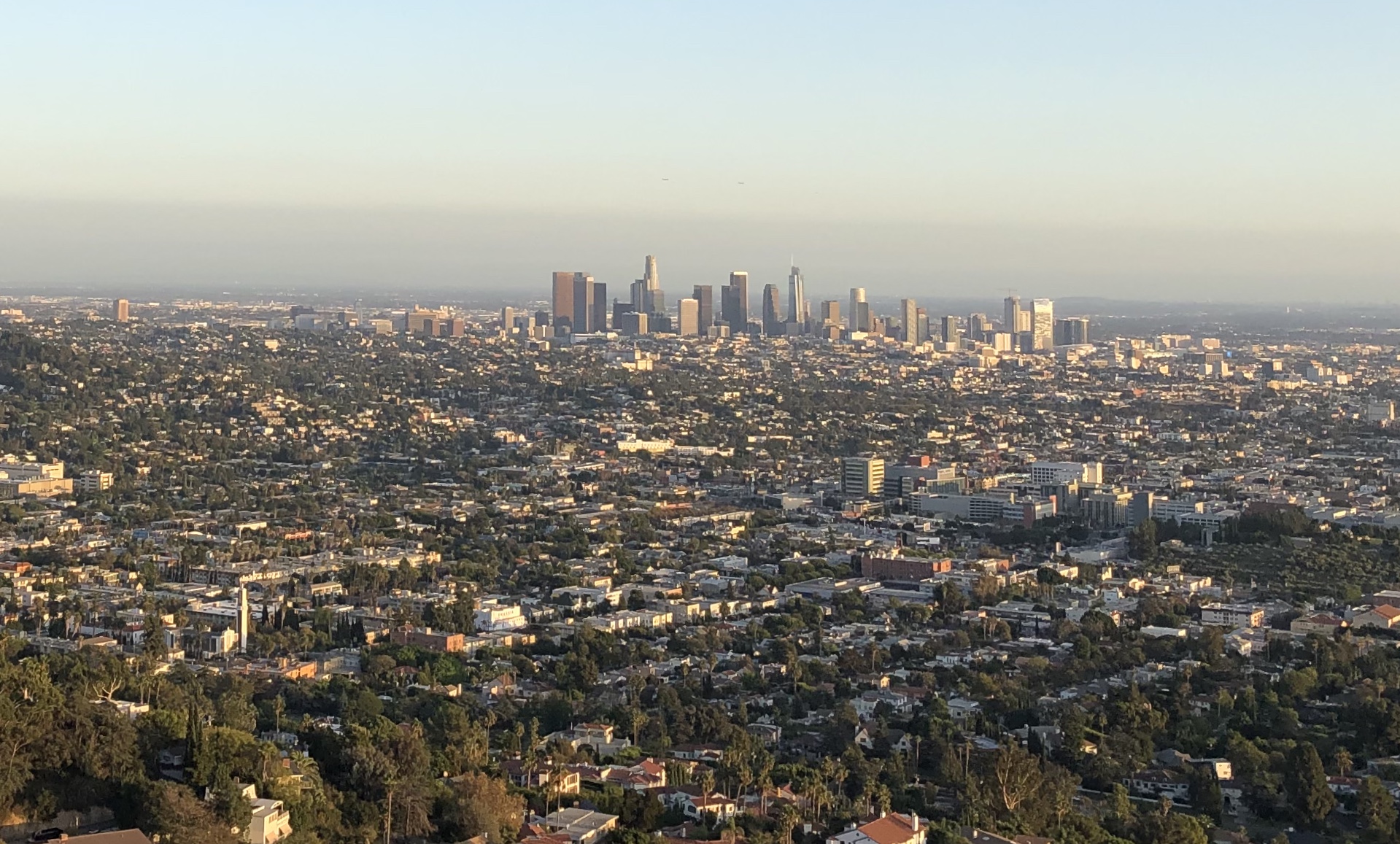
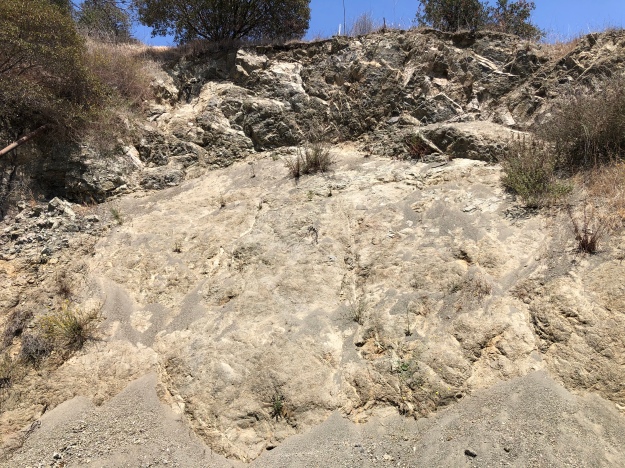
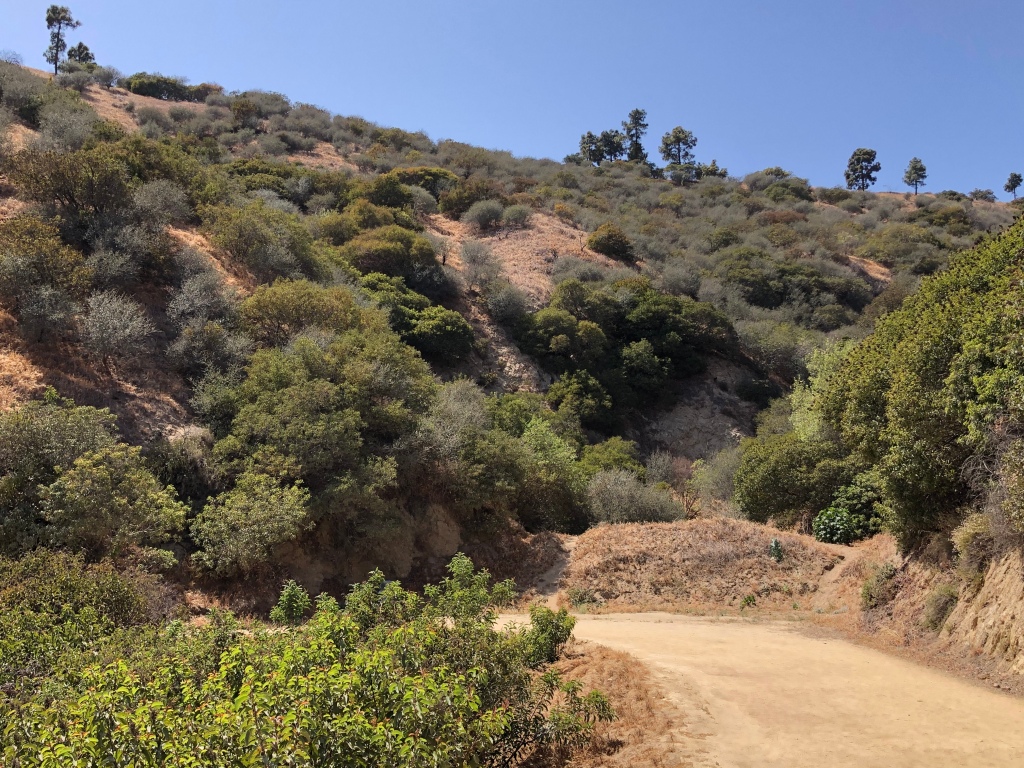
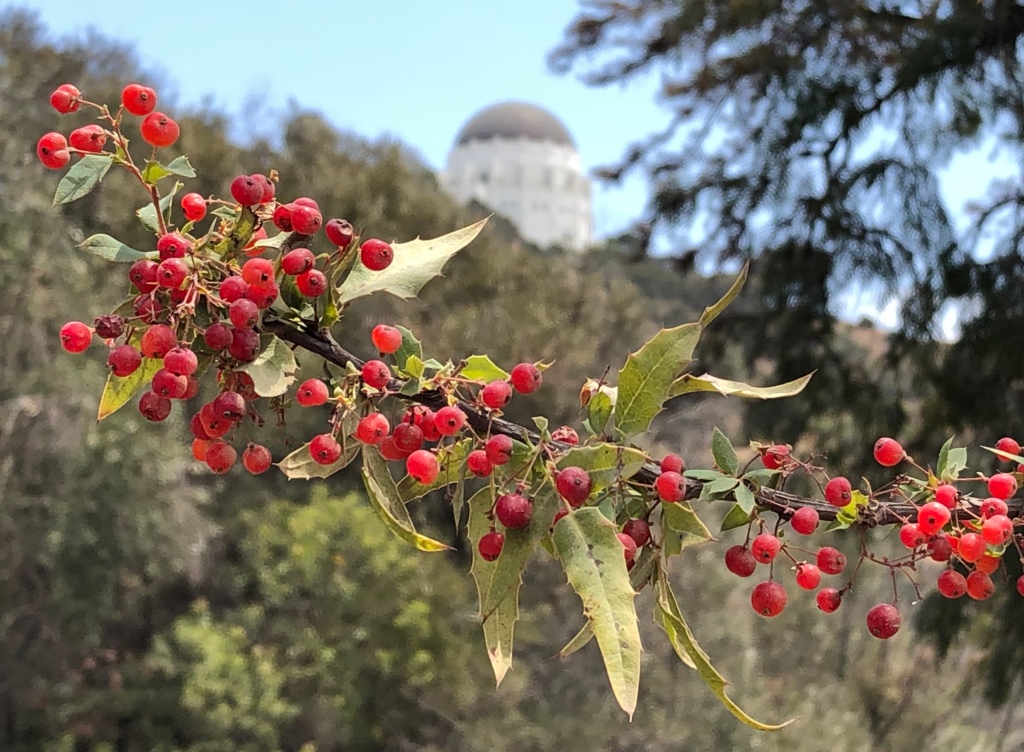
Enjoy this treasury of photographs showcasing the geology, botany, and fascinating social history of LA’s greatest park, now celebrating its 125th birthday.

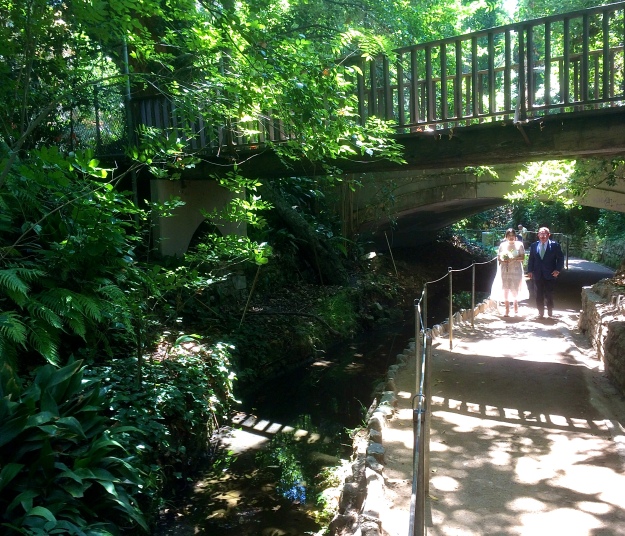
My favorite picture ever, I think. A bride escorted by her dad up Fern Dell. I had just passed the wedding party and officiant at the top of the trail, nicely kitted out, waiting in excitement. The bride was grimacing with fright as she caught the light. What a spot for a wedding! What a spot for anything.
TRAILS CAFE

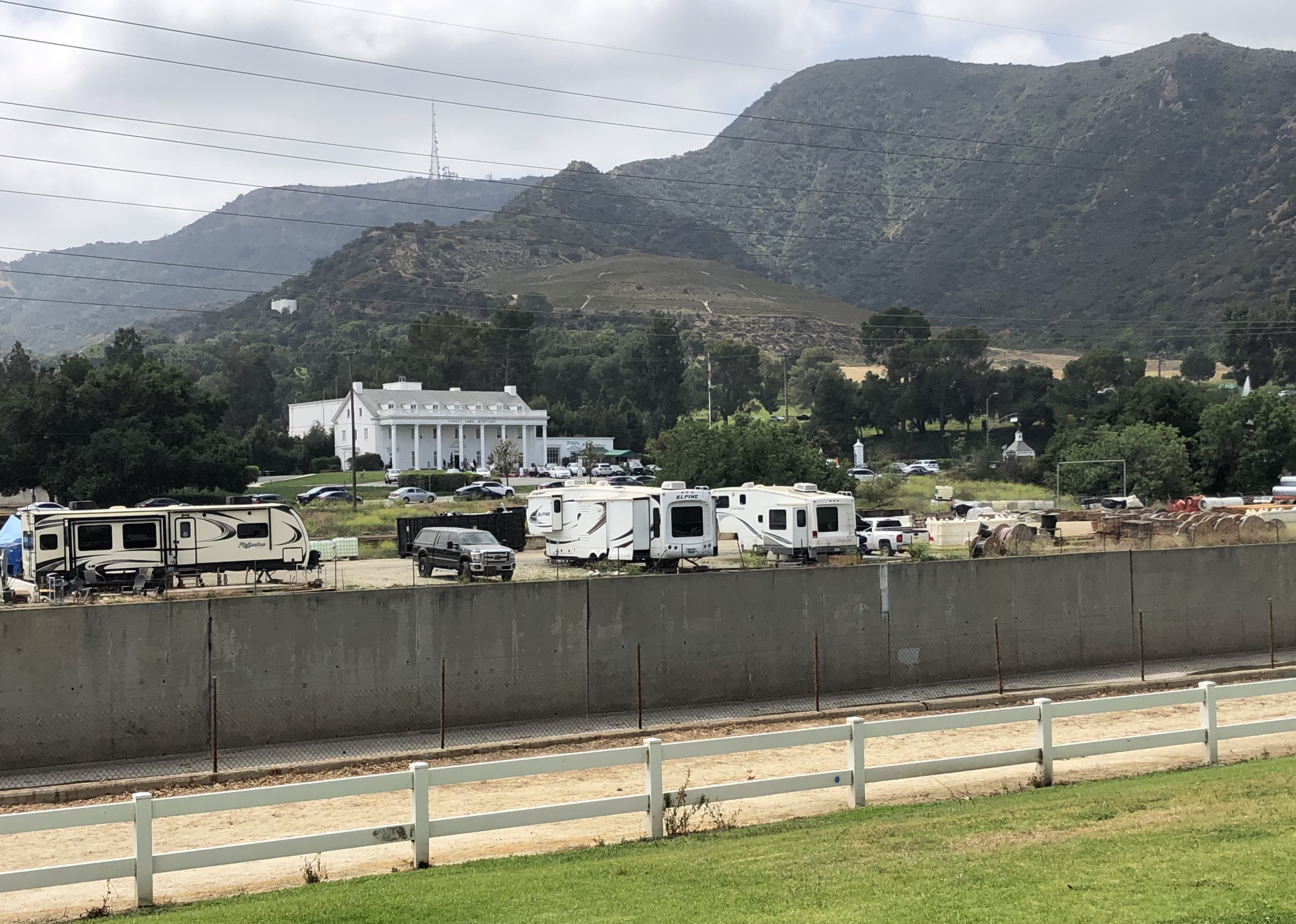
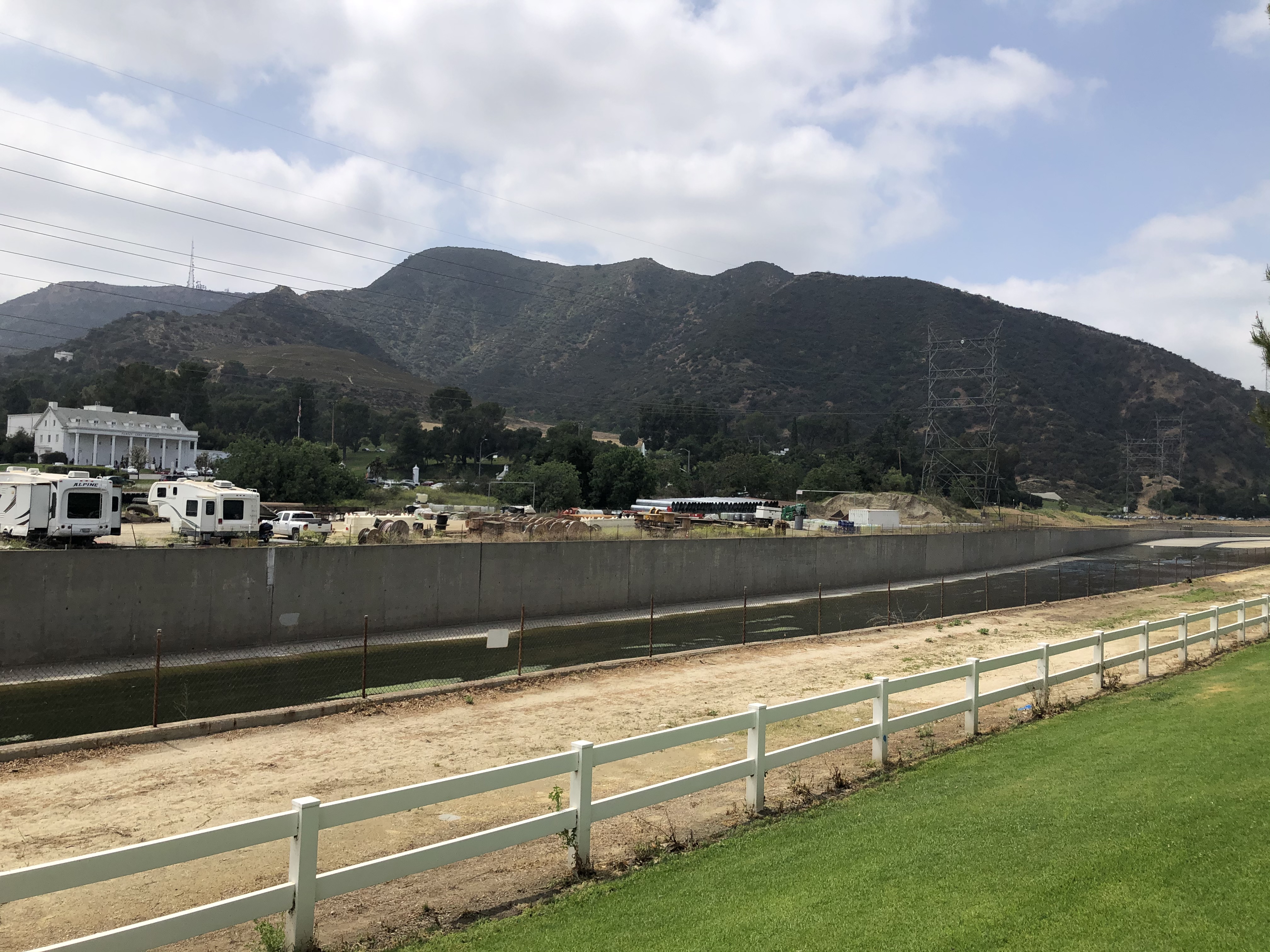
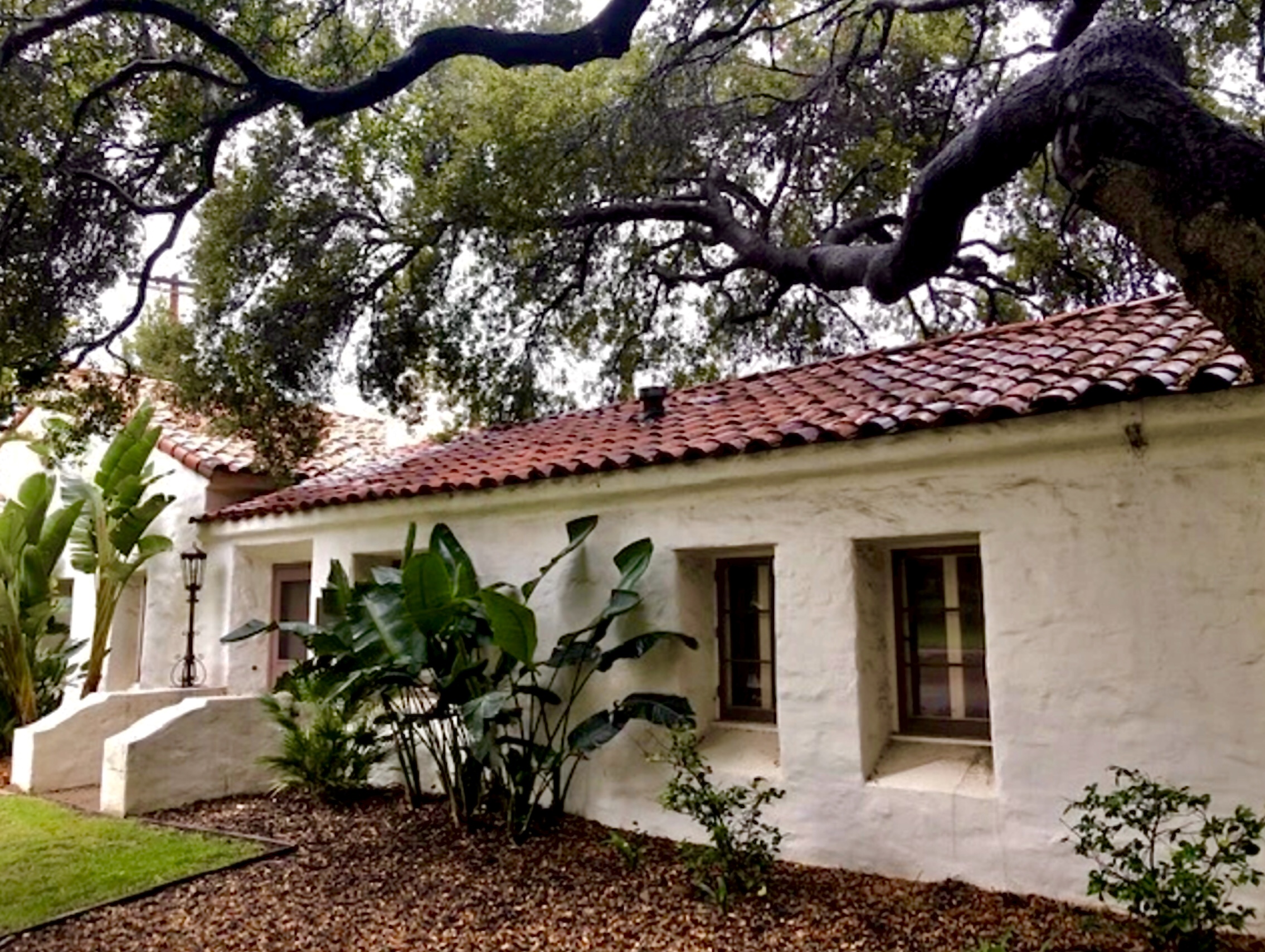
The rancho adobe (in some form, since 1795!) was preserved as Park Ranger HQ.

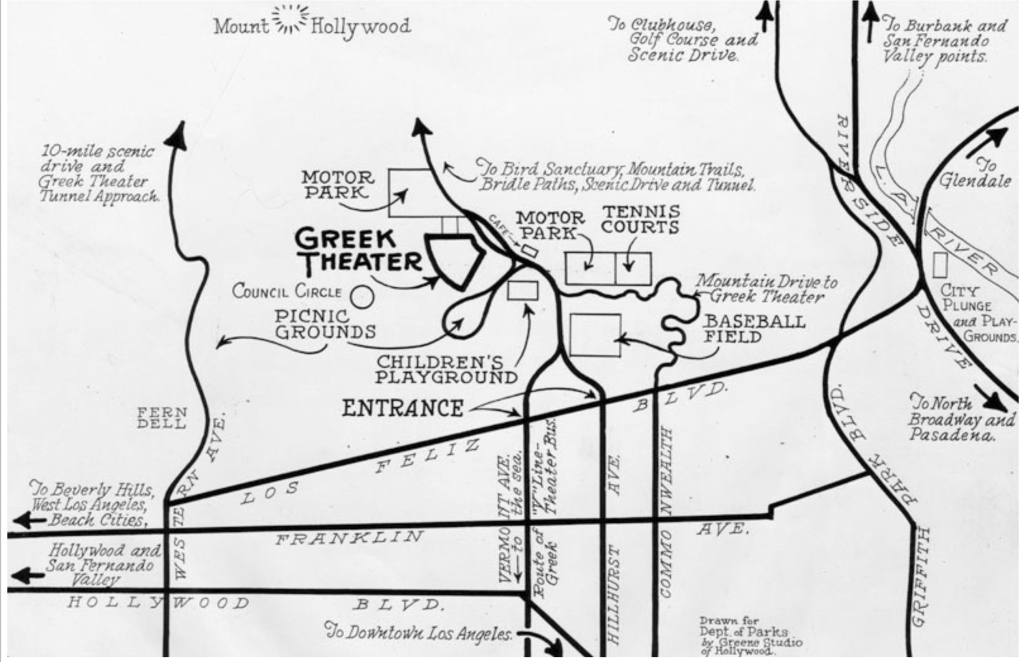
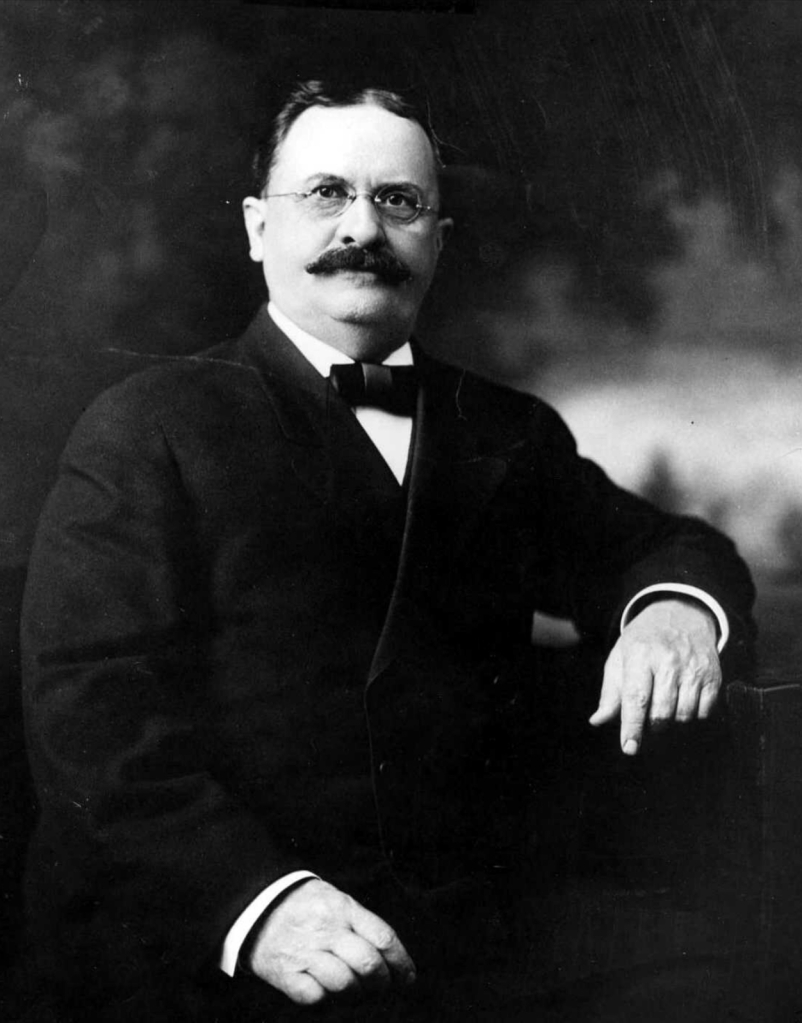
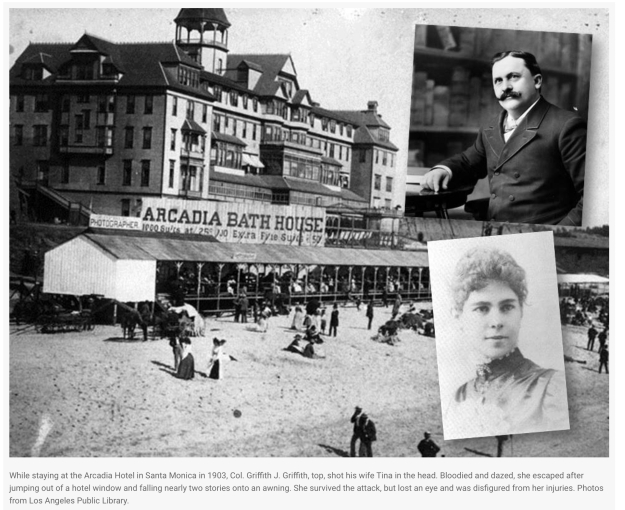
This unbelievabvly rich land was Rancho Los Feliz — “the Felizes’,” the first (or second) rancho grant in California. It was granted as a reward to a retiring military intendente of Los Angeles. The Pueblo was successfully settled and competent, the Tongva successfully relocated to San Gabriel, and happy Mexican farmers were churning out grain in the vast riverbed. Griffith J. Griffith bought the rancho from Yankee speculators for a song, and when he offered it to the City, with his grand visions of civic adornment and classical education and human uplift and ecological connection — he practically had to beg the City to take it. They were afraid to take Griffith’s gift, thousands of untouched watershed acres, because Griffith personally, had problemsit turns out, he shot his wife in the face, in a hotel room on Santa Monica Beach. The City Fathers were afraid the voters’ wives’ ministers’ wives would reject the City Council socially, if they shook hands with a beast like Griffith. He did two years in Q.

This photo is from the California Department of Corrections online article about Q’s famous alumnus, which tells the whole lurid story! Click, Baited Reader, click….

https://www.cdcr.ca.gov/insidecdcr/2019/05/23/unlocking-history-las-griffith-park-observatory-bear-name-of-early-1900s-san-quentin-inmate/

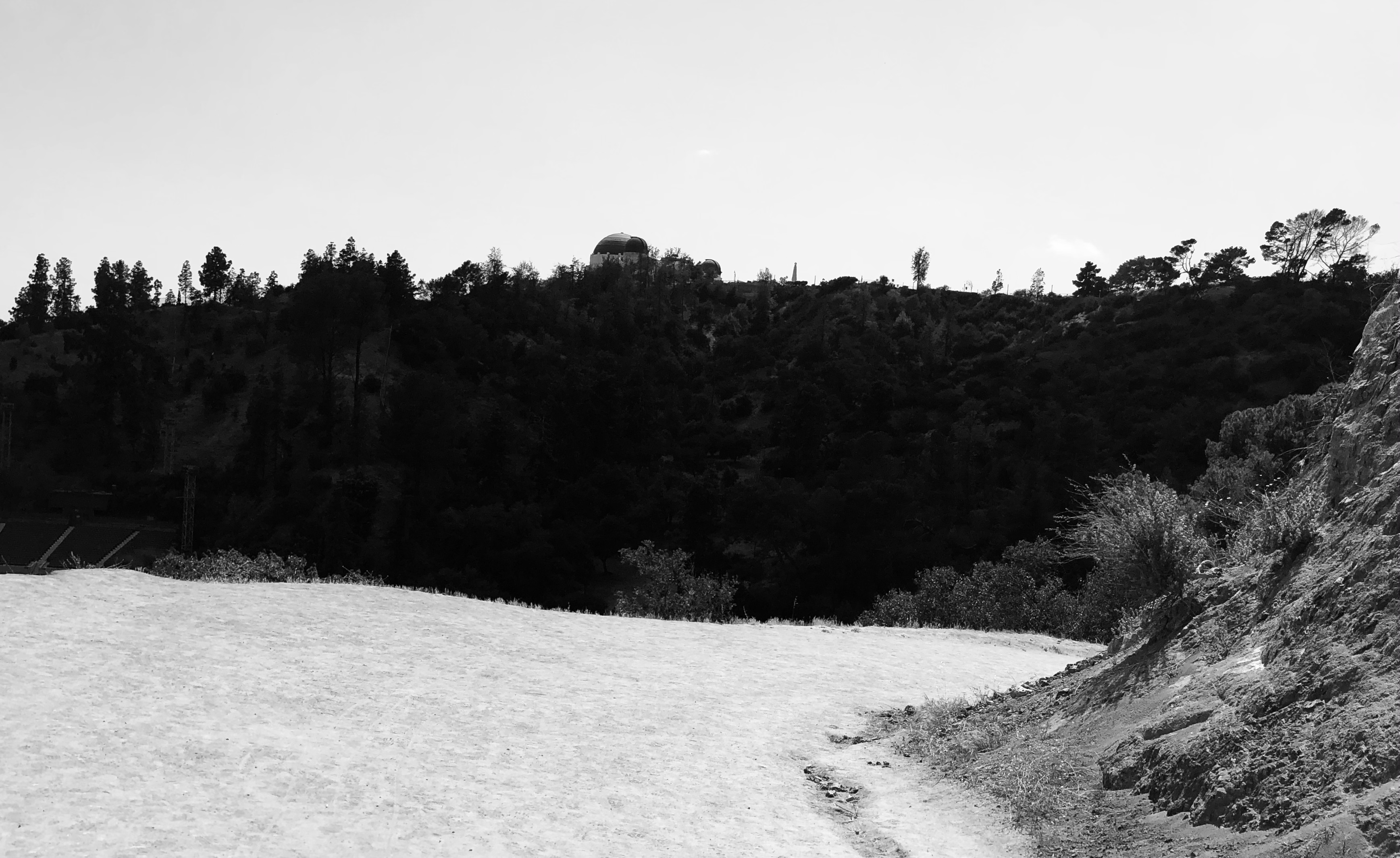
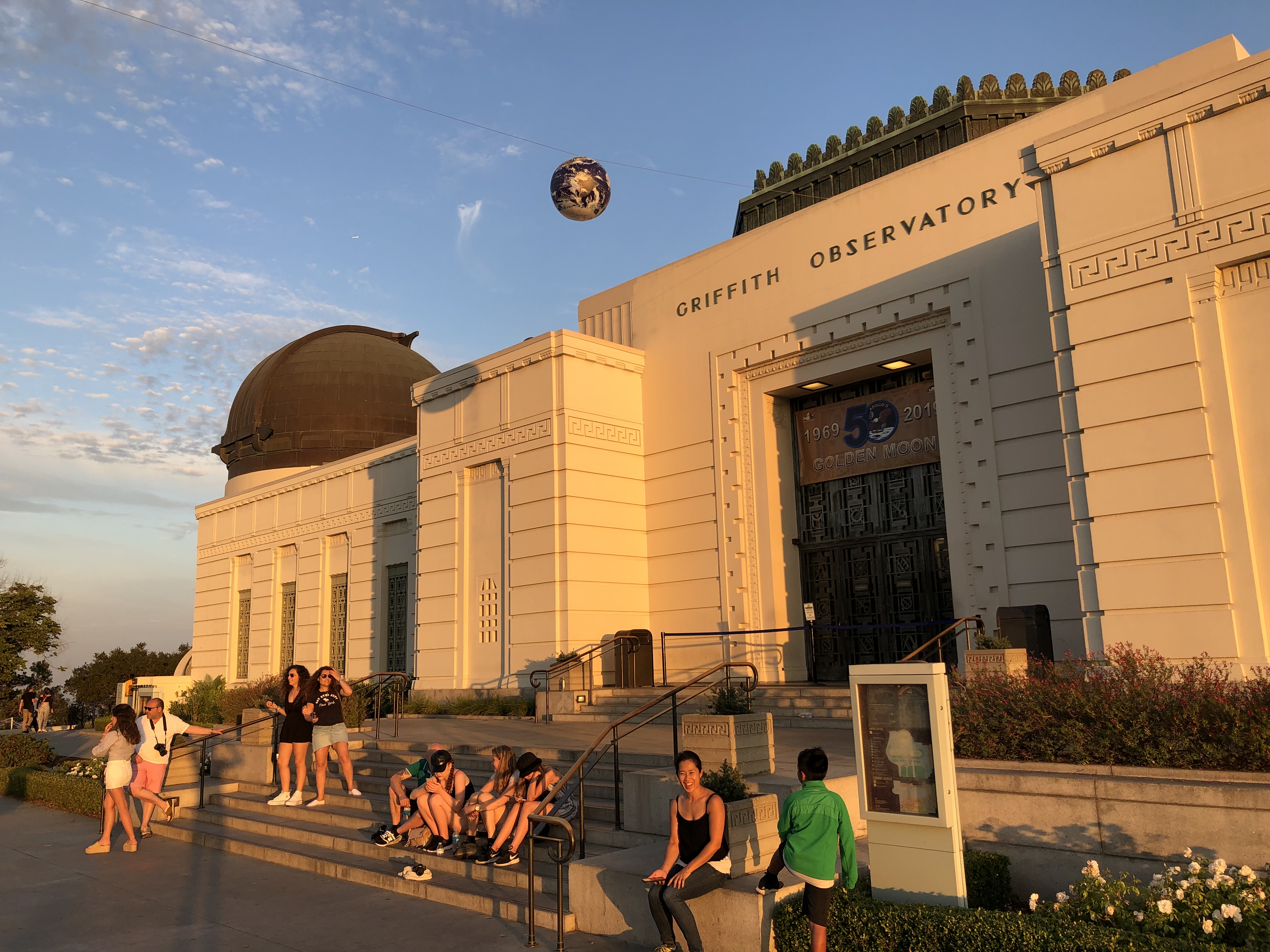
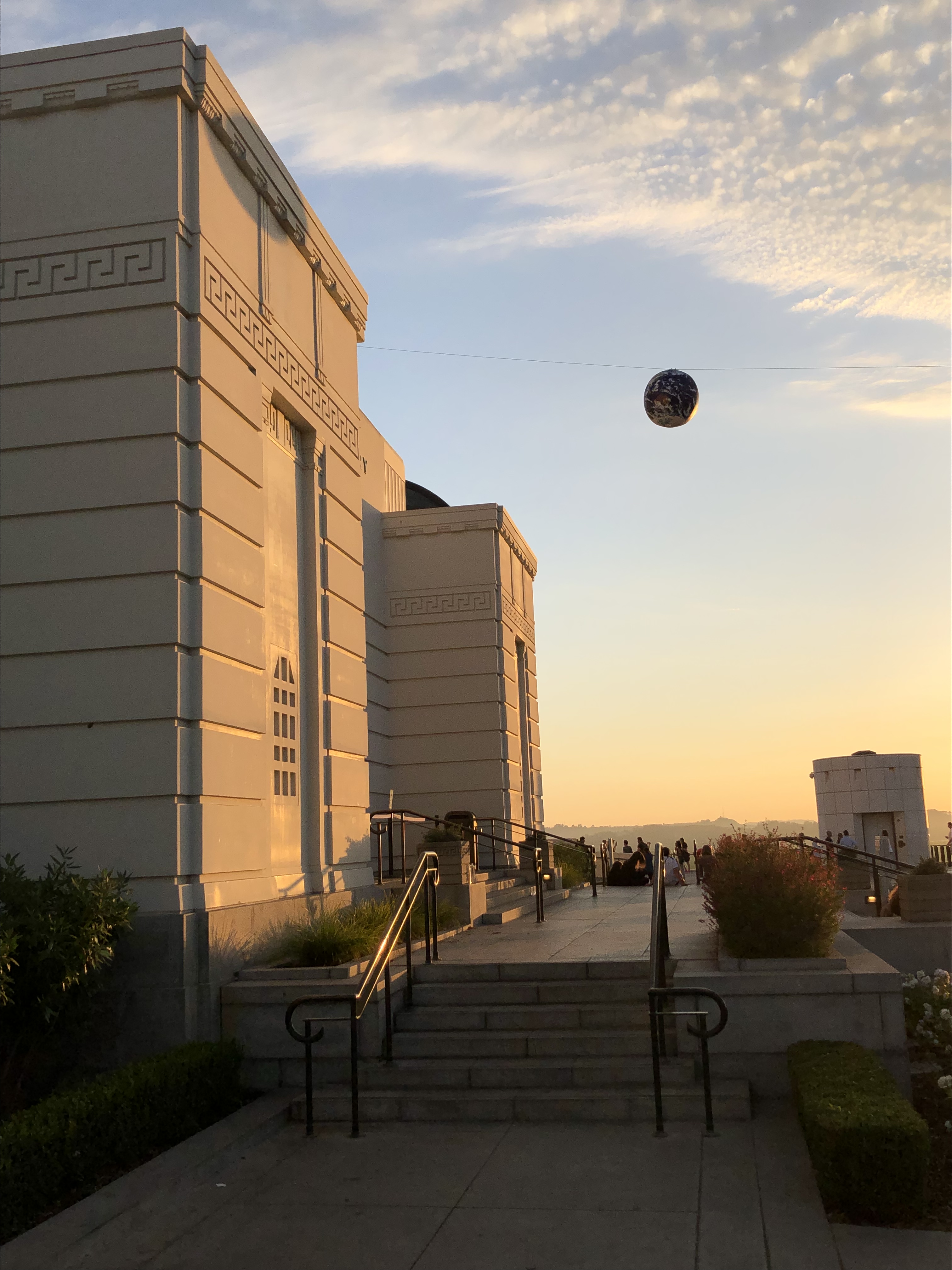
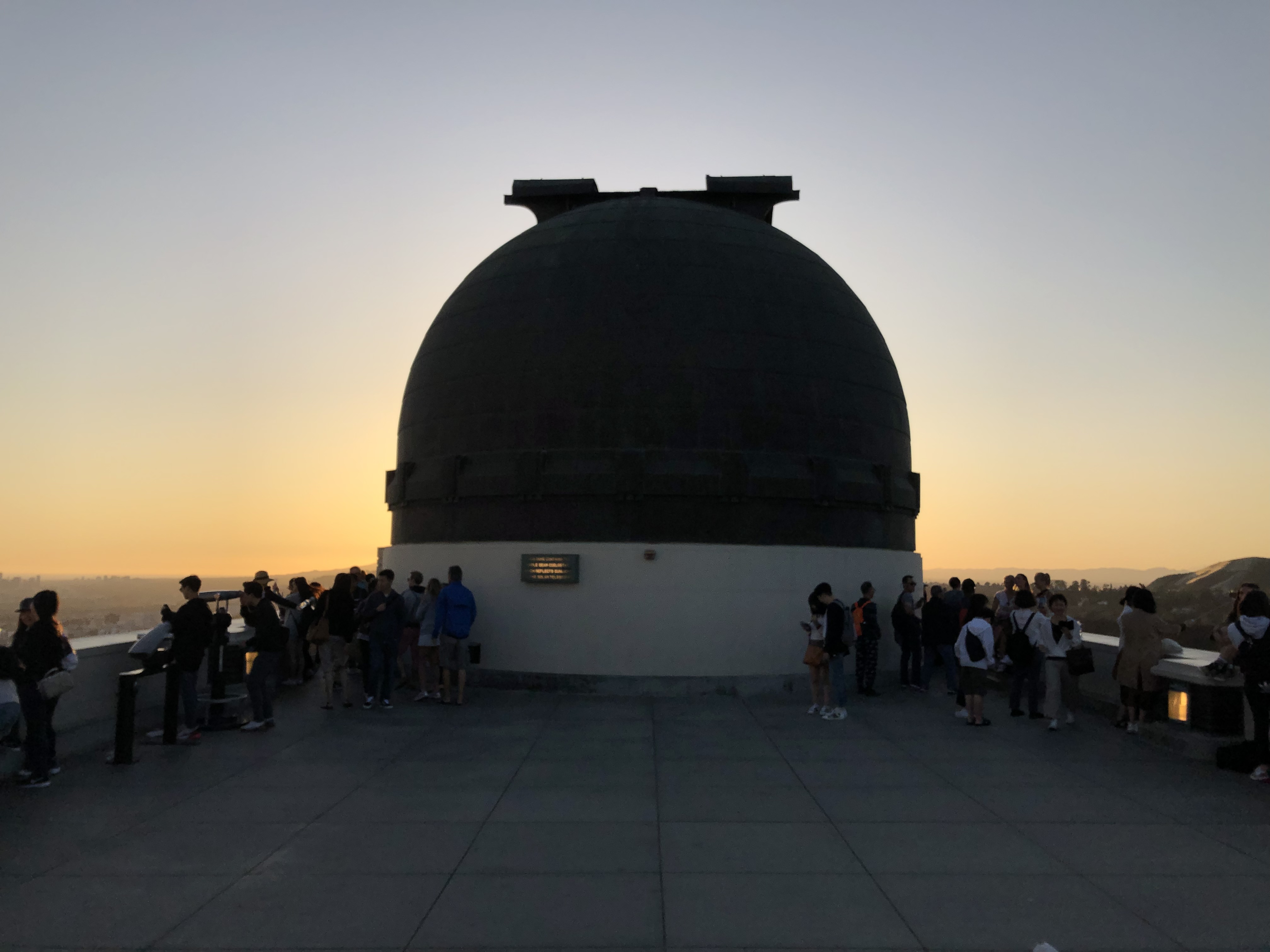
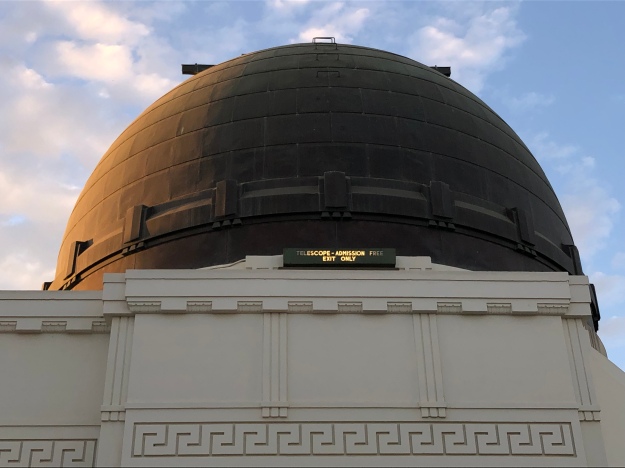
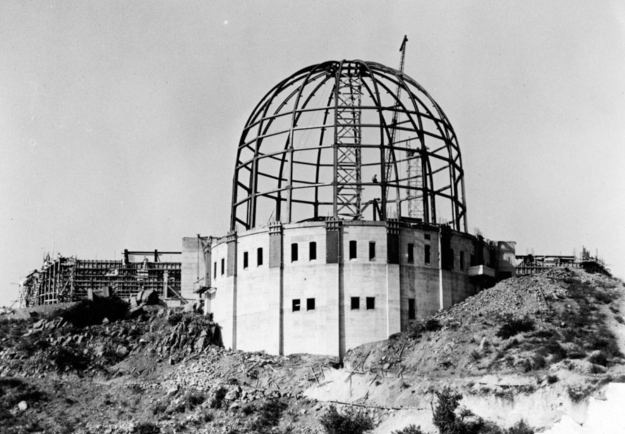
It took decades before Victorian propriety thinned out enough for the City to take possession, and it took decades more (1930!) for them to get around to building the Observatory and the Greek Theatre; both were stipulated in the conveyance. The delay was a good thing too, architecturally, for the Observatory — by then, the grace of Art Deco had come in to soften the Greek of Griffith’s preference, and the Federal Fascism that looked forward to Roosevelt’s New Deal; and it could all coalesce with modern engineering. It is one of the most iconic buildings on planet Earth (which it turns out is where we are; go inside and they’ll explain.)

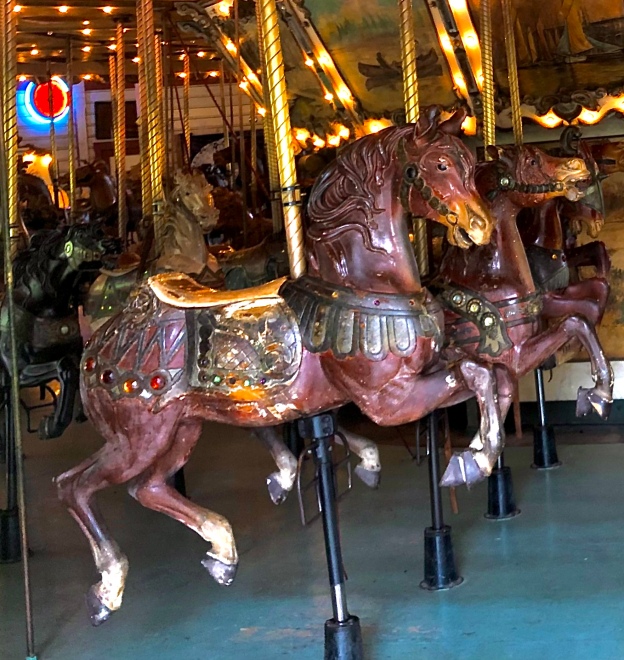
The Griffith Park Merry-Go-Round. Since we’re nosing into the Holidays anyway (Sinter Klaas, Dec. 5), and there’s apparently no other footage anywhere of the Merry-Go-Round, and the dead operator who loved and maintained this instrument for years can be seen in the video in his Sinter Klaas cap, here is Jolly Old St. Nicholas, with bells and whistles, and the moose bugling along. Enjoy the View Walt Disney had, a bench in the Park, watching his Merry- kids -Go -Round, and see if you dream up anything as lucrative as Disneyland, like he did. Dream harder…

https://drive.google.com/file/d/1PqOmMc9dStEtvi2b-GYdFhgiXTlYQ_SK/view?usp=drivesdk

“Griffith Park is 125. It looked 125 five years ago. It will look it twenty years from now. I hate parks.”